The Complete Guide: Email Tone in Singapore vs Taiwan (Formality Levels Explained)
Discover formality levels in Singapore vs Taiwan professional emails. Real examples, cultural insights, and how to adjust your tone for different audiences.

Jump to sections
Use these anchors to jump straight to the section you need.
The Tale of Two Asian Tigers
Scene: A marketing manager in Taipei (Taiwan) emails her regional colleague in Singapore. Taipei Email: "Dear Mr. Tan, I would ideally like to humbly request your kind assistance to review the attached deck. I would greatly appreciate your valuable feedback..." Singapore Reply: "Noted. Will check. Thanks."
AI Grammar Buddy
Make this sound professional
Improve tone for work emails without changing your meaning.
The Taipei manager thinks: "Wow, he's so rude! Did I offend him?" The Singapore manager thinks: "Wah, why she write so long? Reading headache."
Both are professionals. Both speak English. But they are operating on completely different politeness frequencies.
In this guide, we dive deep into the fascinating differences between Singapore and Taiwan business email etiquette, and how you can bridge the gap.
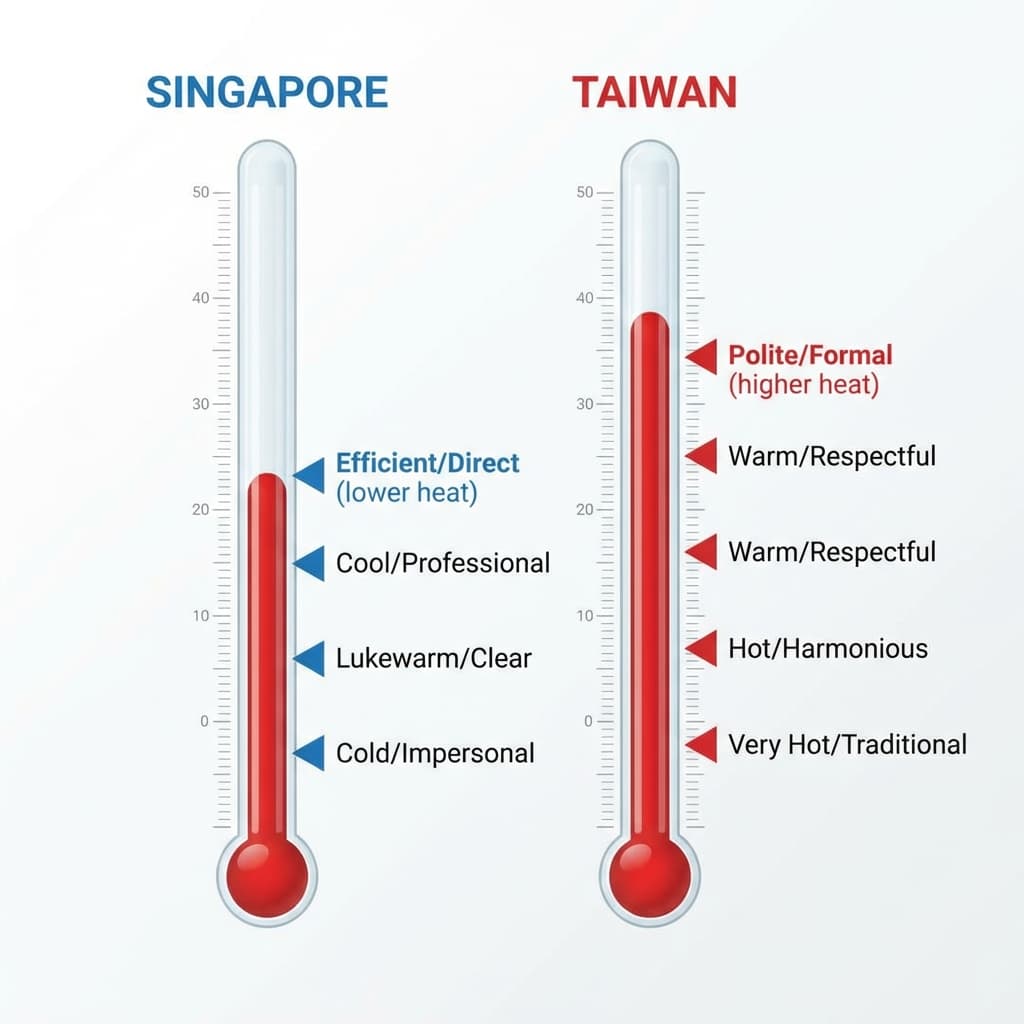
4 Levels of Politeness: Singapore Edition 🇸🇬
Singapore business culture is Efficiency-First. Politeness is shown by not wasting your time.
Level 1: Casual / Singlish
- Who: Close colleagues, work friends.
- Example: "Eh, can help check this? Thanks!"
- Vibe: Familiar, brotherhood/sisterhood.
Level 2: Standard Professional (The Default)
- Who: Bosses, colleagues from other depts.
- Example: "Hi John, could you please review this when you have a moment? Thanks."
- Vibe: Direct, clean, no fluff. This is 80% of SG emails.
Level 3: Formal
- Who: External clients, Senior Management (Big Boss).
- Example: "Dear Mr. Tan, I would appreciate it if you could review this document at your earliest convenience."
- Vibe: Respectful distance.
Level 4: Very Formal (Rare)
- Who: Government bodies, Apology letters.
- Example: "I am writing to formally request your consideration regarding..."
- Vibe: Severe or official.
4 Levels of Politeness: Taiwan Edition 🇹🇼
Taiwan business culture is Relation-First (Guanxi). Politeness is shown by "face" (keeping the other person comfortable) and formal hierarchy.
Level 1: Casual (with "Chinese" warmth)
- Who: Close team members.
- Example: "Hi! Can you help me check this? Many thanks!!"
- Vibe: Friendly, exclamation marks usually included.
Level 2: Standard Professional (The Default)
- Who: Colleagues, Peers.
- Example: "Hi [Name], I would appreciate your feedback on this. Thank you for your time."
- Difference: Much softer than Singapore's default. Usage of "would", "appreciate", "kindly" is high even among peers.
Level 3: Formal
- Who: Superiors, Clients.
- Example: "Dear [Title] [Name], I would be grateful if you could spare some time to review... I await your kind advice."
- Vibe: Deferential. Humility is key.
Level 4: Very Formal
- Who: First contact, VIPs.
- Example: "We are honored to present this proposal for your esteemed consideration..."
- Vibe: Highly ceremonial.
The Comparison: Why We Misunderstand
| Feature | Singapore 🇸🇬 | Taiwan 🇹🇼 |
|---|---|---|
| Core Value | Efficiency (Fast is polite) | Harmony (Soft is polite) |
| "No" | "Cannot." / "Unable to do." | "It might be difficult..." / "We will try our best but..." |
| Requests | "Please update me." | "Would you be so kind as to update me?" |
| Influences | British / Singlish | American / Chinese Honorifics |
Real Case: Leave Application
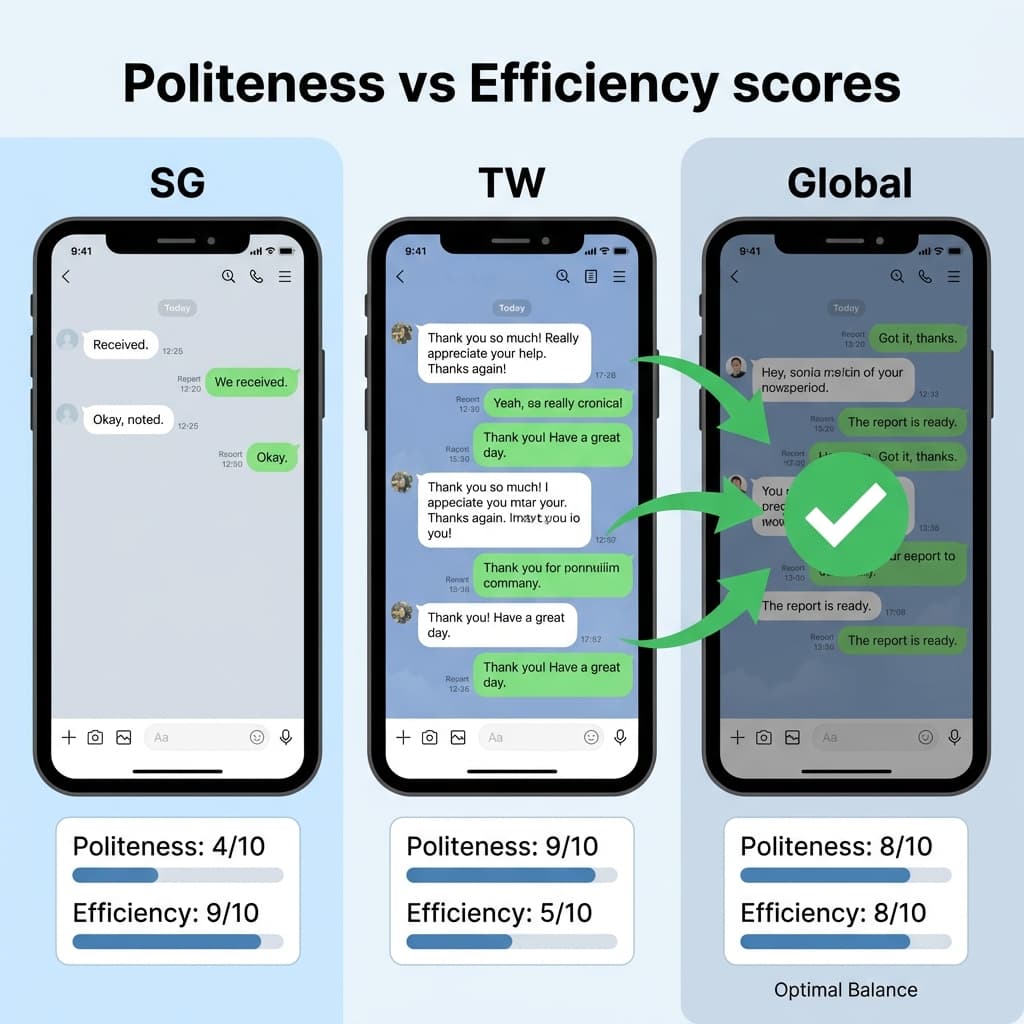
Singapore Style: "Hi boss, applying for leave 12-15 Jan. Will clear tasks before I go. Thanks!"
Direct. Gets the job done. The boss likes it because it's fast to read.
Taiwan Style: "Dear Manager, I am writing to humbly request annual leave from Jan 12-15. I have arranged for [Name] to cover my duties. I hope this does not cause inconvenience. Thank you for your understanding and approval."
Respectful. Shows "face" to the superior.
The "Global" Sweet Spot: "Hi [Name], I’d like to request leave for Jan 12-15. I’ve arranged coverage with [Name]. Please let me know if you need anything else. Thanks."
5 Golden Rules for Cross-Asia Email
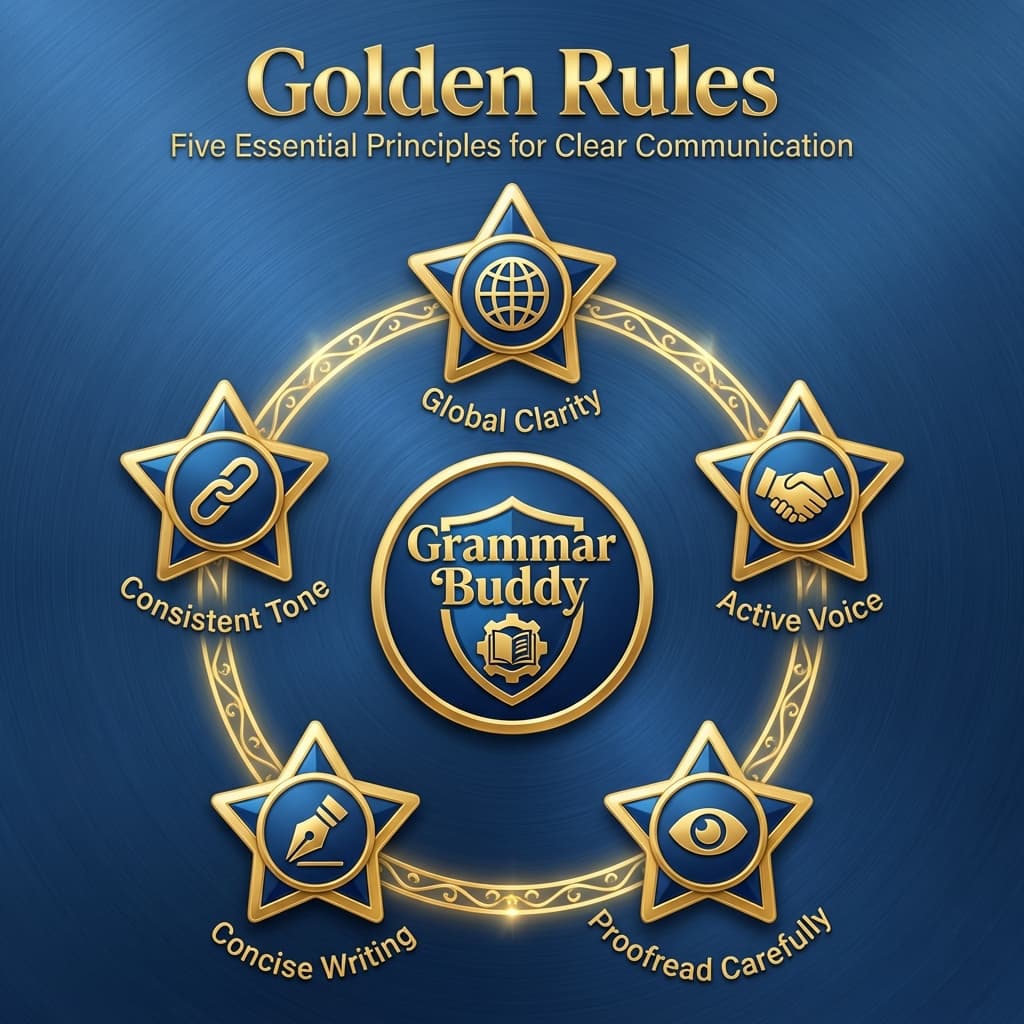
- Mirror the Other Person: If they write long, write slightly longer. If they write short, keep it brief.
- Singaporeans: Add one warmer sentence when writing to Taiwan/Japan/Korea. "Hope you are having a good week." goes a long way.
- Taiwanese: Cut the "Humbly / Esteemed / Kindly" by 50% when writing to Singapore/Westerners. It sounds overly submissive in English.
- Clarity Wins: Regardless of tone, make your Call to Action (CTA) clear. Don't bury the deadline in 3 paragraphs of politeness.
- Use Tools: Not sure if you're too rude or too fluffy?
Tone Polishing with Grammar Buddy
Grammar Buddy has a specific feature for Tone Calibration.
- Select "Make it Warmer" (For SG -> TW context)
- Select "Make it Concise" (For TW -> SG context)
Think of it as a cultural translator that keeps your original meaning but adjusts the "temperature" of the email.
Final Thoughts
Diversity is Asia's strength. Singapore's efficiency drive and Taiwan's human touch are both valuable. The best leaders—and the best communicators—are those who can code-switch between the two.
Start practicing today. Your "rude" Singaporean colleague might just be busy, and your "long-winded" Taiwanese partner is just trying to be nice.
Want a cheat sheet? Stay tuned for our downloadable PDF: "Singapore vs Taiwan Email Tone Guide" coming next month.
Subscribe to our newsletter to get it first.
Next step
Make this sound professional
Improve tone for work emails without changing your meaning.
Keep going
Continue with AI Grammar Buddy
AI Grammar Buddy
Email Improver
Paste your draft and rewrite it for clearer, more professional English.
Improve My ToneRelated guide
Business Trip English Phrases: Airport, Hotel & Meetings
Learn practical business trip English phrases for airports, immigration, hotels, meetings, and delays, with mini dialogues and ready-to-use examples.
30 July 2026
Related guide
OK Noted Meaning in Email: Rude? Better Replies
What does OK noted mean in email? Is okay noted rude? Why noted on this is wrong, plus clearer professional replies you can copy.
18 July 2026
Related guide
AI Email Rewriter for Professional Emails (Before & After)
Turn rough drafts into professional emails. See before-and-after rewrites, better prompts, and common mistakes that affect tone, clarity, and structure.
17 June 2026