Noted With Thanks Alternatives for Singapore Workplaces
Professional noted with thanks alternatives for Singapore workplaces—manager, colleague, client and vendor replies, plus tone tips and copy-paste examples.
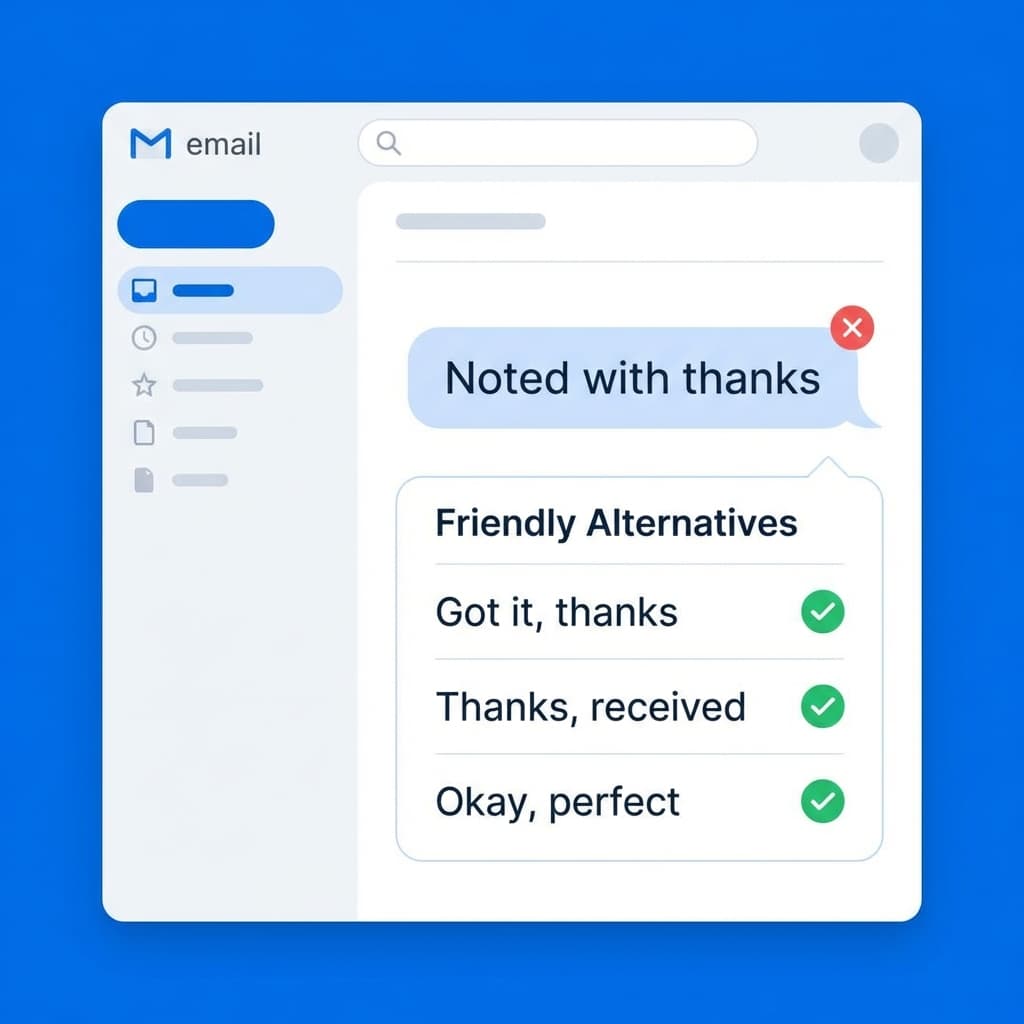
In Singapore offices, “noted with thanks” is everywhere—but it often stops at acknowledgement. Managers want ownership, clients want next steps, and vendors want confirmation. Below are role-ready noted with thanks alternatives you can paste, then tune with one clear action and deadline.
This page is about workplace replies, not the phrase’s definition. For correctness and general usage, read the complete “noted with thanks” meaning guide.
TL;DR
Choose an acknowledgement that fits the person and the task: thank the sender, confirm what you received or understood, and add the next action when one is expected.
Top alternatives:
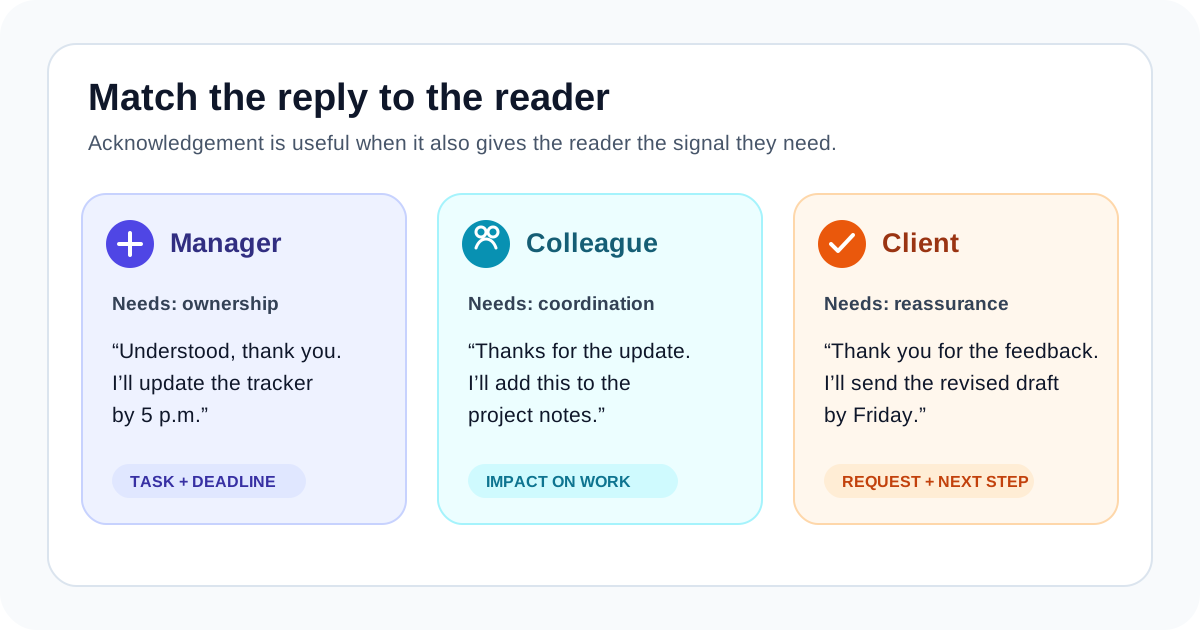
- •Manager: “Understood, thank you. I’ll update the tracker by 5 p.m.”
- •Colleague: “Thanks for the update. I’ll add this to the project notes.”
- •Client: “Thank you for the feedback. I’ll send the revised draft by Friday.”
AI Grammar Buddy
Turn this template into your email
Start with the example, then rewrite it for your real situation.
Jump to sections
Use these anchors to jump straight to the section you need.
Quick Answer: What Can You Say Instead?
Start with the purpose of your reply rather than choosing from a long list of synonyms.
| Purpose | Recommended reply | Tone | Best use |
|---|---|---|---|
| Acknowledge information | Thanks for letting me know. | Neutral and warm | A general update with no action required |
| Confirm instructions | Understood, thank you. | Respectful and direct | A manager assigns or clarifies a task |
| Confirm receipt | Received, thank you. | Concise and neutral | A vendor sends a file or form |
| Show appreciation | Thanks for the update. | Friendly and natural | A colleague shares progress |
| Confirm the next action | Thank you. I’ll proceed accordingly. | Professional and accountable | You know what needs to happen next |
| Reply formally | Thank you for the information. | Formal and measured | A client or senior stakeholder writes to you |
The most reliable pattern is acknowledgement + next action. It tells the sender not only that you read the message, but also what will happen next. If receipt itself is the main purpose, use these acknowledge-receipt email examples for documents, payments, applications, and requests.
What Singapore Teams Actually Expect
Acknowledgement does not always mean the task is complete. In the workplace-style drafts Kin reviews for AI Grammar Buddy, the useful difference is usually what the reader needs after the acknowledgement:
- A manager needs ownership: confirm the task and a realistic deadline.
- A colleague needs coordination: say how the update affects your work.
- A client needs reassurance: reflect the request and name the next step.
- A vendor needs confirmation: identify the file, order, or date you received.
This is why one “best alternative” cannot fit every inbox. The same short reply may be efficient in an internal chat and incomplete in a client email.
Alternatives for Replying to Your Manager
When a manager gives an instruction, confirm that you understand it and take ownership of the next step.
| Situation | Reply you can use | Why it works |
|---|---|---|
| Your manager asks you to update the monthly tracker | “Understood, thank you. I’ll update the tracker by 5 p.m. today.” | Confirms the instruction and gives a precise completion time |
| Your manager explains where a draft needs improvement | “Thank you for the specific feedback. I’ll revise the analysis and share a new draft tomorrow afternoon.” | Recognises the effort behind sensitive feedback and shows how you will respond |
Avoid promising a deadline you cannot meet. If timing is uncertain, say when you can confirm it: “Understood, thank you. I’ll review the workload and confirm the delivery time by noon.”
If your first draft still sounds flat, paste it into the Email Improver and ask for a warmer, more accountable version that keeps your deadline.
Alternatives for Replying to Colleagues
Peer-to-peer replies can be warmer and less formal, especially in an established team.
| Situation | Reply you can use | Tone |
|---|---|---|
| A teammate says that testing is complete | “Thanks for the update. I’ll add the result to the project notes.” | Friendly and neutral |
| A close teammate shares the room number in chat | “Got it, thanks!” | Casual and efficient |
For a colleague you do not know well, “Thanks for letting me know” is a safer neutral choice than a very casual “Got it.” If you are weighing an even shorter reply, the guide to “OK noted” in email explains when it closes a thread and when it sounds unclear.
Alternatives for Replying to Clients
Client replies should show that you understood the specific request. A generic acknowledgement can leave the client unsure whether you will act.
| Situation | Reply you can use | Why it works |
|---|---|---|
| A client asks for two new sections in a proposal | “Thank you for clarifying the requirements. I’ll add both sections and send the revised proposal by Friday.” | Reflects the request and confirms ownership and timing |
| A client sends line-by-line comments | “Thanks for the detailed feedback. I’ll review each comment and confirm the revision schedule this afternoon.” | Matches the effort in the message without making a rushed commitment |
Here is the difference a clear action makes:
Original: Noted with thanks.
Improved: Thank you for clarifying the requirements. I’ll add both sections and send the revised proposal by Friday.
The improved version is not longer for its own sake: it confirms exactly what the client needs. If your client reply still feels too brief, paste it into the Email Improver and ask for a warmer version that preserves the request and deadline.
Alternatives for Confirming Documents
When a vendor emails a quotation or signed form, use: “Received, thank you. I’ll review the document and come back to you by Wednesday.” It is neutral and businesslike, confirms receipt, and removes uncertainty about follow-up.
For a routine attachment that needs no action, “Received, thank you” is enough. For contracts, approvals, invoices, or other important records, identify the document and state the next step: “I’ve received the signed agreement and will forward it to our legal team today.” The guide to “well received with thanks” explains why that phrase can be ambiguous when confirming documents.
Alternatives for Meeting and Schedule Updates
Schedule replies should repeat the confirmed date or time. That gives both people a quick accuracy check and creates a useful written record.
| Situation | Reply you can use | Why it works |
|---|---|---|
| A meeting moves from 2 p.m. to 3 p.m. | “Thanks for letting me know. I’ve updated my calendar for 3 p.m.” | Confirms the new time instead of only acknowledging the change |
| A stakeholder checks whether Friday still works | “Thank you for checking. Friday works for me, and I’ll send the final file by 4 p.m.” | Answers the question and confirms the delivery time |
| An urgent meeting is moved to the same afternoon | “Understood, thank you. I can join at 4 p.m. and will send the revised agenda beforehand.” | Confirms availability and the action needed before the meeting |
Casual vs Neutral vs Formal Replies
| Level | Example | Choose it when |
|---|---|---|
| Casual | “Got it, thanks!” | You are in an internal chat with a close colleague and the message is routine |
| Neutral | “Thanks for the update. I’ll adjust the timeline.” | You are replying to most colleagues, managers, or familiar vendors |
| Formal | “Thank you for the information. I’ll review the request and respond by Thursday.” | You are writing to a client, senior stakeholder, or new external contact |
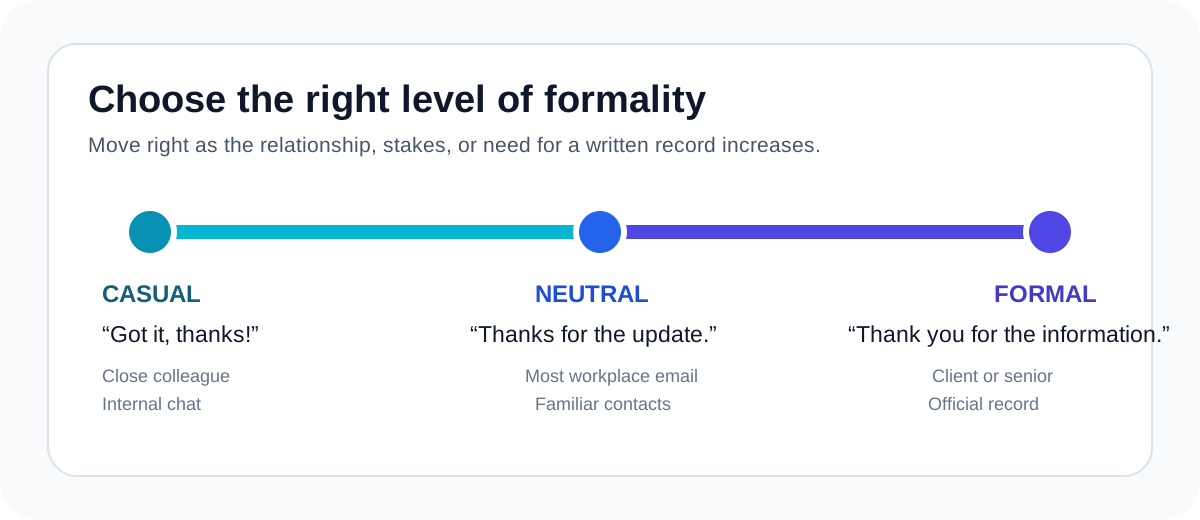
Formality is not a ranking of “good” and “bad” English. The right level depends on the relationship, channel, and importance of the message. The broader Singapore email etiquette guide can help you calibrate the rest of the email. If “well noted” is another option in your draft, check its formality and workplace tone before using it with an international reader.
Unsure whether a reply is too casual for a client? Run it through AI Grammar Buddy’s Email Improver and request a formal rewrite that keeps your facts and deadline.
Singapore Workplace Email Examples
These short replies are ready to adapt.
Manager instruction
Hi Daniel,
Understood, thank you. I’ll update the forecast and send it to you by 5 p.m. today.
Best,
Mei
Colleague update
Hi Aisha,
Thanks for the update. I’ll include the confirmed figures in tomorrow’s deck.
Cheers,
Joel
Client request
Dear Ms Tan,
Thank you for clarifying the request. We’ll revise the scope and send the updated quotation by Thursday afternoon.
Kind regards,
Priya
Vendor document
Hi Marcus,
I’ve received the signed delivery order, thank you. I’ll forward it to Accounts today.
Regards,
Farah
Common Mistakes When Acknowledging an Email
- Acknowledging without answering. If the sender asked a question, reply to it rather than sending a receipt-only phrase.
- Leaving out the action. When you own the next step, state what you will do.
- Adding an unrealistic deadline. A specific time helps only when you can meet it.
- Using chat language with a new client. “Got it” may be natural internally but too casual in a formal thread.
- Writing a paragraph for routine admin. A short “Received, thank you” is still useful when no action or reassurance is needed.
If your problem is repeatedly defaulting to the same one-line acknowledgement, the five concise “noted with thanks” rewrites offer a shorter practice set. You can also paste a receipt-only draft into the Email Improver and ask it to add the missing next step.
How These Replies Were Reviewed
Kin reviewed each example against four practical checks: reader, purpose, action, and timing. The reply must fit the relationship, answer what the sender needs, avoid implying action when none is promised, and use a deadline only when the writer can realistically meet it.
The examples are editorial models, not survey findings or universal rules about Singapore English. Team norms vary, so the final check is always the actual thread: what was sent, who is reading, and what needs to happen next.
How AI Grammar Buddy Can Help
AI Grammar Buddy’s Email Improver can adjust a real reply for warmth, formality, or clearer action without changing the underlying facts. Paste the sender’s context and your draft, then specify the reader—manager, colleague, client, or vendor—and any deadline that must remain unchanged.
For example:
Draft: Noted with thanks. Will do.
Rewrite instruction: Make this professional and accountable for my manager. Keep it concise and confirm Friday’s deadline.
Result: Understood, thank you. I’ll complete the revision and send it by Friday.
Always check names, dates, promises, and confidential details before sending an AI-assisted rewrite.
Final Takeaway: Which Reply Should You Choose?
Before sending, ask three questions:
- Who is reading it? A close colleague may welcome a casual line; a client may need more reassurance.
- What did they send? A routine FYI needs less detail than instructions, feedback, or an important document.
- What happens next? If you own an action, name it and include a realistic time.
Use “Thanks for the update” as a flexible default, then add the next action when needed. If your concern is whether the original phrase will sound cold in a particular relationship, see the separate guide to Singapore office tone and “noted with thanks”.
If someone has replied “Noted” to you and you are deciding whether the thread needs another response, use the guide to replying to “Noted” professionally.
The best reply is not the fanciest one; it is the one that makes receipt, appreciation, and the next step clear.
About This Article
Kin
Senior Business English Editor
Kin reviews workplace email drafts, acknowledgement phrases, and tone problems for AI Grammar Buddy. She focuses on practical replies that help non-native English writers confirm receipt, show ownership, and sound natural across Singapore and international teams.
Last updated 3 August 2026
Frequently Asked Questions
What is the best alternative to "noted with thanks" in Singapore?▼
“Thanks for the update” is a natural default for routine workplace messages. If action is required, make it more useful by adding what you will do and when. For example: “Thanks for the update. I’ll revise the timeline this afternoon.”
How should I acknowledge instructions from my boss?▼
Use “Understood, thank you” and add the next action or deadline. For example: “Understood, thank you. I’ll update the report by 4 p.m.” This confirms both understanding and ownership without making the reply unnecessarily long, and gives your manager a clear follow-up point.
What should I write when replying to a client?▼
Name what the client sent or requested, show appreciation, and confirm the next step. For example: “Thank you for the detailed feedback. I’ll send the revised proposal by Friday.” This reassures the client that you understood the substance, not only that you received the email.
How do I confirm that I received a document?▼
“Received, thank you” works for routine files. For an important document, identify it and add what happens next: “I’ve received the signed agreement and will forward it to our legal team today.” This also creates a clearer record for the sender.
Should my reply be formal or casual?▼
Use casual wording for close colleagues in internal chat, neutral wording for most workplace email, and formal wording for clients, senior stakeholders, or official records. Match your team’s established style; “Got it, thanks” can suit Teams, while “Thank you for the information” suits formal email.
Next step
Turn this template into your email
Start with the example, then rewrite it for your real situation.
Keep going
Continue with AI Grammar Buddy
AI Grammar Buddy
Email Improver
Paste your draft and rewrite it for clearer, more professional English.
Rewrite My EmailRelated guide
50 Professional Email Templates for Work
Copy complete workplace emails for common requests, updates, and follow-ups.
Related guide
Essential Client and Vendor Email Templates
Use practical templates for quotations, confirmations, complaints, and vendor follow-ups.
Related guide
How to Acknowledge Receipt of an Email Professionally
Use clear templates for confirming emails, documents, payments, and requests.