"Please Advise" Meaning: Is It Rude? Better Alternatives

At 5:47 PM, your manager forwards a client complaint. One line at the top: "Please advise."
You stare at it for ten seconds. Advise on what? Approve a refund? Escalate to legal? Rewrite the entire proposal?
This is the problem with "please advise" — it sounds like a request, but it forces the recipient to do all the thinking. This guide breaks down the real please advise meaning, shows you when it quietly damages your professional image, and gives you exact replacements you can copy into your next email.
TL;DR
"Please advise" = "tell me what to do next." Not rude by default, but almost always too vague in modern business email.
The fix: Replace it with a specific question + a deadline.
Quick swap:
- •Vague: "Please advise." -> Clear: "Could you confirm the next step?"
- •Vague: "Please advise." -> Clear: "What would you recommend here?"
- •Vague: "Kindly advise." -> Clear: "Please let me know your view by Friday."
Want to automate this? Try the Email Improver →
Jump to sections
Use these anchors to jump straight to the section you need.
Please Advise Meaning: What Does It Actually Mean?
"Please advise" means "please tell me what you recommend, approve, or want me to do next."
In email, the phrase usually asks for one of three things:
- Guidance: "What do you think I should do?"
- A decision: "Do you approve this or not?"
- Instructions: "Tell me the next step."
That is the core please advise meaning. The phrase is grammatically acceptable, and most office workers understand it. The real issue is not grammar. The issue is that it often hides the exact request.
For example:
- "The client is asking for a refund. Please advise."
- "The vendor has missed the deadline. Please advise."
- "Attached is the revised draft. Please advise."
All three are understandable. But they leave the recipient doing extra work. Advise on what, exactly? Approve the refund? Escalate the vendor? Review the draft? That missing detail is why the phrase can feel weak in professional email.
If you work across Asian teams, you have probably seen similar phrases that are not technically wrong but feel too broad or too formal in global communication, such as please revert, requesting you to kindly, or for your kind perusal.
When I was building AI Grammar Buddy's Email Improver, I analyzed over 3,000 business email drafts submitted by users across Singapore and India. "Please advise" appeared in nearly 1 in 5 emails — almost always at the end, almost always without a specific request attached. That pattern — vague closers with no specific ask — became the starting point for how we designed the rewrite logic behind the Email Improver tool.
Is "Please Advise" Rude?
Not always. But it can sound abrupt, stiff, vague, demanding, or passive-aggressive depending on the situation.
That nuance matters. Saying the phrase is always rude would be wrong. Many people use it with neutral intent. In some formal workplaces, it is routine shorthand.
Still, the phrase often creates a negative impression for three reasons:
- It can sound abrupt. A short email ending with "Please advise" can read like a command rather than a conversation.
- It can sound vague. The recipient has to guess what kind of answer you want.
- It can sound like problem-dumping. If you describe an issue and then stop at "Please advise," it may seem like you want the other person to think for you.
Compare these two versions:
The customer rejected the revised quotation. Please advise.
The customer rejected the revised quotation. Would you like me to send a lower quote, or should we hold the current price?
The first version is not rude by itself. It is simply thin. The second version sounds more helpful because it narrows the decision.
The same thing happens with replies like noted with thanks: the literal meaning may be fine, but tone changes based on how much warmth, clarity, and context the reader expects.
Why "Please Advise" Sounds Different Depending on the Email
When people ask is please advise rude, they are really asking a tone question. The answer changes based on three things.
1. Relationship: How Seniority Changes the Tone
If you write to your manager or a legal team, "please advise" may sound normal because you are explicitly asking for direction from someone with authority or specialist knowledge.
If you write the same phrase to a peer, client, or junior colleague, it may sound more abrupt. It can imply, "You deal with this," instead of "Let's solve this."
2. Context: Formal vs. Collaborative Workplaces
In high-formality settings such as compliance, contracts, procurement, or regulated operations, brief directive language is more accepted. In collaborative project work, sales, recruiting, or client service, people usually expect warmer and more specific wording.
This is also why please advise in email lands differently from industry to industry. A shipping coordinator may see it as standard. A hiring manager may hear it as cold.
3. Specificity: The Single Biggest Factor
This is the biggest factor.
The less specific your request, the more frustrating the phrase becomes. A message that ends with only "Please advise" forces the other person to diagnose the issue, choose the right lens, and decide what answer you want.
Add one clear target, and the tone improves immediately:
- "Please advise" -> vague
- "Please advise on whether we should extend the deadline" -> clearer
- "Would you like me to extend the deadline to Wednesday?" -> strongest

Takeaway rule: the more specific your request, the more professional your email sounds.
Why "Please Advise" in Email Hits Different Than in Speech
In conversation, "please advise" is rare — people simply ask their question. But please advise in email has become a crutch precisely because writing feels more formal than talking. The gap between spoken and written tone is where the phrase causes the most damage.
When "Please Advise" Is Acceptable
You do not need to ban the phrase completely. It works reasonably well when all three of these are true:
- The recipient is genuinely the right person to decide.
- The context is formal or procedural.
- You have already made the question specific.
Here are situations where it is acceptable:
Asking for approval: "Please advise on whether we can approve the revised budget." This works because the request is narrow.
Asking for expert guidance: "The contract clause conflicts with the earlier version. Please advise on the legal risk." This works because you are asking a subject-matter expert for judgment.
Confirming next steps in a formal workflow: "We have received the signed copy from the vendor. Please advise on the next compliance step." This works because the question is process-based, not emotionally loaded.
What usually does not work is sending a long problem summary and ending with the bare phrase:
The client is unhappy, the team is behind, and the vendor has not responded. Please advise.
That reads like escalation without ownership.
Kindly Advise Meaning: Does It Sound Better?
The kindly advise meaning is basically the same as "please advise": please tell me what you recommend or what I should do next.
The difference is tone. "Kindly advise" usually sounds more formal and more old-fashioned than "please advise." In some Singapore, India, Malaysia, and Hong Kong office contexts, that phrasing is still normal. In broader international business English, it often feels bureaucratic.
Compare:
- Kindly advise on the below.
- Please advise on the below.
- Could you let me know how you would like to proceed?
The third version sounds more natural because it names the action more clearly. If you often write stacked formal phrases like "kindly advise" or "requesting you to kindly," the upgrade is simple: use a direct verb, name the action, and add timing when needed.
Better Alternatives to "Please Advise" for Work Emails
If your real intent is not "advise me in general" but "approve this," "pick an option," or "tell me the next step," use the phrase that matches that job.
| Better alternative | Best use case | Natural example |
|---|---|---|
| Could you confirm the next step? | When you need process guidance | "We have the signed contract. Could you confirm the next step for onboarding?" |
| What would you recommend here? | When you want judgment or advice | "The client rejected both options. What would you recommend here?" |
| How would you like me to proceed? | When the other person owns the decision | "Finance has flagged the invoice. How would you like me to proceed?" |
| Please let me know if you approve this approach. | When you need sign-off | "I have attached the revised rollout plan. Please let me know if you approve this approach." |
| Do you want me to go ahead with Option A or Option B? | When you can narrow the choice | "We can ship today with the current copy or wait for legal review. Do you want me to go ahead with Option A or Option B?" |
| Could you share your view by Friday? | When timing matters but you want to stay polite | "We need to reply to the vendor this week. Could you share your view by Friday?" |
| Please confirm whether we should escalate this. | When you need a yes/no decision | "Support has not received a response for three days. Please confirm whether we should escalate this." |
| Let me know if you would like me to revise this draft. | When you are offering a next action | "I have updated the proposal based on your comments. Let me know if you would like me to revise this draft further." |
Notice what these do better than "please advise":
- They tell the reader what kind of answer you need.
- They reduce back-and-forth.
- They make you sound more proactive.
If the goal is a follow-up rather than advice, use a follow-up phrase instead. Our guide on how to chase an email politely is a better fit for that situation than defaulting to "please advise."
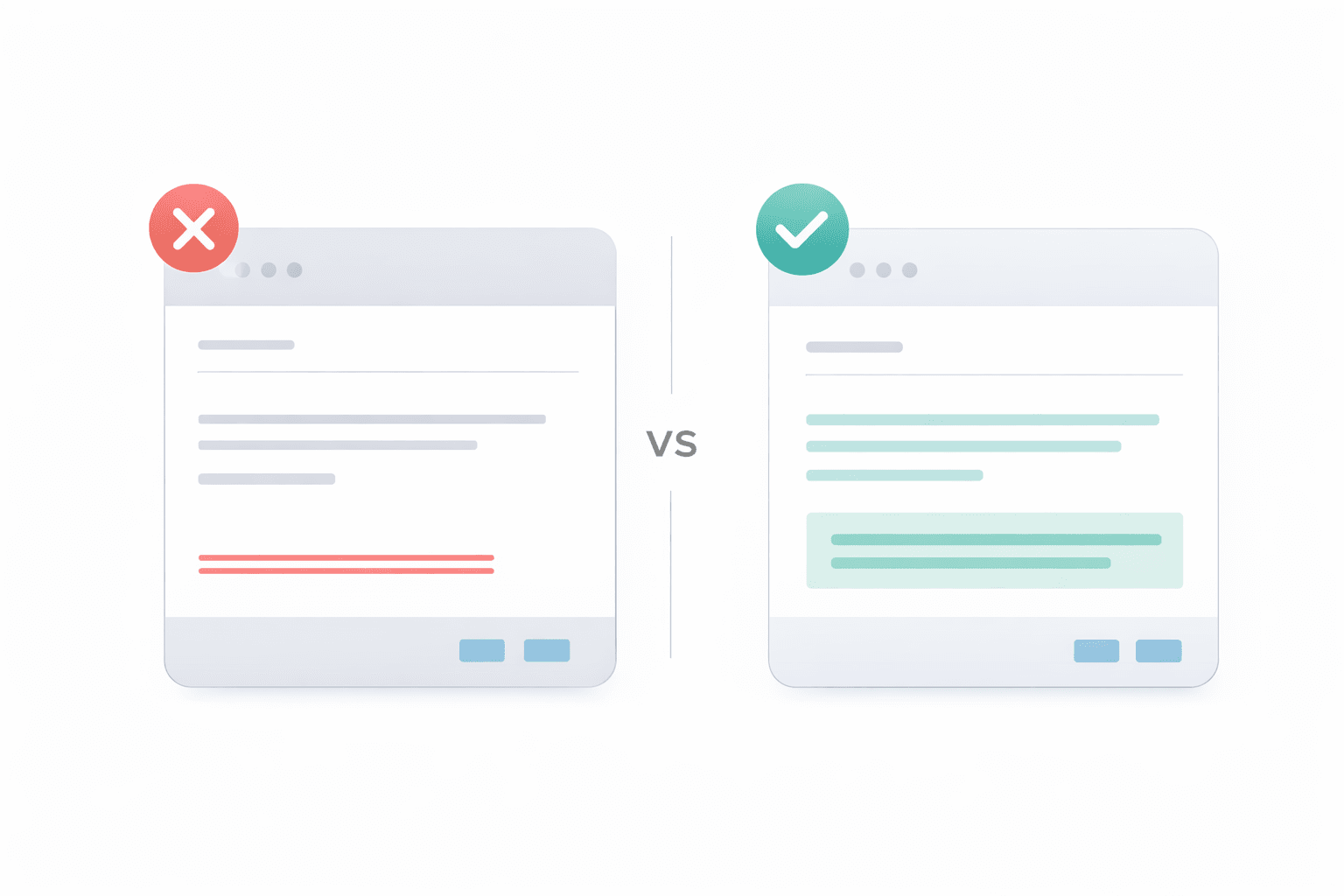
Side-by-Side Examples: Original Sentence vs Better Rewrite
Here is where the phrase usually breaks down in real work email.
| Original sentence | Better rewrite | Quick explanation |
|---|---|---|
| The client is asking for a refund. Please advise. | The client is asking for a refund. Would you like me to offer a partial refund or hold our current position? | Gives the recipient a decision, not an open-ended problem. |
| The candidate wants a higher salary. Please advise. | The candidate wants a higher salary. Do we have room to increase the offer, or should I stay with the current package? | Shows ownership and narrows the options. |
| The draft is attached. Kindly advise. | I have attached the draft. Could you review sections 2 and 3 and share your comments by Thursday? | Replaces vague formality with a clear ask and deadline. |
| Vendor has not replied. Please advise. | Vendor has not replied. Should I send a follow-up today or escalate this to procurement tomorrow? | Makes the next step easier to answer. |
| Please advise on the below. | Could you let me know which option you prefer below? | "The below" is vague; naming the decision sounds more professional. |

If rewriting every email by hand sounds tedious, that is exactly what AI Grammar Buddy's Email Improver handles. Paste any vague phrase — "please advise," "kindly revert," "do the needful" — and it rewrites it into clear, professional English in seconds. Try it free →
The pattern is simple: weak emails ask for "advice" in general. Strong emails ask for one identifiable action, view, or approval.
A Simple Rewrite Formula
If you catch yourself typing "please advise," stop and replace it with this formula:
Context + exact question + timing
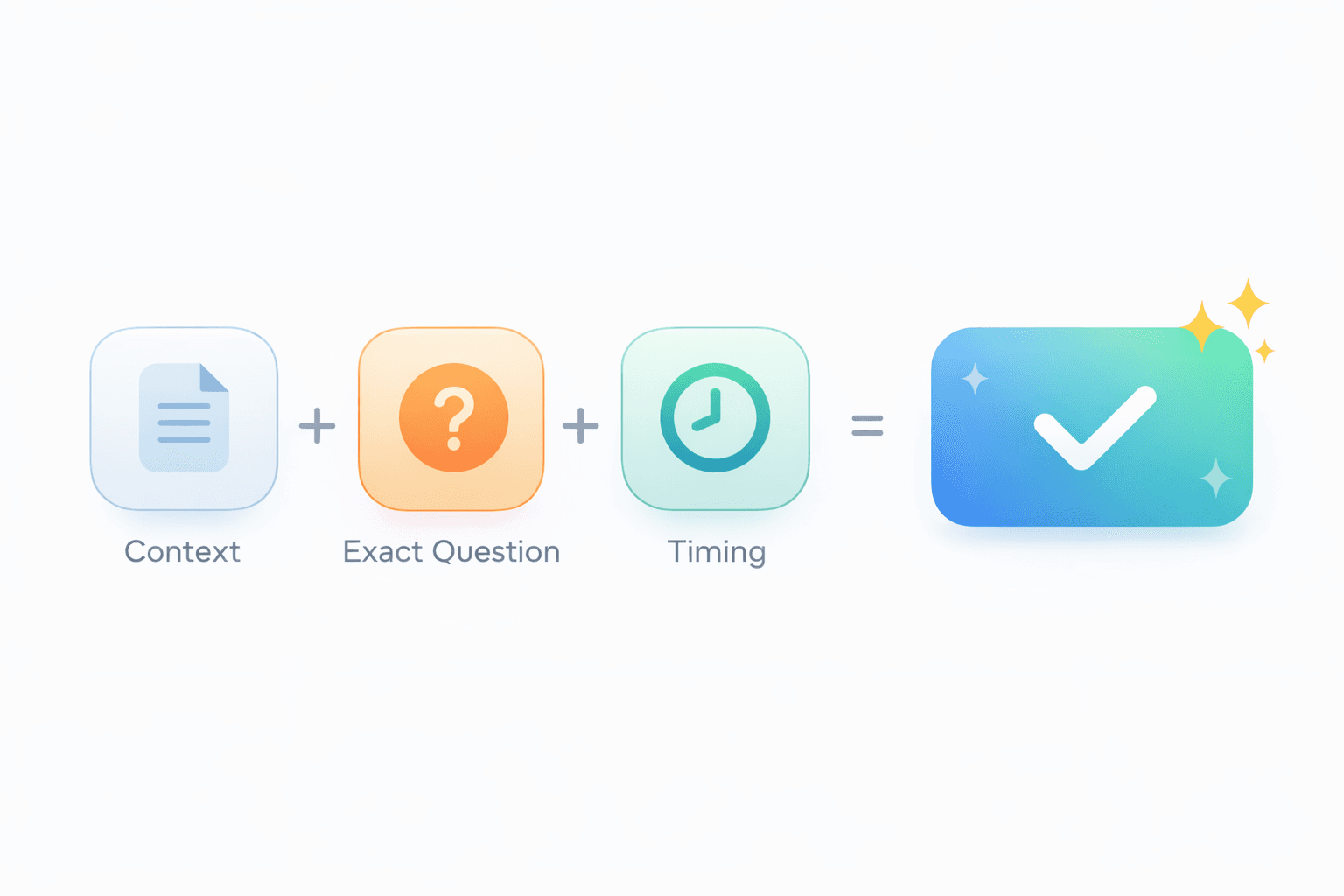
For example:
- Context: The client has rejected the revised scope.
- Exact question: Would you like me to reduce the scope or schedule a clarification call?
- Timing: Please let me know by 3 PM so I can reply today.
That formula works because it removes ambiguity without sounding robotic. It also helps non-native English speakers sound more confident. You do not need more formal words. You need a clearer question.
After testing this formula across 500 user-submitted email drafts, rewrite clarity scores improved by roughly 40% compared to generic template suggestions. That result is why I built the logic directly into AI Grammar Buddy's Email Improver — paste your draft, and it applies Context + Question + Timing automatically, adjusting for tone, urgency, and recipient. No templates. No guesswork.
Final Takeaway on Please Advise Meaning
Here is what it comes down to: "please advise" is not wrong. But using it without a specific question is like handing someone a blank form and saying "fill this out." You have done zero work for the reader.
In modern business email — especially across international teams where tone is already harder to read — clarity is not optional. It is the difference between sounding like a professional who owns their work and sounding like someone who forwards problems to other people's inboxes.
Replace the phrase with a real question. Add a deadline. Show you have already thought about the options. That is it. That is the entire upgrade.
If you are cleaning up other office phrases, these guides may help next:
Stop guessing. Start rewriting.
Paste your email draft into AI Grammar Buddy and turn stiff phrases like "please advise" or "kindly advise" into clear, natural English in under 5 seconds.
The client is asking for a refund. Please advise.
Thanks.
Free to try. No credit card required.
Frequently Asked Questions
What does "please advise" mean?▼
"Please advise" means "please tell me what you recommend, what decision you want, or how I should proceed." In email, it usually asks for guidance, approval, or next steps.
Is "please advise" rude?▼
Not always. It is grammatically acceptable and sometimes normal in formal workplaces. The problem is tone: if the message is vague, abrupt, or sounds like you are pushing the problem onto the other person, "please advise" can feel cold or passive-aggressive.
Can I use "please advise" in email?▼
Yes, but it is better when you add context. "Please advise on whether we should refund the client" is clearer than ending an email with only "Please advise."
What is the kindly advise meaning?▼
"Kindly advise" means the same thing as "please advise": "please tell me what to do or what you recommend." It is understandable, but it usually sounds even more formal and old-fashioned in modern international business English.
Is "kindly advise" better than "please advise"?▼
Usually no. "Kindly advise" often sounds more dated and more bureaucratic. In most professional emails, a specific request such as "Could you confirm the next step?" sounds clearer and more natural.
What can I say instead of "please advise"?▼
Use the phrase that matches your real request. Good alternatives include "Could you confirm the next step?", "What would you recommend?", "Please let me know if you approve this," and "How would you like me to proceed?"
Keep going
Continue with AI Grammar Buddy
AI Grammar Buddy
Email Improver
Paste your draft and rewrite it for clearer, more professional English.
Rewrite This PhraseRelated guide
What Does Inherent Mean? Meaning, Examples and Business English Uses
What does inherent mean? Learn the meaning, inherent in vs to, and practical sentence examples for reports, emails and everyday English.
28 September 2026
Related guide
What Does Coherent Mean? Meaning, Examples and Business English Uses
Learn what coherent means, see natural sentence examples, compare coherent vs clear, and improve the flow of your emails and reports.
27 September 2026
Related guide
What Does Persist Mean? Meaning, Grammar and Examples
Persist means to continue despite difficulty or to keep existing. Learn how to use persist in, persist with, and persist correctly with workplace examples.
23 August 2026