Conserve Meaning in English: Preserve vs Conserve in Emails
Conserve meaning in English: use something carefully so it is not wasted. See workplace email examples, conserve vs preserve, reserve, and save.

In workplace email, conserve is easy to confuse with preserve, reserve, and save. Conserve cash asks a team to use limited funds carefully; reserve a meeting room means book it; preserve the original file means keep it unchanged. One wrong verb can make a request sound like “do not touch this” or “book this for me.” This guide explains conserve meaning in English through everyday and business examples, so you can choose the verb that matches the action.
Pronunciation: as a verb, conserve is /kənˈsɜːv/ in UK English and /kənˈsɝːv/ in US English. As a noun, it is /ˈkɒn.sɜːv/ in UK English and /ˈkɑːn.sɝːv/ in US English. The Cambridge Dictionary entry for conserve includes audio.
Jump to sections
Use these anchors to jump straight to the section you need.
Quick Answer
Quick Summary: In workplace English, conserve means use a limited resource carefully so it is not wasted or depleted. Use conserve cash or conserve electricity, but reserve a meeting room and preserve an original file. Save is the broad everyday choice. Choose based on the action: reduce use, protect condition, set aside, or keep for later.
Conserve vs Preserve vs Reserve vs Save
These four words all relate to keeping something, but they answer different questions. Use this quick comparison before you choose a verb in an email.
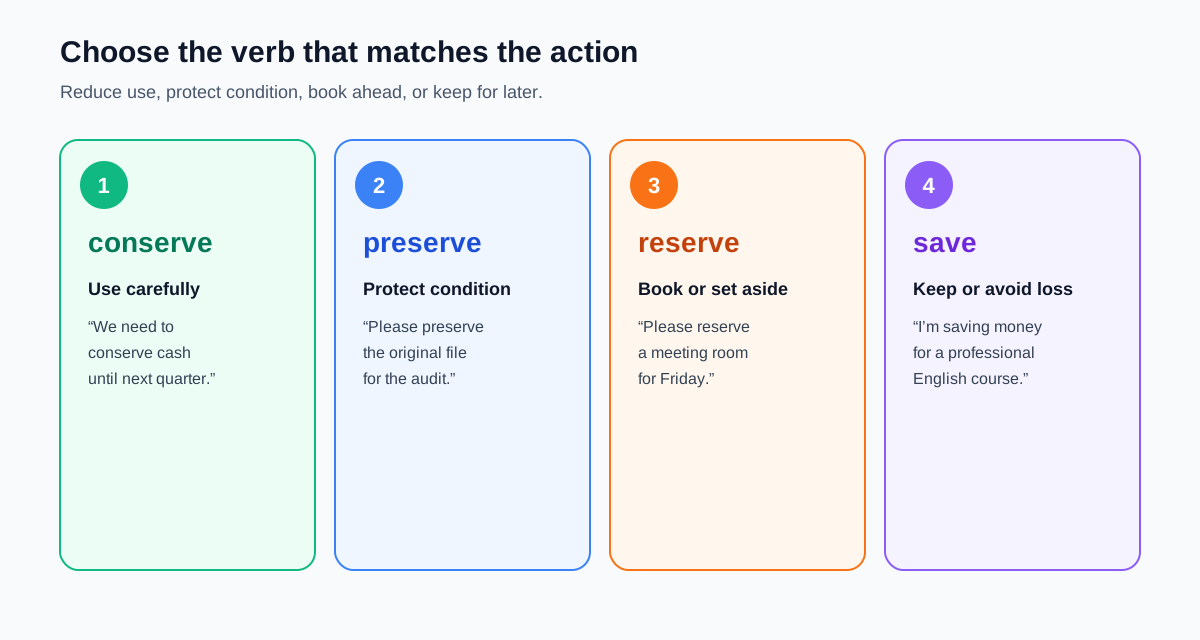
| Word | Core idea | Natural example |
|---|---|---|
| conserve | Use carefully or protect from waste or depletion | “We need to conserve fuel.” |
| preserve | Keep in its current state or protect from harm or decay | “The archive preserves old records.” |
| reserve | Set aside for future use, or book in advance | “Please reserve two seats for the client.” |
| save | Keep, avoid losing, reduce use, or rescue; the broad everyday choice | “I’m saving money for a course.” |
Reserve money by setting it aside, save it by spending less or keeping it, and conserve it by managing limited funds carefully. A tentative date meaning in meeting emails is still provisional; a reserved room is held for a purpose.
Conserve Meaning in Workplace English
The core conserve definition is “use carefully or protect from waste, loss, or damage.” The object makes the intended action clearer: conserve water means reduce unnecessary use, while conserve a habitat can mean protect and manage it for the future.
Three useful senses are:
- Use less or avoid waste: “Please conserve water while the building is under repair.”
- Protect for continued use: “The project aims to conserve the wetland.”
- Describe a scientific rule: “The model assumes that total energy is conserved.”
The scientific sense is technical; ordinary readers usually need the first two. As a transitive verb, conserve takes a direct object: “The hotel conserves water” is complete, while “The hotel conserves” needs more context.
Common Patterns: Conserve Energy, Water, Resources, Fuel, and Money
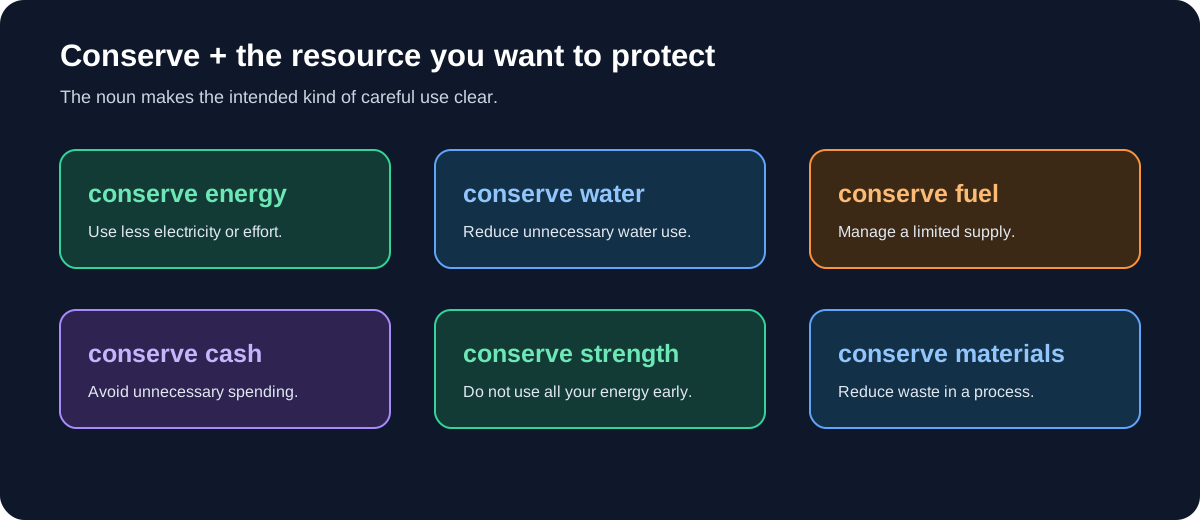
These collocations make the meaning specific:
- conserve energy — use less electricity, fuel, or effort than necessary
- conserve water — reduce unnecessary water use
- conserve resources — manage materials, money, time, or natural resources carefully
- conserve fuel — use a limited fuel supply carefully
- conserve money or conserve cash — protect limited funds from unnecessary spending
- conserve strength — avoid using all your physical or mental energy too early
Name the resource to make the action clear. Conserve the environment is broad; conserve water, conserve wildlife habitat, or conserve soil moisture is more precise.
How to Use Conserve in a Sentence
Use these short patterns:
- conserve + noun: “The factory conserves raw materials by measuring each cut precisely.”
- be + conserving + noun: “We are conserving fuel until the next delivery arrives.”
- conserved + noun: “The redesign conserved enough paper to remove one monthly order.”
In a workplace request, add the limit or reason when it matters: “Please conserve the remaining test units until the supplier confirms the next shipment.” For a sentence-level check before sending a request, see our business email grammar guide. For another easily confused workplace verb pair, see elicit meaning vs illicit.
Conserve Examples in Daily Life, Work, and Business
Everyday English examples
- “Please turn off the tap while you soap your hands so we can conserve water.”
- “I skipped the extra trip to the shop to conserve fuel.”
- “She is conserving her energy for the final presentation.”
- “The family conserved money by repairing the laptop instead of replacing it.”
- “The hikers walked slowly to conserve their strength.”
- “We are conserving electricity until the building’s backup generator is repaired.”
Workplace and business English examples
- “The finance team asked every department to conserve cash until the next quarter.”
- “The data centre upgraded its cooling system to conserve energy.”
- “Please conserve the remaining test units until the supplier confirms the next shipment.”
- “The project manager conserved the team’s time by combining two status meetings.”
- “To conserve resources, the operations team is reusing shipping cartons.”
- “The proposal explains how the new process will conserve materials without reducing quality.”
If a budget update also includes a planning estimate, compare it with our forecast meaning in business. When a change moves through teams, our guide to cascade meaning in business emails explains how to make that movement precise. If you are drafting a budget or supply note and cannot decide between conserve, save, and reserve, paste the sentence into Email Improver for a context check.
Conserve in Sustainability and Environmental English
Conservation meaning is careful use, protection, or management so something remains available or in good condition. Water conservation includes fixing leaks, improving irrigation, or reducing unnecessary use; energy conservation includes efficiency improvements and reducing demand.
Environmental writing uses conserve with forests, soil, habitats, wildlife, and biodiversity. It does not always mean “leave everything untouched”: a programme may protect, restore, limit harvesting, or support sustainable use.
Conservation and sustainability overlap: conservation focuses on protection or careful use; sustainability asks whether an activity can continue.
Conserve vs Preserve: What Is the Difference?
Conserve and preserve overlap, but they are not interchangeable in every sentence. Conserve usually emphasizes avoiding waste or reducing consumption. Preserve usually emphasizes keeping an existing condition or protecting something from damage, change, or decay.
| Word | Usual emphasis | Example |
|---|---|---|
| conserve | Use or manage carefully so a resource is not wasted or depleted; it can also mean protect it | “The city is asking residents to conserve water.” |
| preserve | Keep something in its existing condition, or protect it from damage, change, or decay | “The museum works to preserve the painting.” |
The practical distinction is use versus condition:
- Conserve energy means avoid using more energy than necessary.
- Preserve a document means protect it so it remains readable or intact.
- Conserve a forest may emphasize responsible management and long-term availability.
- Preserve a forest may emphasize protecting it from development or disturbance.
You can preserve natural resources by protecting them, or conserve a historic site through careful management. Context decides, so do not turn this difference into an absolute rule. For food, preserve is common for treating fruit so it lasts longer; conserve can also be a noun for a fruit spread.
If the choice still feels close, paste the sentence into the Grammar Checker and ask whether it describes reduced use or protected condition.
Conserve, Conserved, Conserving, and Conservation
Here is the word family in practical sentences:
- conserve — base form: “We need to conserve water.”
- conserves — third-person singular: “This system conserves energy.”
- conserved — past tense or past participle: “The redesign conserved paper.” / “The conserved funds were used later.”
- conserving — present participle or gerund: “They are conserving fuel.” / “Conserving water matters during a drought.”
- conservation — noun for the practice or process: “Water conservation starts with fixing leaks.”
Use conservation before nouns such as project, policy, and area. Conservative has other meanings, so do not assume every word beginning with conserv- has the same grammar or sense.
Common Mistakes With Conserve
1. Adding the wrong preposition
Use conserve water, not conserve to water. The verb takes its object directly.
2. Using conserve when you mean book, save, or set aside
“Please conserve a table for six” is not normal. Use reserve a table. For a personal budget, save money is usually more natural; conserve cash fits formal cash management.
A booking request that says “conserve a meeting room” can look like a translation error. Run the draft through AI Grammar Buddy before you send it.
3. Treating conserve and preserve as exact synonyms
“Preserve energy” may be understandable, but conserve energy is clearer when you mean use less. Preserve a photograph is more natural when you mean protect its condition.
4. Using a vague object or absolute claim
“The company will conserve the environment” is vague, and “conservation” does not always mean zero use. Name the resource, action, and context: “The company will conserve water in its manufacturing process.”
How AI Grammar Buddy Can Help
AI Grammar Buddy is useful here as a context check, not a dictionary replacement. Before sending a workplace message, ask whether you are reducing waste, protecting a condition, setting something aside, or keeping it for later. Then check whether the object and reason make that action obvious.
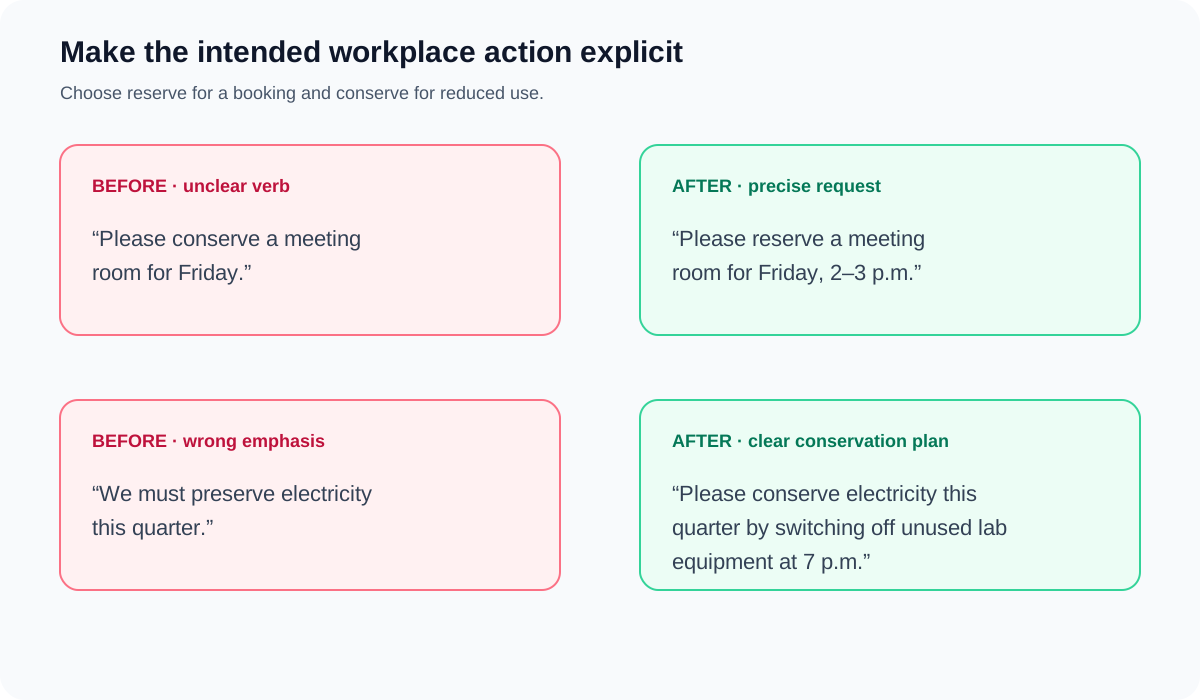
Before and after: workplace email wording
Original: “Please conserve a meeting room for Friday.”
Rewritten: “Please reserve a meeting room for Friday, 2–3 p.m.”
Original: “We must preserve electricity this quarter.”
Rewritten: “Please conserve electricity this quarter by switching off unused lab equipment at 7 p.m.”
The rewrites are clearer because reserve names a booking, while conserve names reduced consumption. Paste your own sentence into AI Grammar Buddy’s Grammar Checker when the grammar is correct but the intended action still feels unclear.
Final Takeaway
The simplest conserve definition is “use carefully or protect from waste, loss, or damage.” Use it with energy, water, resources, fuel, cash, materials, and strength. Conserve usually emphasizes careful use; preserve usually emphasizes keeping something in its existing condition. They can overlap, so let the context and the object choose the verb.
About This Article
Kin
Senior Business English Editor
Kin writes practical English usage guides for learners and professionals. For this guide, she compared dictionary senses with workplace request patterns and checked each example against the action a reader needs: reduce use, protect condition, book, or keep for later.
Last updated 22 August 2026
Frequently Asked Questions
What does conserve mean?▼
Conserve usually means to use something carefully so it is not wasted or used up, or to protect it from damage or loss. In the phrase conserve water, the focus is on using less.
What is the difference between conserve and preserve?▼
Conserve usually emphasizes careful use so something remains available. Preserve usually emphasizes keeping something in its existing condition or protecting it from damage. For example, conserve energy but preserve an original file. The meanings overlap.
What does conserve energy mean?▼
Conserve energy means to avoid using more energy than necessary, such as by switching off unused lights or choosing an efficient process. For example, a team can conserve electricity by shutting down idle equipment.
Can I say conserve cash in a business email?▼
Yes. Conserve cash is natural in formal budget or cash-management writing when the point is to use limited funds carefully. For example, a finance team may conserve cash until quarter-end. Save money is more common in everyday personal English.
Is conserve a verb or a noun?▼
It is mainly a transitive verb meaning use carefully or protect from waste. As a noun, conserve is a formal word for fruit preserved with sugar, as in a berry conserve.
How is conserve different from reserve and save?▼
Conserve means manage use carefully, reserve means set something aside or book it, and save is the broad everyday choice. You conserve fuel, reserve a room, and save money.
Keep going
Continue with AI Grammar Buddy
AI Grammar Buddy
Grammar Checker
Run a fast grammar, wording, and clarity check on your sentence.
Check My SentenceRelated guide
Elicit Meaning: Definition, Examples, and the Difference From Illicit
Choose precise verbs in workplace English with practical examples.
Related guide
Cascade Meaning in Business: Definition and Email Examples
Make business verbs more precise when information or decisions move through a team.
Related guide
Forecast Meaning in Business: Definition, Examples, and Forecast vs Budget
Use precise planning language when a business estimate is not a commitment.