What Does Tentative Mean? Dates, Meetings & Email Examples
Tentative means not final yet. See tentative date/meeting meaning, Outlook and email replies, synonyms, and common workplace mistakes.
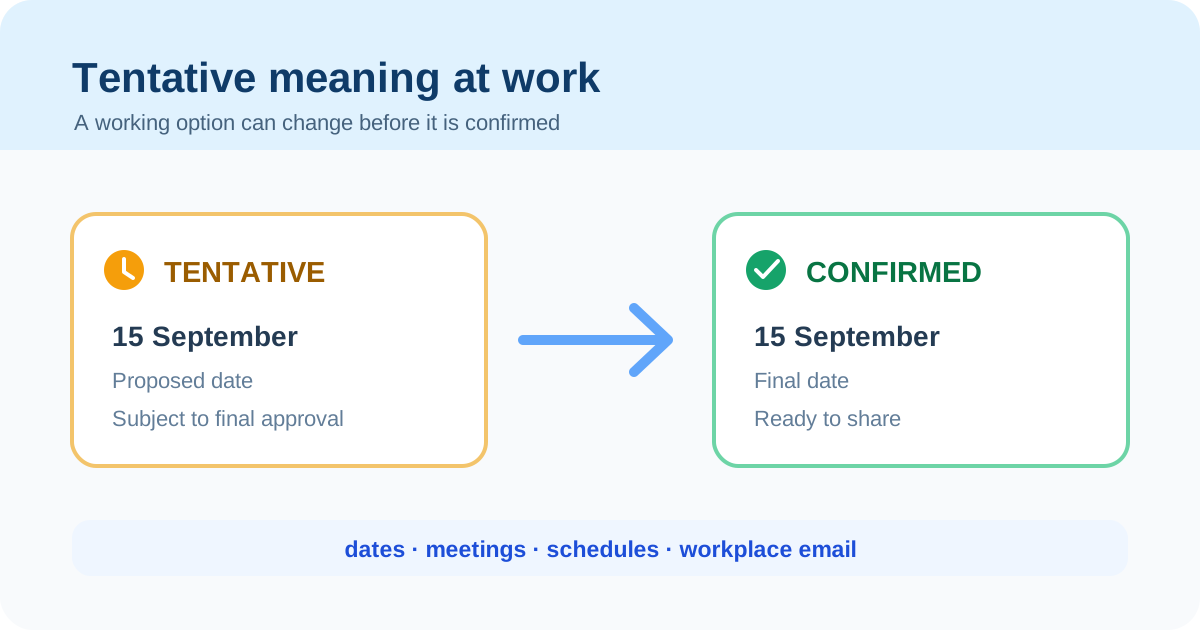
You get a calendar hold marked Tentative, or a hiring email with a tentative start date, and freeze: should you book the flight or wait? The short tentative meaning is “not final yet.” It is a working option while approval, availability, or paperwork is open. This guide covers meetings, emails, Outlook, and job offers without treating a maybe like a promise.
Jump to sections
Use these anchors to jump straight to the section you need.
Quick Answer
Does tentative mean confirmed? No. The short tentative meaning is “not final yet”: a date, meeting, schedule, offer, or plan is still subject to change. It gives people a workable option, not a promise. Tentative can also describe a person, answer, or action that sounds hesitant or uncertain.
If your reply needs to show “I can probably attend” without saying “I will attend,” paste it into Email Improver for a quick tone check.
Tentative Meaning and Grammar
Tentative is an adjective for a date, plan, booking, offer, agreement, answer, or suggestion. It has two common meanings:
- Provisional or subject to change: “Our venue is tentative until the contract is signed.”
- Hesitant or not confident: “She gave a tentative answer because she was not yet sure.”
The adverb is tentatively: “We tentatively agreed to meet next week.” It means “in a provisional or uncertain way.”
Context decides the sense: a tentative schedule may move, while a tentative suggestion may sound cautious.

Common Workplace Phrases With Tentative
| Phrase | Simple meaning | Workplace example |
|---|---|---|
| tentative date | A proposed date, not final | “Our tentative date is 15 September, pending approval.” |
| tentative meeting | A meeting that may move or be cancelled | “We have a tentative vendor meeting next week.” |
| tentative schedule | A timetable that can change | “Use the tentative schedule for planning only.” |
| tentative plan | An initial plan, not a commitment | “The tentative plan is a two-stage release.” |
| tentative booking | A reservation held before confirmation | “The hotel has a tentative booking for our team.” |
| tentative offer | An offer pending checks or approval | “The candidate received a tentative offer.” |
| tentative agreement | An agreement before final terms are signed | “The teams reached a tentative agreement on scope.” |
Tentative Date and Tentative Meeting: What Should You Do?
A tentative date is not a confirmed date. It is a working date while approval, availability, a contract, or another detail remains open. Ask what still needs to happen before treating it as final. When approval is delayed, use a clear follow-up email after no response rather than another vague “just checking.”
The tentative meeting meaning is similar: the meeting is planned in principle, but its time, room, attendees, agenda, or need may change. A calendar hold protects a slot; it is not a final commitment. For wider regional guidance, see this Singapore email etiquette guide.
When you notify colleagues, include the working date or time, the open condition, and when you will confirm. Add the time zone for a global team.
- “Our tentative launch date is 15 September.”
- “The meeting is tentatively scheduled for Tuesday afternoon.”
- “Please treat this date as tentative until we receive final approval.”
- “I’ll confirm the final timing by Friday.”
You can adapt this email pattern:
Hi team,
Our tentative launch date is 15 September, pending final approval from the client. Please treat this date as tentative until we receive confirmation. I’ll confirm the final timing by Friday. If the date creates a conflict, please let me know by Wednesday.
Thanks, [Name]
After approval, write: “The launch date is now confirmed for 15 September.” If it changes, name the new date and the action required.
What Does Tentative Mean in Outlook?
In Outlook, Tentative—sometimes labelled Tentatively Accept—means “I might attend.” It normally adds the invitation to your calendar and tells the organiser you have not given a firm yes. It differs from Accept, which confirms your planned attendance, and No response, which means you have not sent an RSVP. See Microsoft’s Outlook Calendar meeting guidance.
Do not confuse the RSVP with Show as: Tentative. The first describes your response to an invitation; the second describes how your availability appears to others. Neither means the meeting is fixed.
You can reply with:
I’ve marked the invitation as Tentative because I may have another client call. I’ll confirm my availability by Thursday.
If a tentative Outlook reply sounds too vague or too much like a commitment, Email Improver can help you keep the distinction clear.
Tentative Start Date and Tentative Job Offer
A tentative start date is an expected first day while hiring or onboarding steps remain open—for example, paperwork, references, notice-period timing, or final approval. It helps you plan, but it is not final. Ask what condition remains and when HR expects to confirm it before making an irreversible arrangement.
A tentative job offer is positive but conditional: the employer may intend to proceed while checks or approvals remain. Ask for the conditions in writing rather than treating it as final; processes vary by employer and country.
Useful wording includes:
- “The tentative start date is 1 October, pending completion of the remaining onboarding documents. I’ll confirm the final date once HR approves them.”
- “Thank you for the tentative offer. Could you confirm which steps remain before the final offer and start date are issued?”
Once the date is final, these professional interview invitation email templates can help you write a clear confirmation.
How to Respond to a Tentative Date or Meeting
Your reply should show whether you are noting the proposal or available subject to confirmation. Try:
- “Thanks, I’ve noted the tentative date. Please let me know once it is confirmed.”
- “The proposed timing works for me, subject to final confirmation.”
- “I can hold Tuesday afternoon, but I have a conflict after 4 p.m. Please let me know once the final time is set.”
- “What approval is still pending, and when do you expect to confirm the date?”
Do not reply “Confirmed” merely because you can attend a tentative meeting. Your availability may be confirmed while the meeting itself is still provisional.
If you only need to acknowledge the update without locking the slot, compare these replies with the clearer options in well noted meaning in email.
Tentative vs Confirmed and Similar Words
These words overlap, but they do not create the same expectation:
| Comparison | Practical difference | Example |
|---|---|---|
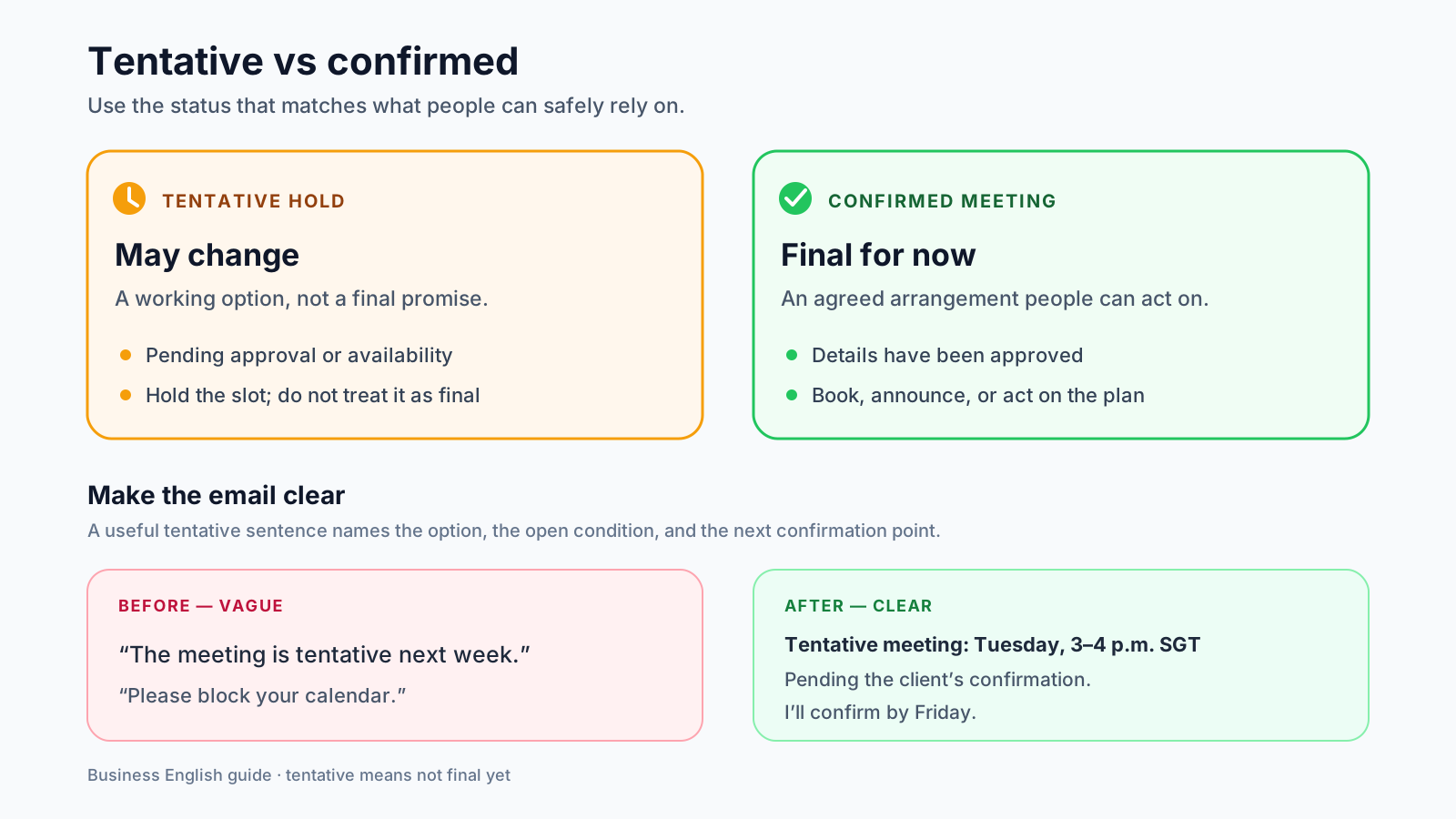
| tentative vs confirmed | Tentative can change; confirmed is final for now. | “Start date is tentative” vs “confirmed.” |
| tentative vs provisional | Both can be temporary; provisional stresses a formal condition. | “Tentative time” / “provisional approval.” |
| tentative vs preliminary | Preliminary means early-stage information, not necessarily a commitment. | “Preliminary findings” vs “tentative date.” |
| tentative vs pending | Pending means waiting for action; it says nothing about likelihood. | “Booking pending payment” vs “booking is tentative.” |
| tentative vs hesitant | Hesitant describes a person, voice, or action lacking confidence. | “She sounded hesitant” vs “schedule is tentative.” |
A useful tentative synonym depends on the noun. Use proposed, unconfirmed, provisional, or subject to change for arrangements; use hesitant, uncertain, or cautious for a person’s manner. “Temporary” is not always a substitute: a temporary arrangement may still be confirmed.
Uncertainty and timing are different problems. If a meeting needs to move earlier rather than remain open, see whether “prepone” is understood in international business English before using it with a global team.
How to Use Tentative in a Sentence
Use one of these patterns:
- tentative + noun: “We have a tentative schedule for the training.”
- Our/Their tentative + noun + is: “Our tentative start date is 1 October.”
- be + tentatively + past participle: “The workshop is tentatively scheduled for Tuesday afternoon.”
- tentatively + verb: “We have tentatively reserved the room.”
In tentative date, the adjective modifies date. In tentatively scheduled, the adverb modifies scheduled and makes the arrangement provisional. Both patterns are correct; use the second when describing a meeting or event.
Common Mistakes With Tentative in Work Emails
1. Writing “I am tentative to…”
Tentative does not normally take a person plus to. Write “I am hesitant to approve the proposal” or “I tentatively plan to attend.”
2. Treating a tentative date as confirmed
Do not book non-refundable travel or announce a launch as final. Write “The date is tentative, pending the client’s approval” and wait for confirmation.
3. Using tentative when the decision is already final
If the room, time, or deadline is decided, say “The meeting is confirmed for Tuesday at 2 p.m.” Reserve tentative for details that remain open.
4. Leaving out when confirmation will happen
“The schedule is tentative” is incomplete. Improve it to “The schedule is tentative; I’ll send the confirmed version by Friday.”
5. Mixing up the two common sentence patterns
Write “Our tentative date is 15 September” or “The meeting is tentatively scheduled for Tuesday.” Avoid “Our date is tentatively” and “The meeting is tentative scheduled.” Run the sentence through Grammar Checker if you want a final word-order check.
How AI Grammar Buddy Can Help
Tentative language needs a clarity check, not just a grammar check:
- What is decided? Name the workable date, time, or plan.
- What may change? State the open condition.
- When will you confirm? Give a day or next step.
Before
The meeting is tentative next week. Please block your calendar.
After
We have a tentative meeting next Tuesday from 3–4 p.m. SGT, pending the client’s confirmation. I’ll confirm by Friday; please hold the slot until then if you can.
The second version keeps real uncertainty but removes accidental vagueness. Paste a full draft into Email Improver when you want clear, polite, appropriately non-committal wording.
Sources and Editorial Note
This guide separates tentative as a provisional arrangement from tentative as a hesitant manner. The language points were checked against the Cambridge Dictionary entry for tentative, Merriam-Webster’s entry for tentative, and Microsoft’s Outlook Calendar meeting guidance. The workplace examples and rewrites are original editorial examples, not quotations or survey results.
Once a meeting is confirmed, use reserve for booking the room, not conserve. Our conserve, preserve, reserve, and save comparison shows the difference in short workplace sentences.
Final Takeaway
The shortest answer to tentative meaning is “not final yet.” Use it for a date, meeting, schedule, or agreement that may change, and use tentatively for a provisional action. To keep a workplace email clear, state the open condition and say when you will confirm the final details.
About This Article
Kin
Senior Business English Editor
Kin writes practical business English guidance for professionals who need clearer emails, meeting updates, and workplace decisions. For this guide, she compared dictionary definitions with official Outlook response guidance and built original examples around approvals, calendar holds, and onboarding paperwork.
Last updated 20 August 2026
Frequently Asked Questions
Does tentative mean confirmed?▼
No. Tentative means proposed or provisional and still open to change; confirmed means final for now.
Does tentative mean maybe?▼
Usually, but it is more specific than casual maybe: a workable option that still needs confirmation.
What is a tentative start date?▼
It is a proposed first day that may change while approval, paperwork, notice-period timing, or another condition remains open.
What does tentative mean in a meeting invitation?▼
The invitation is not a firm yes. In Outlook, Tentative tells the organiser you might attend and normally adds it to your calendar.
Can I say ‘tentative meeting’?▼
Yes, but “The meeting is tentatively scheduled for Tuesday” is often clearer because it shows what is provisional.
What is the opposite of tentative?▼
Usually confirmed, final, or definite; for a date or appointment, confirmed is most natural.
Is tentative formal or informal?▼
Tentative is neutral and professional. It sounds vague only when the email omits what may change or when confirmation will come.
Keep going
Continue with AI Grammar Buddy
AI Grammar Buddy
Email Improver
Paste your draft and rewrite it for clearer, more professional English.
Rewrite This PhraseRelated guide
Follow Up Email After No Response: Professional Templates
Use a specific follow-up when a tentative date or approval remains unanswered.
Related guide
Professional Interview Invitation Email Templates
Use precise dates, times, and confirmation language when arranging workplace meetings.
Related guide
“Prepone” in International Business English
Choose a globally clear phrase when a meeting needs to move earlier.