Forecast Meaning in Business: Definition, Examples, and Forecast vs Budget
Understand what forecast means in business, how leaders use it in real decisions, and how it differs from a budget or projection.

A retailer that overestimates holiday demand ties cash up in dead stock. A SaaS company that underestimates churn hires too aggressively. A manufacturer that misses a raw-material spike can blow through its margin plan in one quarter.
That is why forecast meaning in business matters. A forecast is not guesswork and it is not a promise. It is management's best current estimate of what is likely to happen next, based on actual results, recent signals, and assumptions that may still change.
TL;DR
In business, a forecast is management's best current estimate of future results based on actual performance, recent data, and assumptions that can still change.
Top alternatives:
- •A forecast is an estimate, not a commitment.
- •A budget is the plan. A forecast is the latest view of reality.
- •A useful forecast should state the metric, timeframe, and assumption.
Jump to sections
Use these anchors to jump straight to the section you need.
Quick Answer
Forecast meaning in business: a forecast is a data-based estimate of future business results such as sales, demand, costs, cash flow, or hiring needs.
What Is a Business Forecast?
A business forecast is management's rolling estimate of future revenue, demand, cash flow, or cost based on historical performance, current data, and market assumptions. Unlike a budget, it is meant to change when reality changes, so leaders can adjust inventory, staffing, spending, and timing before problems get worse.
You can use forecast as a noun or a verb:
- noun: "Our Q4 sales forecast is $2.4 million."
- verb: "We forecast lower demand in August."
A forecast is not a guarantee. It is a working estimate used to make decisions before the final results arrive.
Forecast Meaning in Business: What It Actually Means
In business, a forecast answers one practical question:
Based on what we know now, what are we likely to deliver or face next?
That estimate may cover:
- sales
- revenue
- customer demand
- operating costs
- inventory needs
- cash flow
- hiring plans
- margin pressure
That is different from a hope, a target, or a slogan from leadership. A forecast should reflect current reality, even when the answer is uncomfortable.
For example:
- If pre-orders slow down, the sales forecast should move down.
- If payroll costs rise faster than expected, the expense forecast should move up.
- If two large deals slip into next quarter, the revenue forecast should be revised, not defended.
The key idea is likelihood, not aspiration.
Why forecast matters to managers
Leaders use forecasts because they need to act before the quarter is over. A forecast helps them decide whether to buy more stock, freeze hiring, protect cash, or push a pricing change.
In real operating reviews, the forecast often drives decisions such as:
- planning stock levels
- resetting hiring priorities
- preparing for slow or busy months
- protecting cash runway
- adjusting marketing spend
- revising production schedules
- explaining likely outcomes to finance, executives, or investors
A good forecast gives management time. A bad forecast steals it.
Forecast vs Budget vs Projection
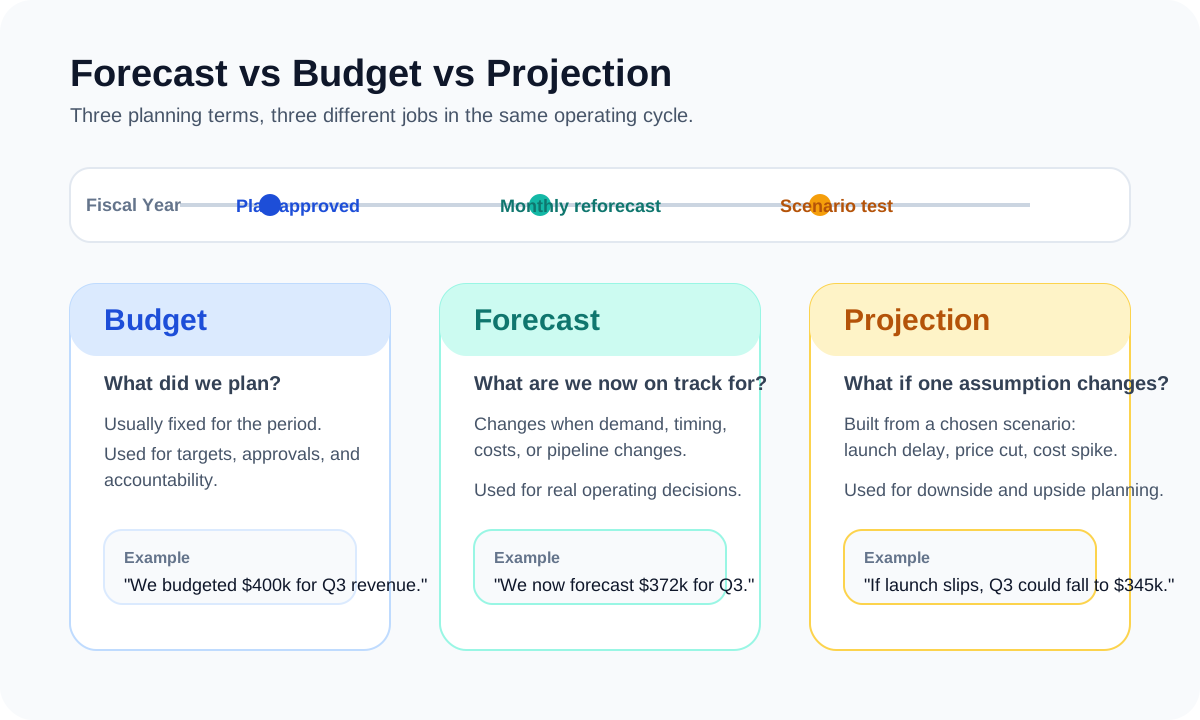
This is where many teams get sloppy. They use forecast, budget, and projection as if they were interchangeable, even though each word does a different job.
| Term | What it means | Question it answers | How teams usually use it |
|---|---|---|---|
| Forecast | Best current estimate based on actuals and assumptions | "What are we now on track to deliver?" | Monthly reviews, re-forecasts, operating decisions |
| Budget | Approved plan or target for a fixed period | "What did we plan to spend or achieve?" | Annual planning, target-setting, accountability |
| Projection | Scenario-based estimate built on a chosen assumption | "What happens if this assumption changes?" | Best-case, base-case, and downside planning |
Here is the simplest way to hear the difference in a meeting:
- Budget: "We planned $400,000 in Q3 revenue."
- Forecast: "We are now on track for $372,000."
- Projection: "If the September launch slips by four weeks, Q3 revenue could fall to $345,000."
That difference matters because each word signals a different level of certainty and accountability. Put simply, budgets answer what should happen, while forecasts answer what will likely happen. If you say forecast when you really mean budget, you can make a miss sound like a plan. If you say projection when you really mean forecast, you can make a scenario sound more certain than it is.
In cross-functional reviews, misusing these terms makes people question your judgment fast. The real risk is not only sounding imprecise. It is making an estimate sound like a commitment. That tone mistake is what creates misunderstanding between finance, sales, and leadership.
Where forecast sits in the decision cycle
Forecasting is not separate from management. It sits inside the operating cycle:
- Teams compare actual results against plan.
- They update assumptions based on new evidence.
- They revise the forecast.
- Management changes a decision.
That is why strong finance and operations teams often prefer a rolling forecast. Instead of treating the annual budget as sacred, they keep updating the next few months as new information arrives.
Examples
The best way to understand forecast meaning in business is to see how companies use it when money, inventory, or hiring is at stake.
Example 1: Retail demand forecast
An ecommerce team starts October with a holiday sales forecast of 18,000 units for one bestselling product. By mid-November, pre-orders are softer than expected and paid traffic is converting below plan. The team revises the forecast to 13,200 units.
That change matters because it affects:
- purchase orders
- warehouse space
- discount timing
- year-end cash tied up in stock
The forecast did not "fail." It did its job by forcing a better decision before the excess inventory arrived.
Example 2: SaaS revenue forecast
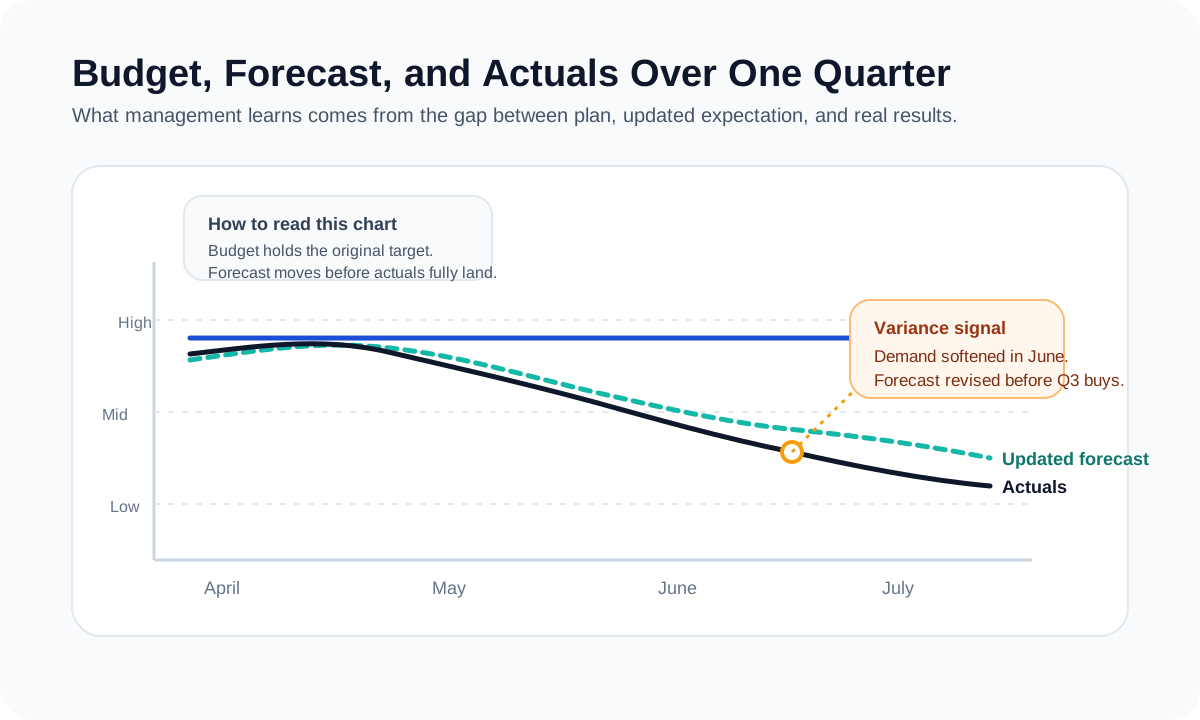
A SaaS company enters Q2 with a budget that assumes $1.2 million in new bookings. In May, two enterprise deals slip into July. The revenue forecast drops to $980,000.
Management now has to decide whether to:
- slow hiring
- lower discretionary spend
- increase outbound activity
- revise commission expectations
This is exactly why teams forecast separately from budget. The budget still shows the original goal. The forecast shows the latest likely outcome.
Example 3: Cash flow forecast
A services business may look profitable on paper and still face a cash problem. Revenue may be booked in June, but customer payment may not arrive until August. A cash flow forecast shows whether payroll, supplier bills, and debt obligations are still safe in the meantime.
That is why finance leaders often care about cash forecasts even more than revenue forecasts. Cash is what keeps operations moving.
Example 4: How forecast language changes the message
These two updates do not sound the same:
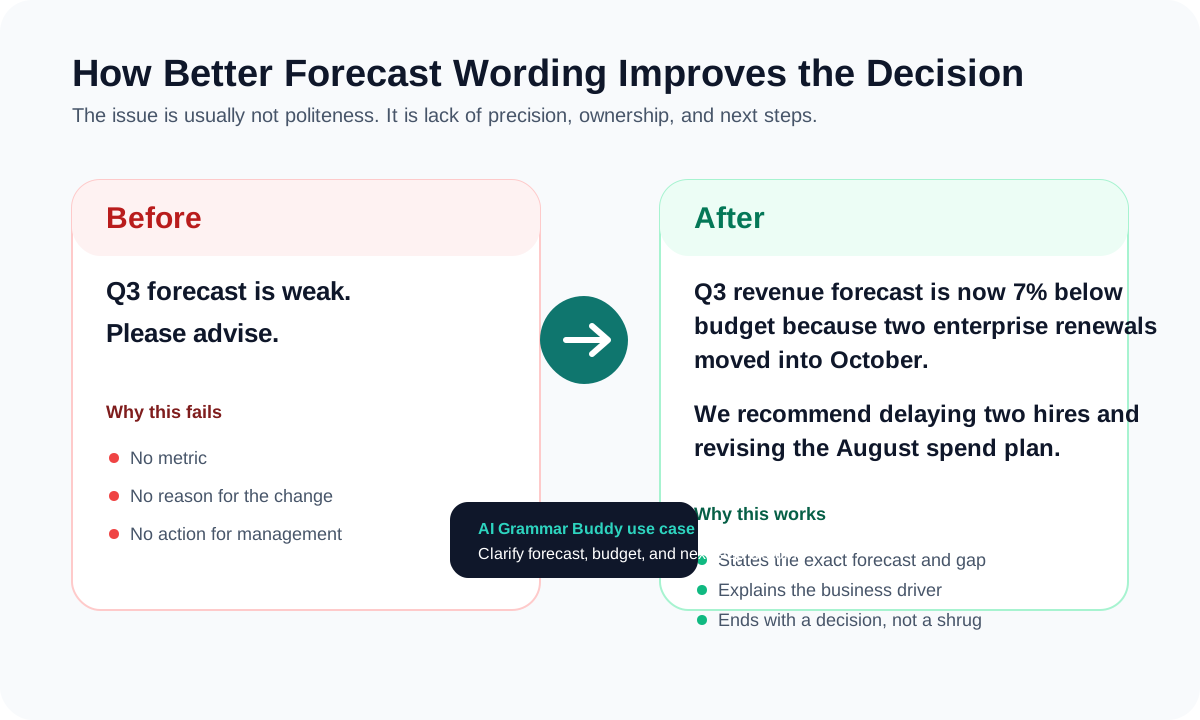
Weak: "Q3 forecast is weak. Please advise."
Stronger: "Q3 revenue forecast is now 7% below budget because two enterprise renewals moved into October. We recommend delaying two hires and revising the August paid media plan."
The second version is better because it states:
- which forecast changed
- how large the gap is
- why it changed
- what decision follows from it
If your team's forecast emails often sound vague, it becomes easier for senior stakeholders to misread the situation. Before you send an update, review our business email grammar guide to make sure the decision, owner, and timing are explicit.
Example 5: Forecast in a meeting sentence
You will often hear managers say:
- "This is our latest forecast, not our original budget."
- "The current forecast assumes flat demand in August."
- "If freight costs rise again, we need a new projection."
Those are not vocabulary details. They tell the room how firm the number is and what kind of decision should follow.
Common Mistakes
1. Treating a forecast like a commitment
A forecast is an estimate. It should move when reality moves.
Bad thinking: "We told the board 12% growth, so we must keep forecasting 12% growth."
Better thinking: "The previous forecast was 12%, but new demand data suggests 7% is more realistic."
2. Confusing forecast, budget, and target
A budget can stay fixed while the forecast changes. A target can be ambitious while the forecast becomes conservative. Mixing those ideas creates bad conversations and worse decisions.
3. Presenting one number without assumptions
Forecasts are more credible when they name the driver behind the number:
- pipeline conversion
- demand trend
- material cost
- pricing change
- hiring delay
Without that context, a forecast sounds arbitrary.
4. Failing to update the forecast after new information
Some teams build a forecast once and then defend it emotionally. That defeats the point. A forecast should be revised when actuals, timing, costs, or market conditions change.
5. Using vague language in management updates
Compare these:
- "The forecast looks better now."
- "The updated demand forecast improved because June repeat orders came in 11% above plan."
The second version gives decision-makers something to work with. Strong numbers still lose force when the message around them sounds casual. If you want forecast updates to carry more executive weight, read how to sound more senior in emails.
How AI Grammar Buddy Can Help
The hardest part of forecast communication is often not the model. It is the tone around the model.
Managers frequently make one dangerous wording mistake: they present a forecast as if it were a promise.
Compare these two lines:
- Commitment tone: "We will reach $300k this quarter."
- Forecast tone: "We forecast $300k this quarter based on the current pipeline and June close rate."
To a director, CFO, or board member, those sentences do not mean the same thing. The first sounds like a commitment. The second sounds like a professional estimate grounded in assumptions.
That is where AI Grammar Buddy is useful. If you are drafting a forecast email, board note, or cross-functional update and you are not sure whether the tone sounds too soft, too vague, or too absolute, use the Email Improver. It can help you turn ambiguous business wording into language that sounds more precise, more measured, and more appropriate for decision-making.
If your broader goal is stronger written communication, the next two helpful reads are clear writing gets you promoted and professional email templates.
When a forecast recommends lower spending or slower use of supplies, see our guide to conserve meaning in workplace English for the precise verb choice.
Final Takeaway
The forecast meaning in business is simple once you put it in a management context: a forecast is the best current estimate of what is likely to happen next.
The important part is what that estimate lets you do.
- spot problems earlier
- adjust inventory, hiring, or spending
- separate reality from plan
- communicate risk without overstating certainty
If you remember only one distinction, make it this:
- budget = the plan
- forecast = the latest realistic view
- projection = what happens under a chosen scenario
That is the language leaders use when they need to decide, not just describe.
About This Article
Kin
Senior Business English Editor
Kin reviews the business English used in planning decks, management updates, and cross-functional forecast discussions. She focuses on helping non-native professionals sound precise when they explain assumptions, risks, and decisions.
Last updated 6 July 2026
Frequently Asked Questions
What does forecast mean in business?▼
In business, a forecast means management's best current estimate of future results based on actual performance, recent data, and reasonable assumptions.
Is a forecast the same as a budget?▼
No. A forecast shows what is likely to happen. A budget shows what a business plans or targets for a period.
What is a rolling forecast?▼
A rolling forecast is a forecast that is updated regularly, such as every month or quarter, so the planning window keeps moving forward instead of stopping at year-end.
Is a forecast a promise?▼
No. A forecast is not a promise. It is an estimate that should change when demand, pipeline, costs, or other assumptions change.
When should a business update its forecast?▼
A business should update its forecast when actual results move away from plan, when a major assumption changes, or when management needs a more realistic view for a decision.
What is a sales forecast?▼
A sales forecast is an estimate of future sales volume or revenue for a specific period, usually based on pipeline, seasonality, past performance, and recent demand signals.
Keep going
Continue with AI Grammar Buddy
AI Grammar Buddy
Email Improver
Paste your draft and rewrite it for clearer, more professional English.
Rewrite This PhraseRelated guide
Alleviate Meaning: Grammar, Synonyms and Examples
What does alleviate mean? Learn its pronunciation, grammar, synonyms and common mistakes, with clear sentence examples for everyday and workplace writing.
1 October 2026
Related guide
What Does Inherent Mean? Meaning, Examples and Business English Uses
What does inherent mean? Learn the meaning, inherent in vs to, and practical sentence examples for reports, emails and everyday English.
28 September 2026
Related guide
What Does Coherent Mean? Meaning, Examples and Business English Uses
Learn what coherent means, see natural sentence examples, compare coherent vs clear, and improve the flow of your emails and reports.
27 September 2026