How to Become a Proofreader With No Experience (2026)
No degree or clients yet? Learn skills, markup, a 3–5 sample portfolio, free tools, and realistic job steps—plus what proofreading courses actually require.
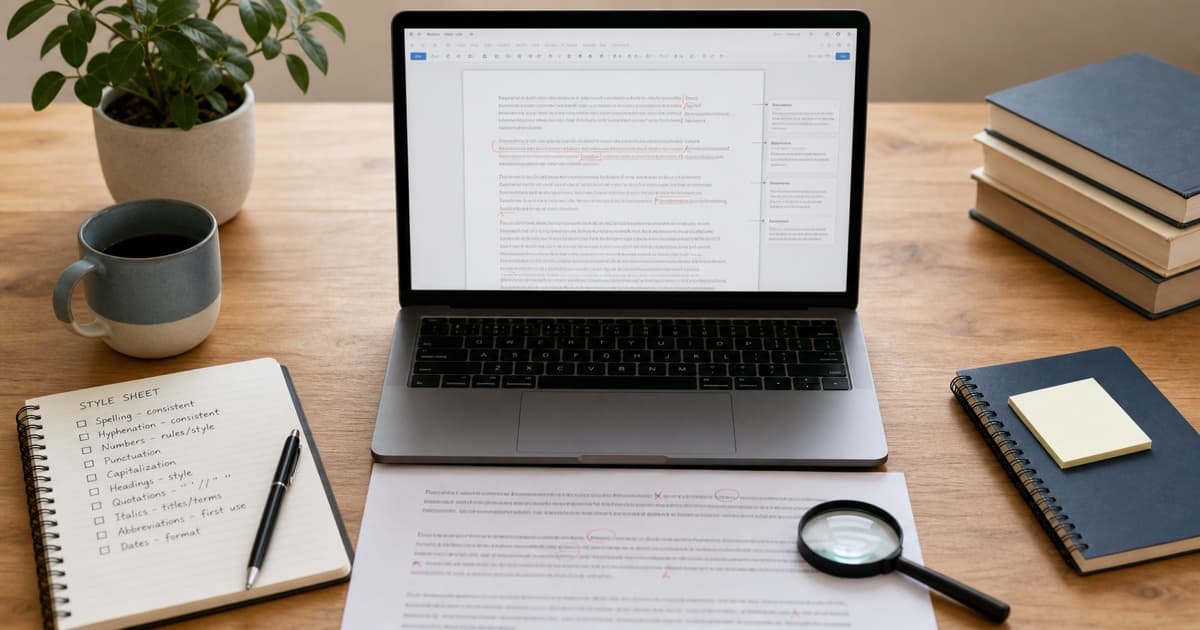
Clients rarely hire a résumé. They hire proof that you can catch surface errors without rewriting the author’s voice. If you are learning how to become a proofreader with no experience, you can start by building markup habits, dependable judgement, and three to five honest before-and-after samples.
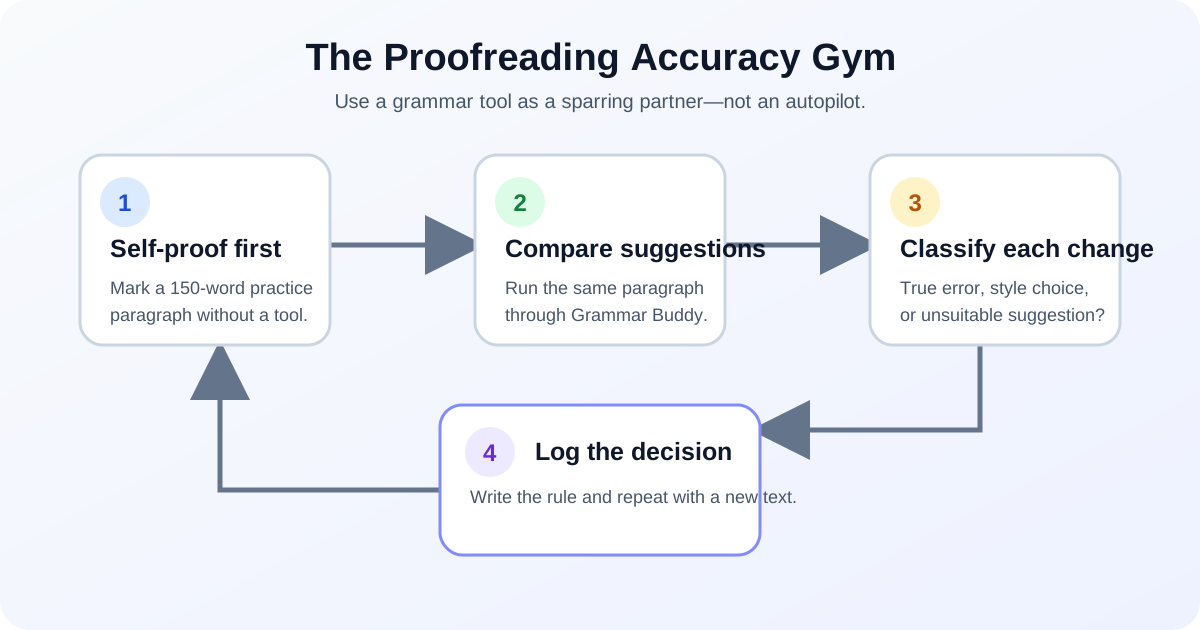
This guide covers free practice, course decisions, and honest applications. Use a grammar checker as a sparring partner, not an autopilot: compare its suggestions with your own pass, then keep only true errors.
Jump to sections
Use these anchors to jump straight to the section you need.
Quick Answer
You can become a proofreader with no experience by proving accuracy through practice samples, not by waiting for a job title. Learn proofreading limits, train grammar and consistency, mark up files digitally, build three to five before-and-after portfolio pieces, then apply for small, clearly scoped jobs.
What Does a Proofreader Do?
Proofreading is normally the final quality check before a document is published, submitted, or sent. A proofreader looks for mistakes that remain after the writing and editing stages:
- spelling, punctuation, and grammar errors
- duplicated, missing, or incorrect words
- inconsistent capitalisation, hyphenation, numbers, and abbreviations
- incorrect headings, lists, spacing, fonts, or page elements
- obvious cross-reference or formatting problems
- departures from a client’s style sheet or chosen English dialect
Proofreading and editing are not interchangeable.
| Service | Main question | Typical changes |
|---|---|---|
| Developmental editing | Does the whole piece work? | Structure, argument, order, missing content |
| Copyediting | Is each sentence clear, correct, and suitable? | Grammar, wording, flow, tone, consistency |
| Proofreading | Is the near-final version clean and consistent? | Remaining errors, typos, layout, style-sheet checks |
Some clients use “proofreading” to describe heavier editing. Ask for a sample and define the service before quoting. If sentences need substantial rewriting, recommend editing rather than quietly expanding the scope.
Do You Need Experience or a Degree?
There is no universal licence for proofreaders. Specialist roles may ask for a degree or subject knowledge, while many freelance clients care more about a relevant sample, test, and understanding of the brief.
You may already have transferable experience. Teachers check student work, marketers review web copy, and administrators prepare reports. Do not present those tasks as paid proofreading if they were not. Describe the honest skill instead: “Reviewed customer-facing documents for grammar and consistency.”
A rigorous proofreading certificate can strengthen a profile. It shows training, not a licence or promise of employment.
Essential Skills Every Proofreader Needs
The skills needed to become a proofreader extend beyond spotting a misspelled word.
Language knowledge. Build confident grammar, punctuation, spelling, and usage. Use our step-by-step grammar checking process, practise dialect consistency, and log repeated errors.
Attention and restraint. A proofreader must notice tiny inconsistencies and resist changing correct text simply because another version sounds nicer.
Style-guide research. Find reliable answers and apply them consistently. Common references include Chicago for books, AP for journalism and marketing, and APA for many academic documents.
Digital markup. Learn Track Changes and comments in Word, Suggesting mode in Google Docs, PDF annotation, and basic file/version management.
Client communication. Confirm the dialect, style guide, scope, deadline, file format, and treatment of ambiguous issues.
Time management and confidentiality. Estimate from a sample, leave time for a second pass, secure client files, and keep confidential material out of online tools unless permitted.
How to Become a Proofreader With No Experience
1. Improve your grammar and punctuation
Take a diagnostic test, then study by error category: sentence boundaries, agreement, verb forms, punctuation, and confused words.
After your own pass, paste the same practice paragraph into the free Grammar Checker and log every difference as a real error, style preference, or unsuitable fix. Verify the rule yourself before accepting a change.
2. Learn markup and style guides
Recognise traditional proofreading marks, but prioritise the digital methods used in your target work. For each practice file, create a one-page style sheet covering dialect, dictionary, headings, numbers, punctuation choices, and unusual names.
3. Practise with different document types
Start with 500–1,000 words at a time. Proofread a business email, blog post, cover letter, and short story because each exposes different problems. Our business email grammar examples make a useful workplace exercise.
Make separate passes:
- spelling and missing words
- grammar and punctuation
- numbers, capitals, and hyphenation
- headings, spacing, and layout
- final clean read
Record false positives and missed errors. Accuracy includes leaving correct text alone.
4. Build a small portfolio
Create three to five before-and-after samples. Include the brief, style choice, marked-up file, clean file, and notes on two decisions. Use your own text, permitted material, or labelled practice copy—not confidential work.
5. Consider structured training
Self-study works if you can plan a syllabus, find exercises, and evaluate your work. Structured training adds sequenced lessons, assessment, and feedback. Compare the current curriculum and terms rather than choosing by testimonials.
6. Define your services and set a starting rate
Choose one or two document types that you understand and state what your service includes: proofreading only, document length, turnaround, file format, and revision limits. Quote from a representative sample. You can charge by word, page, hour, or project, but calculate the effective rate after fees, revisions, tax, and admin.
7. Find beginner proofreading work
Begin with a newsletter, short article, CV, business document, or website page. Offer a modest sample instead of an entire free project. After delivery, request permission to quote feedback or show an anonymised extract.
Examples: Build a Portfolio Without Inventing Experience
A portfolio sample should demonstrate a process, not just display a clean paragraph.
| Sample | Brief | What to show |
|---|---|---|
| 700-word blog post | US English, AP-inspired house style | Tracked corrections, heading consistency, clean file |
| Two-page business document | UK English, formal tone | Numbers, capitals, punctuation, query comments |
| 1,000-word short story | Preserve voice and dialogue style | Minimal intervention, style sheet, final pass |
For example, a US-English proofread might change “The team have reviewed the three proposal’s, however no decision were made” to “The team has reviewed the three proposals; however, no decision was made.”
The agreement, plural, and sentence-boundary fixes are required. Replacing “reviewed” with “assessed” is a preference, so it stays out. Decision notes show clients that you can correct without over-editing.
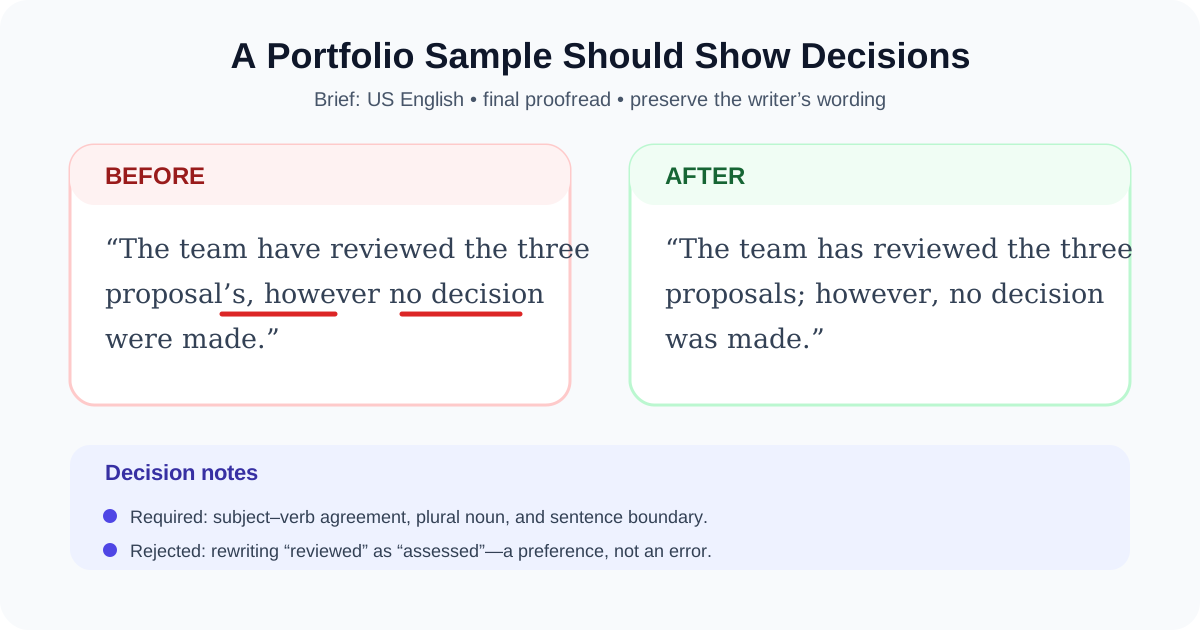
Try the same process on a short email and write two decision notes for your portfolio.
Is an Online Proofreading Course Worth It?
No course is mandatory. An online proofreading course can be worth the cost when you do not know what to study, cannot assess your accuracy, or want sequenced lessons, tutor feedback, and a final assignment. Self-study may be better if you already have reliable references and can build your own feedback loop.
Before buying an online proofreading course, ask:
- Does it clearly distinguish proofreading from copyediting?
- Are exercises based on realistic files and different document types?
- Will a qualified person review the final work?
- Does access expire, and are reassessment fees explained?
- Are work opportunities conditional on another course, a grade, or location?
The best choice is the route that gets you to reliable work—not the route with the boldest promise.
Knowadays Becoming A Proofreader Course
This is an editorial overview based on the official Becoming A Proofreader page and course-bundle terms. We have not taken or tested the course, so check the official pages for current pricing and terms.
Knowadays describes Becoming A Proofreader as an entry-level course requiring no previous qualifications or experience. Its official page lists 13 modules, 78 lessons, practice exercises, self-paced study, lifetime access, a digital CPD-accredited certificate after successful completion, and one-to-one tutor support.
The curriculum covers language, consistency, style guidelines, US and UK English, creative, business, and academic writing, plus digital tools. Knowadays says it does not teach traditional proofreading symbols.
The final assignment consists of two proofreading tests, with tutor feedback and a feedback call. A high level of written English is required to pass.
Potential advantages: a structured route, varied exercises, digital-tool training, tutor support, final-assignment feedback, and a completion certificate.
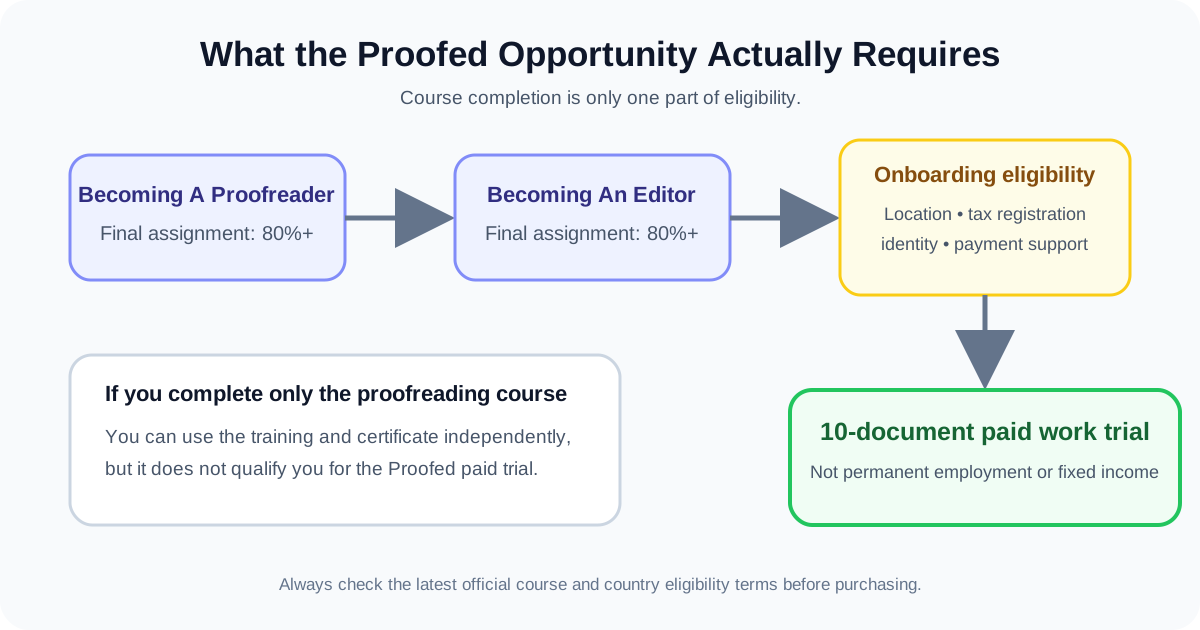
Important limitations: it is paid, excludes traditional proof marks, and still requires practice. A certificate does not guarantee clients or income, and this course alone does not qualify you for the Proofed paid trial.
The official bundle page currently lists the Proofreader & Editor Course Bundle as two courses sold together at a discounted bundle price. A discount code may be required for some offers; price, discount, and availability can change, so treat the official page as the source of truth rather than relying on a fixed figure in an article.
Knowadays Work Opportunity: Important Conditions
The work opportunity is narrower than “finish one course and get a job.” According to the official Proofreader & Editor Course Bundle page and work-opportunity page:
- You must complete both Becoming A Proofreader and Becoming An Editor.
- You must score at least 80% on each course’s final assignment.
- Eligible graduates are invited to a 10-document paid work trial with Proofed.
- The trial is not a permanent job, guaranteed workload, or fixed income.
Knowadays says successful completion of the trial can lead to a freelance editor contract with Proofed; onboarding and ongoing platform terms still apply.
Eligibility and terms apply. Knowadays says the offer depends on country of residence, tax-treaty requirements, and compatible payment arrangements. Check current onboarding details before purchasing.
You can still take the course or build an independent business if you are not eligible for Proofed.
How Long Does It Take to Become a Proofreader?
There is no fixed course-to-career timeline. A beginner with strong written English may build a basic portfolio after several weeks; another person may need months. Treat readiness as a quality check: can you follow a brief, explain decisions, deliver clean files, and repeat the result on unfamiliar text?
A practical 30-day starter plan
- Days 1–7: Review grammar, punctuation, spelling, and sentence boundaries; start an error log.
- Days 8–14: Practise Track Changes or Suggesting mode and write a one-page style sheet.
- Days 15–21: Proofread a business email, blog post, and short piece of fiction; save both versions.
- Days 22–30: Finish three samples, define one service, ask for feedback, and send tailored applications.
If your accuracy is inconsistent after 30 days, extend the practice cycle before accepting client work.
How Much Can Beginner Proofreaders Earn?
There is no universal beginner rate. Freelancers charge by word, page, hour, or project, and earnings depend on accuracy, speed, niche, location, client type, and unpaid administration.
Published salary guides and professional association surveys can provide context, but they measure different markets and experience levels. They are not a beginner promise or a freelance quote. Calculate your effective rate after revisions, fees, taxes, and admin, then adjust it as your speed and niche knowledge improve.
Where to Find Freelance Proofreading Jobs
Use several channels instead of waiting on one crowded platform:
- Your network: Ask teachers, writers, small businesses, charities, or colleagues about short, defined projects.
- Freelance marketplaces: Check fees, payment protection, eligibility, and client history before applying.
- Job boards: Set alerts for “proofreader,” “editorial assistant,” “copy editor,” and “content quality.” Read the scope carefully because titles overlap.
- Editorial agencies: Check tests, specialisms, location restrictions, and contractor terms.
- Direct outreach: Contact organisations in a niche you understand with one relevant sample and a specific offer. Use these professional email templates for pitching to keep the message concise.
- Professional communities: Contribute helpfully before asking for referrals.
Tailor every application. State your document type, dialect, software, turnaround, and one relevant example. Do not claim specialist expertise without the necessary knowledge.
Free Tools for Practising Proofreading
You can build a useful practice setup before paying for specialist software.
- Use Word Track Changes or Google Docs Suggesting mode for visible corrections and comments.
- Use AI Grammar Buddy only after your manual pass; classify each suggestion and never upload confidential text without permission.
- Keep a trusted dictionary, the client’s style guide, and a simple error log or spreadsheet.
Use this workflow: self-proof → tool comparison → style-sheet note. Change the view, read aloud, and proof numbers separately.
Common Mistakes New Proofreaders Make
The fastest way to damage trust is to accept work before defining it.
- Rewriting instead of proofreading: Query larger issues or recommend editing.
- Relying on software: Use tools for a second pass, then reject unsuitable suggestions.
- Treating preferences as rules: Follow the style guide and preserve the writer’s voice.
- Doing one rushed pass: Separate language, consistency, and layout checks.
- Sharing client text: Get permission before using cloud or AI tools.
- Promising perfect work: Use quality control instead of an impossible guarantee.
How AI Grammar Buddy Can Help
Check a practice paragraph free, but correct it yourself first. Classify each suggestion as an error, preference, or unsuitable change. That comparison trains the restraint clients pay for.
If a tool proposes a full rewrite, it is not automatically part of a proofreading brief. Never use AI Grammar Buddy or any third-party tool with confidential client content unless the client has approved that workflow.
Final Checklist Before You Apply
Before applying, confirm that you can explain your proofreading boundary, follow a dialect and style guide, deliver marked-up and clean files, show three to five permission-safe samples, quote a clear scope, run multiple quality-control passes, protect client files, and describe your experience honestly.
Final Takeaway
Learning how to become a proofreader with no formal experience means creating trustworthy evidence. Master the brief, practise on varied documents, and build a portfolio that shows corrections and restraint.
A structured course can organise the path, but it is optional. Judge readiness by your accuracy, and treat certificates and partner trials as opportunities—not guaranteed employment or income.
Proofreading is one way to turn strong English into a service. If you discover that you prefer explaining language choices to correcting final copy, compare the separate path of teaching English online after strengthening your writing.
About This Article
Kin
Editorial Lead, AI Grammar Buddy
Kin reviews practical English examples for grammar, clarity, and tone. Her editorial process separates required corrections from optional rewrites so readers can understand when a suggestion fixes an error—and when it changes a writer’s voice.
Last updated 29 July 2026
Frequently Asked Questions
Can I become a proofreader without experience?▼
Yes. You can create relevant experience through structured practice, volunteer projects, and portfolio samples before you have paid clients. You still need a strong command of written English, careful attention to detail, and evidence that you can follow a brief and style guide.
Do proofreaders need a degree?▼
Not for every freelance proofreading job. Some employers and specialist fields may require a degree or subject knowledge, but many clients judge freelancers by their test result, portfolio, accuracy, and reliability.
Is a proofreading certificate necessary?▼
No. Proofreading certification can show that you completed structured training, but it is not a universal licence and does not guarantee work. Compare the syllabus, assessment, tutor feedback, and relevance to your target document type.
How long does it take to become a proofreader?▼
There is no fixed timeline. A beginner with strong English might build a basic portfolio after several weeks of focused study and practice, while another person may need several months. Readiness should depend on accuracy and consistency, not a calendar date.
Is Knowadays suitable for beginners?▼
Knowadays describes Becoming A Proofreader as an entry-level course that requires no previous qualifications or experience. A high level of written English is still needed for the final assignment. The course may suit beginners who want a structured syllabus and tutor support, but it is a paid option and is not required to start practising.
Where can beginners find proofreading jobs with no experience?▼
Start with small, clearly scoped projects through your existing network, freelance marketplaces, job boards, editorial agencies, or direct outreach. Check each platform’s fees and eligibility, and use relevant before-and-after samples instead of claiming experience you do not have.
How much do beginner proofreaders earn?▼
There is no universal beginner rate. Pay varies by document type, niche, location, speed, and whether you charge by word, page, hour, or project. Published employee averages and professional association surveys are useful context, but they should not be treated as a guaranteed starting income.
What is the difference between proofreading and editing?▼
Proofreading is usually the final check for remaining errors and formatting inconsistencies. Copyediting happens earlier and can change grammar, wording, flow, tone, and consistency. Developmental editing deals with larger issues such as structure, argument, and missing content.
Keep going
Continue with AI Grammar Buddy
AI Grammar Buddy
Grammar Checker
Run a fast grammar, wording, and clarity check on your sentence.
Check My SentenceRelated guide
How to Check Grammar Mistakes in 8 Steps
Use a repeatable process to find grammar errors and review your corrections.
July 2026
Related guide
Business Email Grammar Checker: 10 Rules + Examples
Practise proofreading realistic workplace writing.
June 2026
Related guide
How to Write an Essay in English
Learn the structure and language patterns common in academic documents.
July 2026