How to Reply to “Kindly Do the Needful”: Email Examples
Got “kindly do the needful”? Copy clear email replies: confirm the task, ask one question if unclear, or set a timeline—without repeating the vague phrase.
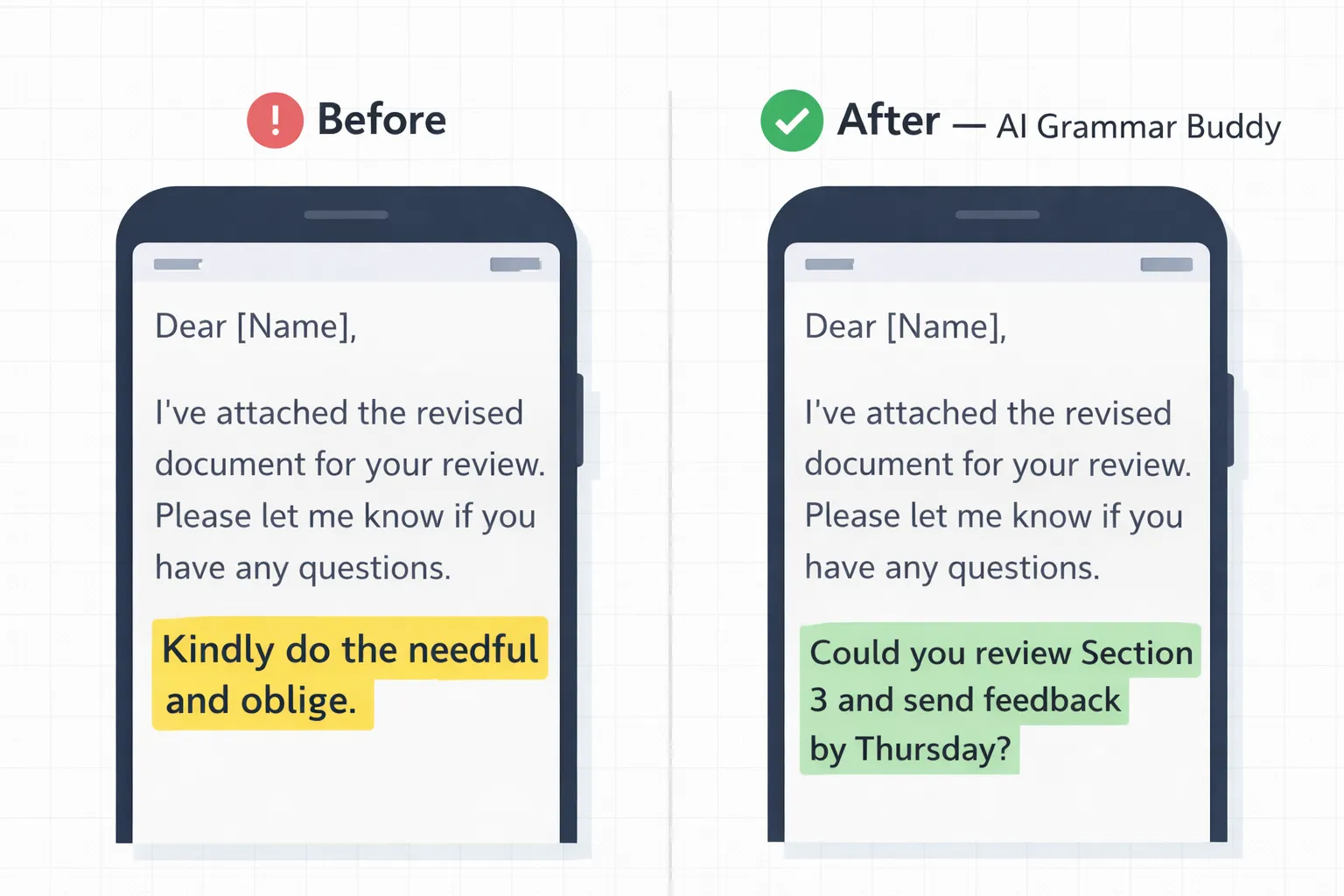
You just got “Kindly do the needful.” The sender thinks the next step is obvious. You may not. Replying “Noted, will do the needful” only copies the fog. Below are ready-to-send replies for when the task is clear, when it is not, and when you need more time—plus the three-part structure that makes every reply useful.
The phrase is common in Indian and Southeast Asian business English and is not automatically rude. A global reader may still find it vague; that does not mean the sender intended to be impolite. See our guide to Indian English and global business email phrases for more cross-cultural examples.
For the related closing used in leave and document requests, read “kindly oblige” meaning, tone, and better email lines.
In the workplace email drafts I review for AI Grammar Buddy, the recurring problem is usually not politeness—it is missing detail. A useful reply closes that gap without criticising the sender’s English.
TL;DR
Reply to “kindly do the needful” by confirming the specific action and timeline. If the request is unclear, ask one focused question before acting. Do not repeat the vague phrase in your response.
Top alternatives:
- •Clear task: “I will update the file and send it back by 3 PM today.”
- •Unclear task: “Could you confirm which sections you would like me to update?”
- •Completed task: “The access has been granted. Please let me know if you need anything else.”
AI Grammar Buddy
Turn this template into your email
Start with the example, then rewrite it for your real situation.
Jump to sections
Use these anchors to jump straight to the section you need.
Quick Answer
To reply to “kindly do the needful,” acknowledge the message, name the exact action, and give a timeline: “Thanks for the details. I’ll update the spreadsheet by 3 PM today.” If the task is unclear, ask one focused question before acting.
For the phrase’s definition, correctness, tone, and alternatives, start with our main guide to “do the needful” meaning and professional alternatives.
If the message uses the British informal variant instead, see what “do the necessary” means and whether it is correct.
How to Reply to “Kindly Do the Needful”: The Three-Part Structure
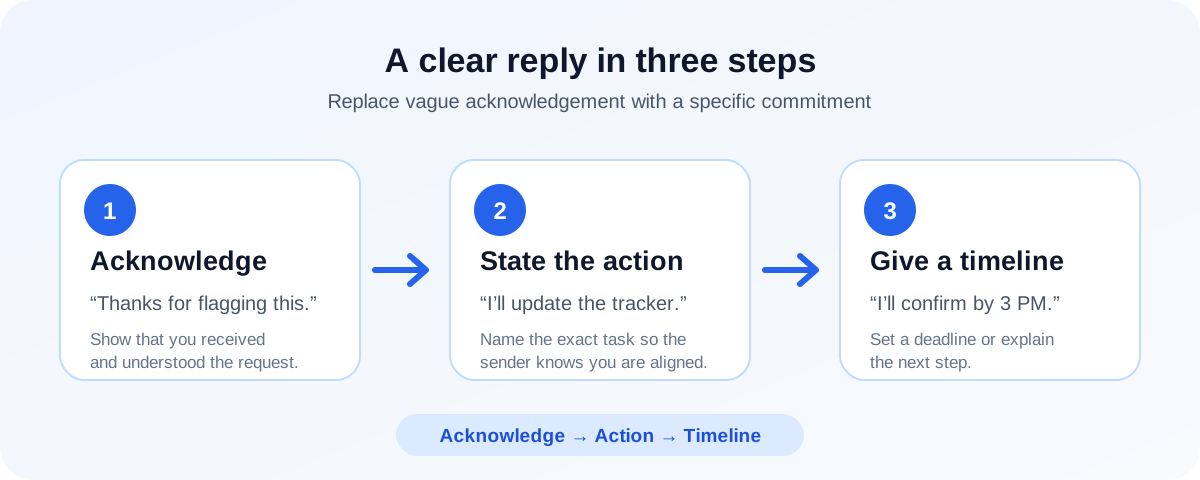
A useful response has three parts:
- Acknowledge the request. “Thanks for flagging this.”
- State the exact action. “I will update the access list.”
- Give a timeline or next step. “I will confirm once it is complete this afternoon.”
This is more helpful than replying “Noted, will do the needful.” It proves that you understand the request and gives the sender a clear expectation.
Reply formula: acknowledge the message → state the exact action → give a timeline or next step.
Email Examples: When the Task Is Clear
Confirming that you will act
Hi Priya,
Thanks for sending the documents. I will review page 3 and return the signed copy by Thursday.
Best, Alex
Confirming that a task is complete
Hi Team,
The vendor profile has been updated and the invoice is now queued for payment. Please let me know if you need anything else.
Regards, Mei
Confirming a technical fix
Hi Sam,
I have reset the client’s access and tested the login successfully. I will monitor the account through the end of the day.
Thanks, Jordan
Confirming an approval step
Hi Elena,
I will review the revised budget and send my approval or comments by 4 PM tomorrow.
Best regards, Noor
If you only need to confirm that a file or message arrived, use one of these acknowledge receipt email templates instead of promising an action you have not taken.
Draft feels stiff? Paste it into the Email Improver to keep the same facts while making the tone clearer.
Email Examples: When the Request Is Unclear
Do not guess what “the needful” refers to. A short question is faster than completing the wrong task.
Ask which action is needed
Hi Chris,
Happy to help. Could you confirm whether you would like me to update the invoice, the purchase order, or both?
Thanks, Ana
Ask for the missing deadline
Hi Ravi,
I can take care of the requested update. When do you need the revised file back?
Best, Morgan
Ask who owns the next step
Hi Team,
To make sure I handle the right part, should I submit the request or prepare the documents for Finance to submit?
Thanks, Lee
Not sure how direct your clarification should sound? Rewrite the question in the Email Improver before you send it.
Email Examples: When You Need More Time
Be direct about the timeline and, when useful, explain the next step.
Hi Priya,
I have started the review. I need confirmation from Finance before I can complete the update, so I will send you a status update by 11 AM tomorrow.
Best, Alex
Hi Team,
I can complete the access request by Friday afternoon. Please let me know if that timeline creates a problem.
Regards, Mei
If you are waiting on someone else before you can finish, these examples for chasing an email politely can help you request the missing update without sounding impatient.
Avoid These Replies
| Avoid | Why it falls short | Use instead |
|---|---|---|
| “Noted, will do the needful.” | It repeats the vague request. | “Noted. I will update the tracker by 3 PM.” |
| “Will check.” | It does not say what happens next. | “I will check the payment status and update you by noon.” |
| “Done.” | It gives no useful record of the work. | “The contract has been signed and returned.” |
| “Please clarify.” | It can sound abrupt without context. | “Could you confirm which version of the file you would like me to update?” |
For more acknowledgement options, compare better alternatives to “noted with thanks”. If the original request also says “revert,” check what “please check and revert” means before you answer.
If someone replies to your clarification with only “Noted,” use this guide to reply to “noted” professionally and confirm whether you can proceed.
How AI Grammar Buddy Can Help
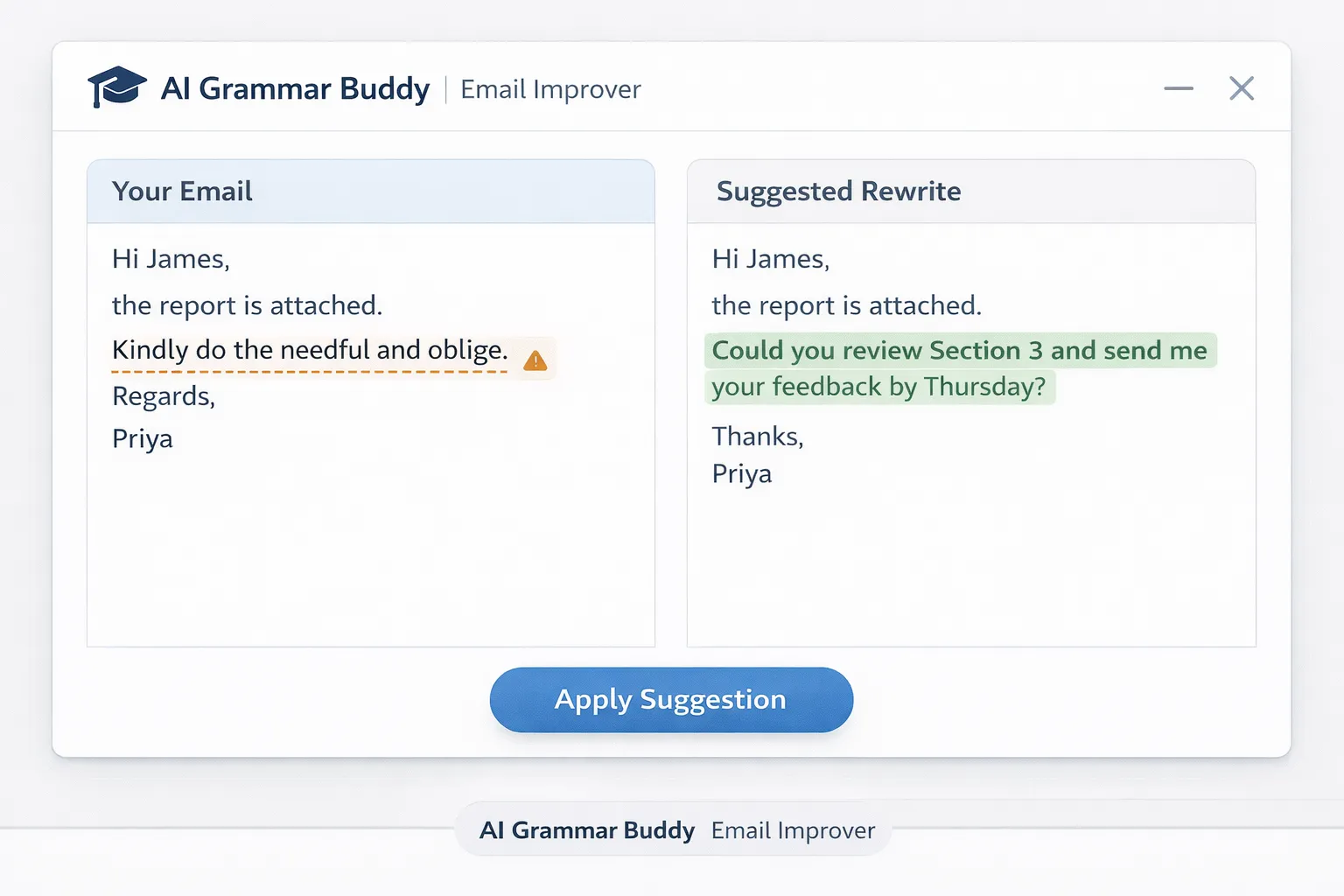
If your reply feels too brief, overly formal, or unclear, AI Grammar Buddy’s Email Improver can turn “Noted, will do the needful” into a clear response that names the action and keeps the right professional tone.
Final Takeaway
The best reply to “kindly do the needful” is specific: acknowledge the message, name the task, and give a deadline or next step. If the request is unclear, ask one focused question instead of guessing or repeating the phrase.
Before you send, paste your reply into the Email Improver for a quick clarity and tone check.
About This Article
Kin
Senior Business English Editor
Kin reviews workplace email drafts, acknowledgement phrases, and cross-cultural tone problems for AI Grammar Buddy. She focuses on helping non-native English writers replace vague office shorthand with clear actions and timelines.
Last updated 23 July 2026
Frequently Asked Questions
How do you reply to “kindly do the needful”?▼
Confirm the exact action you will take and the expected timeline. For example: “Thanks for the details. I will update the spreadsheet and send it back by 3 PM today.”
What if “please do the needful” is unclear?▼
Ask a short clarification question rather than guessing. For example: “Could you confirm whether you would like me to update the invoice, the purchase order, or both?”
Should I reply “noted, will do the needful”?▼
Avoid repeating the phrase. A reply that names the task is clearer: “Noted. I will review the contract and return the signed copy by Thursday.”
Next step
Turn this template into your email
Start with the example, then rewrite it for your real situation.
Keep going
Continue with AI Grammar Buddy
AI Grammar Buddy
Email Improver
Paste your draft and rewrite it for clearer, more professional English.
Rewrite My EmailRelated guide
"Do the Needful" Meaning + Better Email Alternatives
Learn what the phrase means, whether it is correct, and what to write instead.
Related guide
"Please Check and Revert" Meaning and Alternatives
Replace another common regional email phrase with a clear action and reply request.
Related guide
Is "Noted with Thanks" Rude?
Compare acknowledgement phrases and choose a warmer, more useful response.