Noted With Thanks: Is It Rude? Meaning, Usage & Better Alternatives
Noted with thanks: meaning, tone risks, and better alternatives for global teams. Learn when it sounds polite and when it sounds rude.
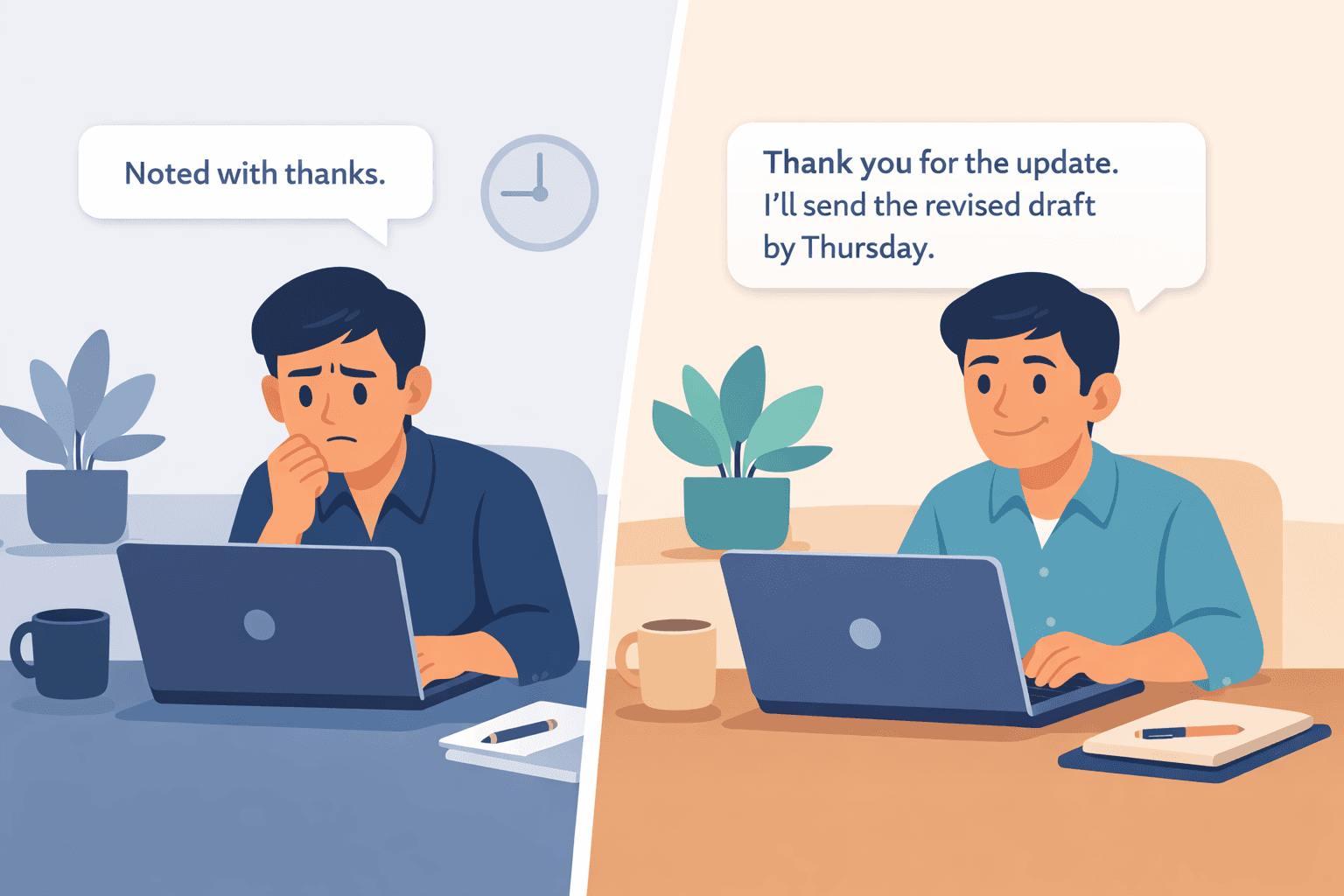
I once saw a manager escalate a harmless email reply because it said only: "Noted with thanks." No insult. No argument. Still, the relationship cooled for weeks.
That is why this phrase matters. Noted with thanks looks polite on paper, but in international teams it can land as efficient, cold, or dismissive depending on who reads it. If you write across Singapore, India, the UK, and the US, this is not a grammar debate. It is a trust signal.
AI Grammar Buddy
Make this sound professional
Improve tone for work emails without changing your meaning.
Jump to sections
Use these anchors to jump straight to the section you need.
What Does "Noted With Thanks" Mean?
The plain noted with thanks meaning is: "I have received and understood your message, and thank you for it."
It is a concise acknowledgement, usually used to confirm receipt and move on.
Why it is common in Asian business English
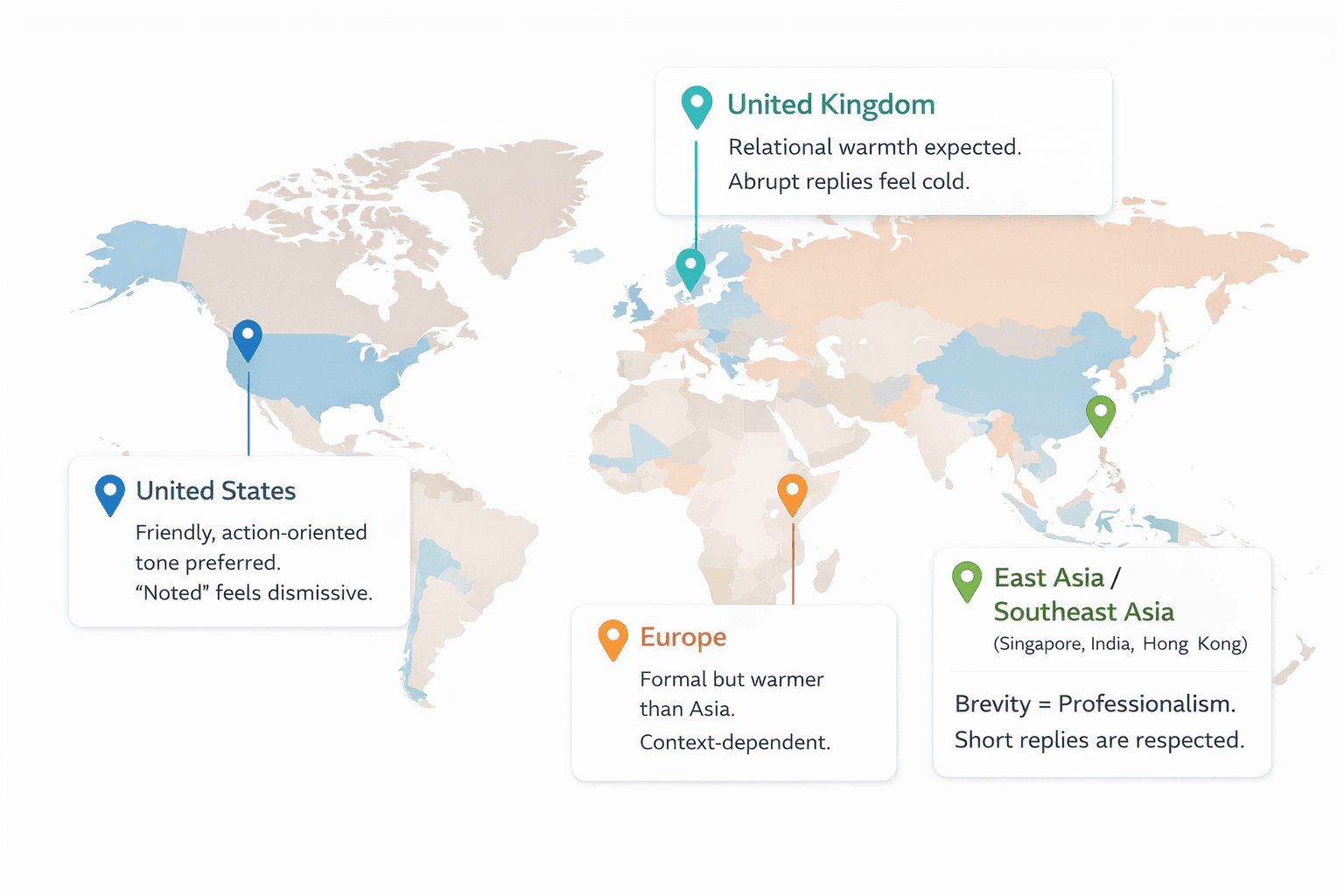
In Singapore, India, and Hong Kong, brevity often signals professionalism. I have worked with teams where inbox volume is extreme, and short confirmations are practical. "Noted with thanks" functions like a clean operational checkpoint.
Why it feels different in Western contexts
In many US/UK teams, expected politeness includes a bit of relational language. A short, closed reply can feel like emotional distance. Same words. Different cultural reading.
When "Noted with Thanks" Sounds Rude
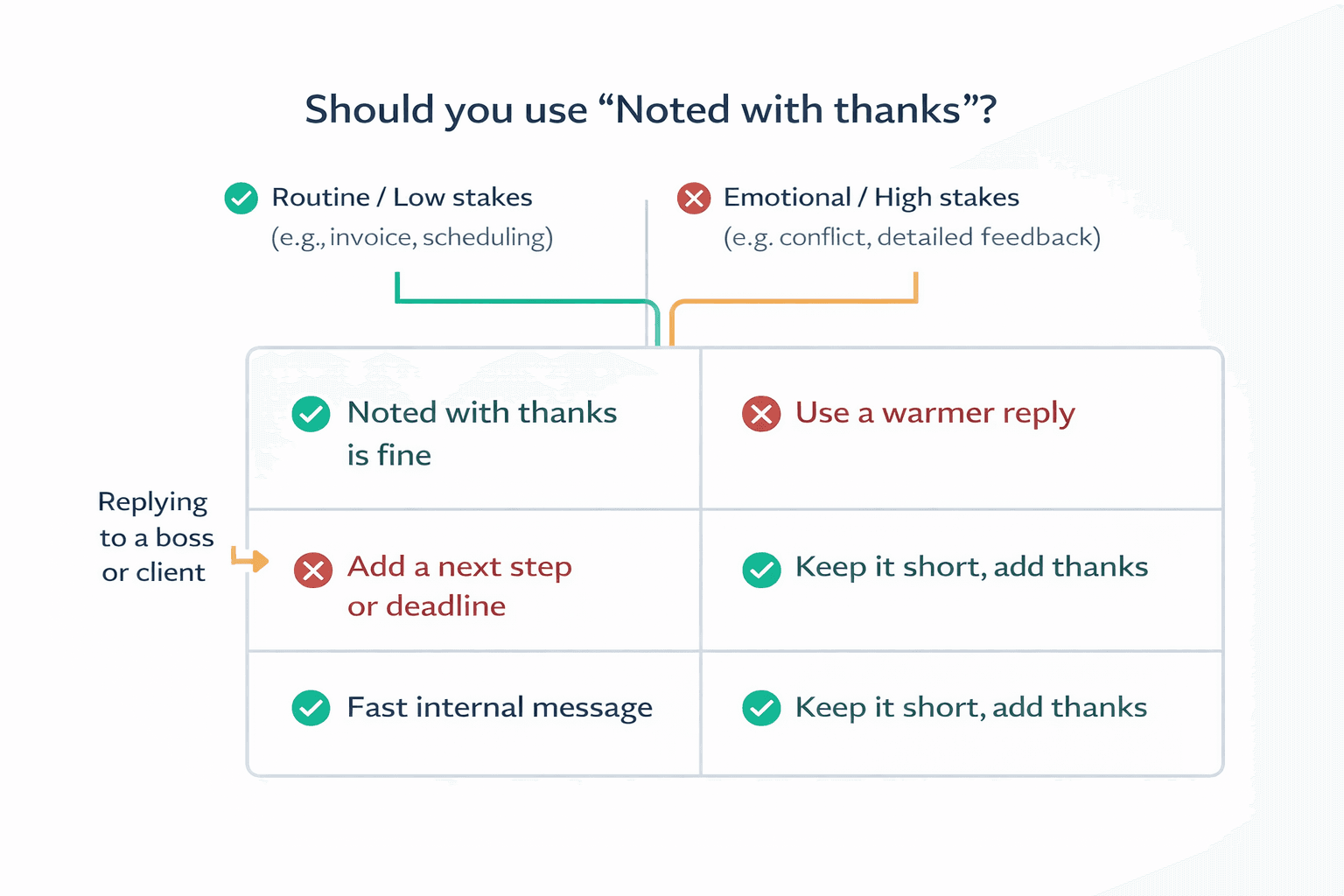
Let me be direct: is noted with thanks rude? Not automatically - it is usually fine for invoice confirmations, scheduling updates, and procedural messages.
When Noted with Thanks Becomes a Problem
I have seen misunderstandings repeat in the same scenarios:
- someone shares bad news,
- a client gives detailed feedback,
- a manager asks for reasoning,
- a conflict is already active.
In those cases, "noted with thanks" can sound like a shutdown.
A useful benchmark: According to Grammarly and The Harris Poll (2023), knowledge workers spend about 19 hours per week on written communication. When writing consumes that much time, tone friction is not minor. It directly affects speed, rework, and stakeholder confidence.
Is It Grammatically Correct?
Short answer: It is accepted in business email but technically a fragment.
Full form: "Your message is noted with thanks."
That is why the phrase feels compressed. In routine email, it is acceptable shorthand. In formal documents, write complete sentences.
10 Noted With Thanks Alternatives by Situation
Formal / professional
- Thank you for the update.
- Received with thanks.
- I appreciate the clarification.
- Thank you. I have noted this and will follow up by EOD.
Casual / internal
- Got it, thanks.
- Thanks for letting me know.
- Understood, thanks.
Replying to a boss or client
- Understood, I will proceed accordingly.
- Thank you for the guidance. I will implement this in the next revision.
- Noted, and I will share an update by tomorrow 3 PM.
Noted vs Noted With Thanks vs Acknowledged
| Phrase | Tone / Perception | Best Used For |
|---|---|---|
| Noted | Cold / Strict / Dismissive | Fast internal exchanges with low emotional stakes |
| Noted with thanks | Efficient / Transactional | Routine administrative communication |
| Acknowledged / Received | Formal / Robotic | Compliance, ticketing, and legal-adjacent updates |
| Well noted | Warm / Slightly dated | Asian & European business English, written confirmations |
If "well noted" is the phrase you use most often, see our separate guide to what "well noted" means in email before using it with global clients.
Before vs After: Better Professional Replies
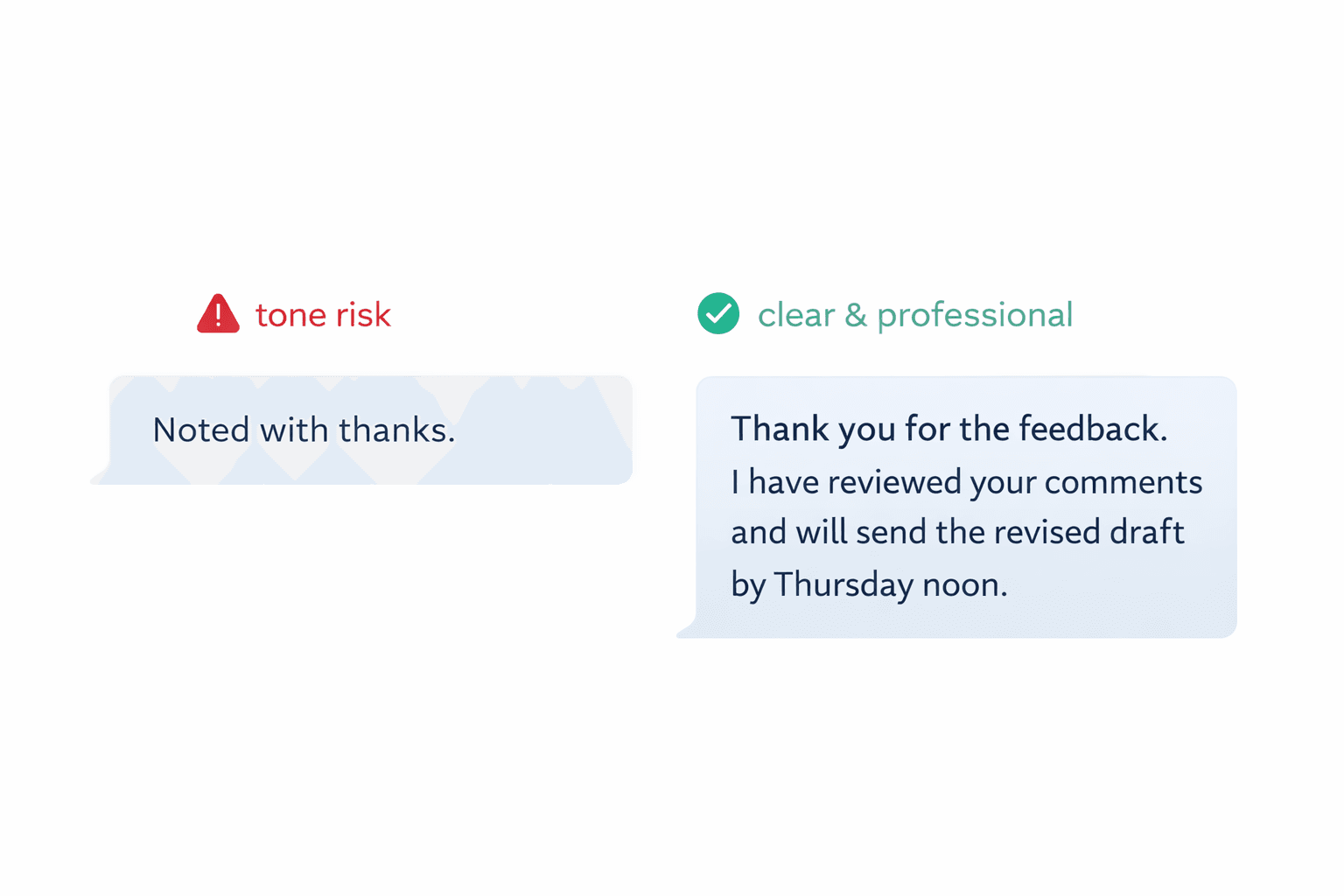
Example 1: Client revision request
Before
Noted with thanks.
After
Thank you for the feedback. I have reviewed your comments and will send the revised draft by Thursday noon.
Example 2: Internal timeline update
Before
Noted with thanks.
After
Thanks for the update. I have aligned our timeline and will confirm dependencies by 4 PM.
If you second-guess phrasing like this often, AI Grammar Buddy can flag tone risk in real time and suggest clearer alternatives before you send.
Practical Rules for Global Teams
Rule 1: Match emotional weight
The higher the stakes, the warmer and more specific your reply should be.
Rule 2: Add one actionable line
My recommendation is simple: include a next step or deadline. It instantly removes ambiguity.
Rule 3: Default to clarity over brevity
I would rather send one extra line than repair a relationship after a tone misread.
If you want to go deeper on either of these situations, I have covered them separately:
how to reply to "Noted" professionally
noted with thanks alternatives for Singapore teams
The strongest communicators I know are not the shortest writers. They are the clearest. If your message can be read as cold, it will be read as cold. Write one more line. Every time.
Frequently Asked Questions
Is it rude to just say "Noted"?▼
In many US and UK workplaces, yes. "Noted" alone often sounds blunt or dismissive, especially in cross-functional threads. Add "thanks" and one next step when the message carries emotion, effort, or business risk.
How do you reply professionally without saying noted?▼
Use a three-part response: appreciation, confirmation, and action. Example: "Thanks for the update. I have reviewed it and will send the revised draft by Friday." This sounds cooperative and removes tone ambiguity.
Is "Noted with thanks" grammatically correct?▼
It is accepted business shorthand but technically a fragment. The full sentence is "Your message is noted with thanks." It is fine in routine email, but complete sentences are safer for formal or legal communication.
Can I say "Well noted"?▼
You can, and it is common in Asian and European business English. In US settings, it may sound dated. If your audience is mostly American, "Understood" or "Thanks for the update" usually reads more naturally. For a deeper comparison, read our well noted meaning guide.
How do you politely acknowledge an email?▼
Use concise language plus a clear next step: "Received with thanks. I will follow up by 3 PM tomorrow." This keeps your tone warm and actionable, which is safer than a one-word acknowledgment.
Next step
Make this sound professional
Improve tone for work emails without changing your meaning.
Keep going
Continue with AI Grammar Buddy
AI Grammar Buddy
Email Improver
Paste your draft and rewrite it for clearer, more professional English.
Improve My ToneRelated guide
AI Email Rewriter for Professional Emails (Before & After)
Turn rough drafts into professional emails. See before-and-after rewrites, better prompts, and common mistakes that affect tone, clarity, and structure.
17 June 2026
Related guide
10 Better Ways to Say "In Conclusion"
Looking for a better way to say in conclusion? Learn 10 natural alternatives for essays, emails, and professional writing, with examples and a quick comparison table.
14 March 2026
Related guide
15 Polite Ways to Say No (Work & Email Examples)
15 ways to say no politely with workplace and email examples, common mistakes, and a quick reference table. Paste your draft into AI Grammar Buddy to make it sound more professional and natural.
14 March 2026