What Does Insist Mean? Grammar, Examples and Common Mistakes
Insist means to demand something firmly or state that something is true. See how to use insist on, insist that and insist upon in workplace sentences.
Jump to sections
Use these anchors to jump straight to the section you need.
Insist Meaning: Quick Answer
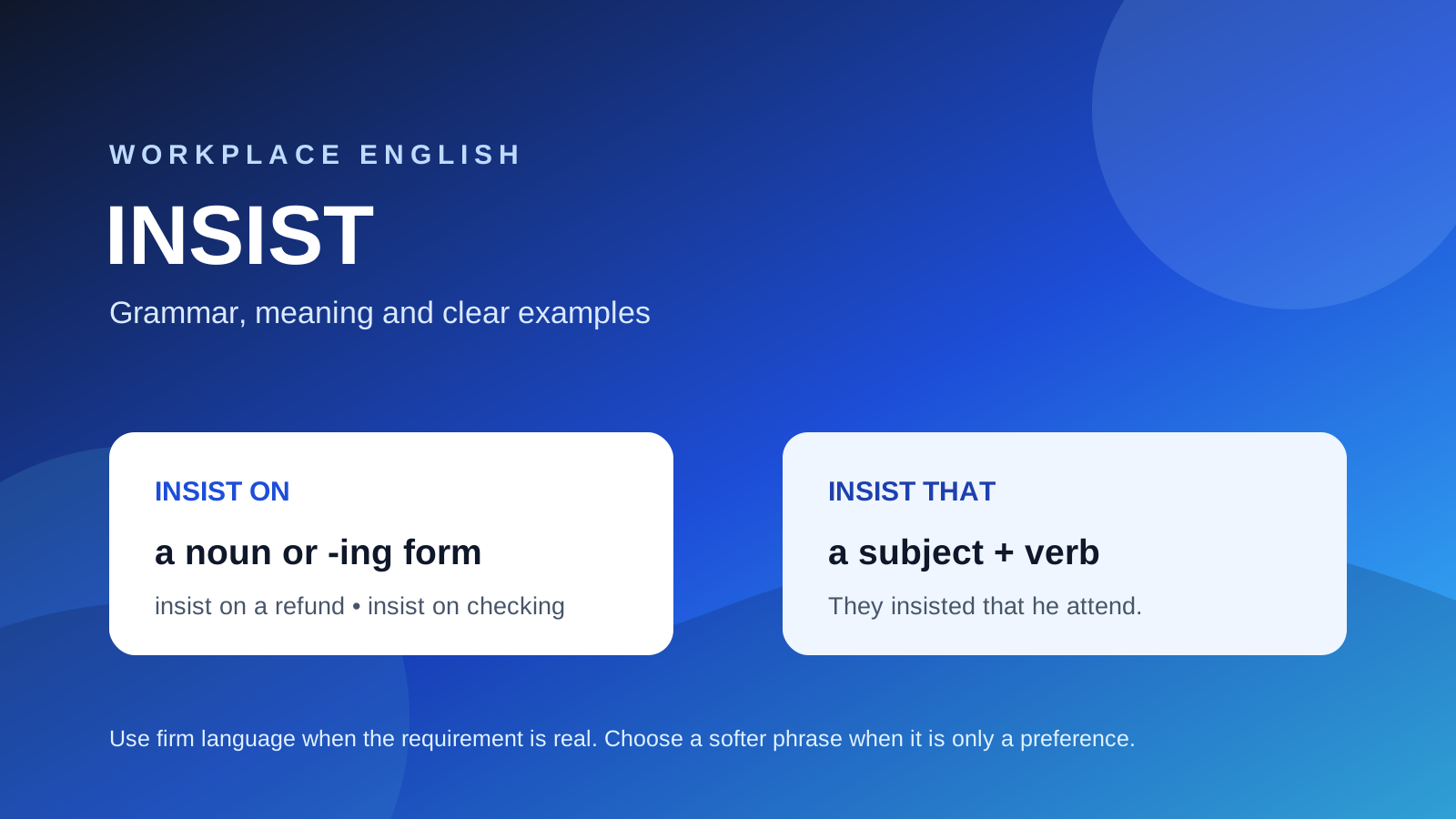
Insist means to demand something firmly or state emphatically that something is true. Use insist on before a noun or -ing form (insist on a refund; insist on checking) and insist that before a clause (They insisted that he attend). In workplace email, reserve it for genuine requirements—not ordinary preferences.
Quick reference
- Pronunciation: /ɪnˈsɪst/
- Part of speech: verb
- Forms: insist, insists, insisted, insisting
- Common collocations: insist on payment, insist on a refund, insist on following the rules, insist that a report be corrected
- Related words: require or demand for a firm request; assert or maintain for a firm claim
The Cambridge Dictionary entry for insist confirms the core definitions and pronunciation. This distinction is especially useful for Singaporean, Malaysian, and other Asian professionals writing to international colleagues, clients, and vendors.
What Does Insist Mean?
Insist has two main meanings:
- Require something firmly: “The supplier insisted on payment before dispatch.” Payment was a condition of dispatch.
- State firmly that something is true: “The supplier insisted that the payment had already been sent.” The supplier made a strong claim about the facts.
The first meaning concerns an action, condition, or result. The second concerns a statement or belief. Compare insist on a refund, which requires an outcome, with insist that the refund was approved, which claims that approval happened.
Insist is not automatically rude: “Please go first—I insist” can be courteous. In business email, however, I insist usually signals a serious requirement, so consider the relationship, reason, and action.
How to Use Insist Correctly
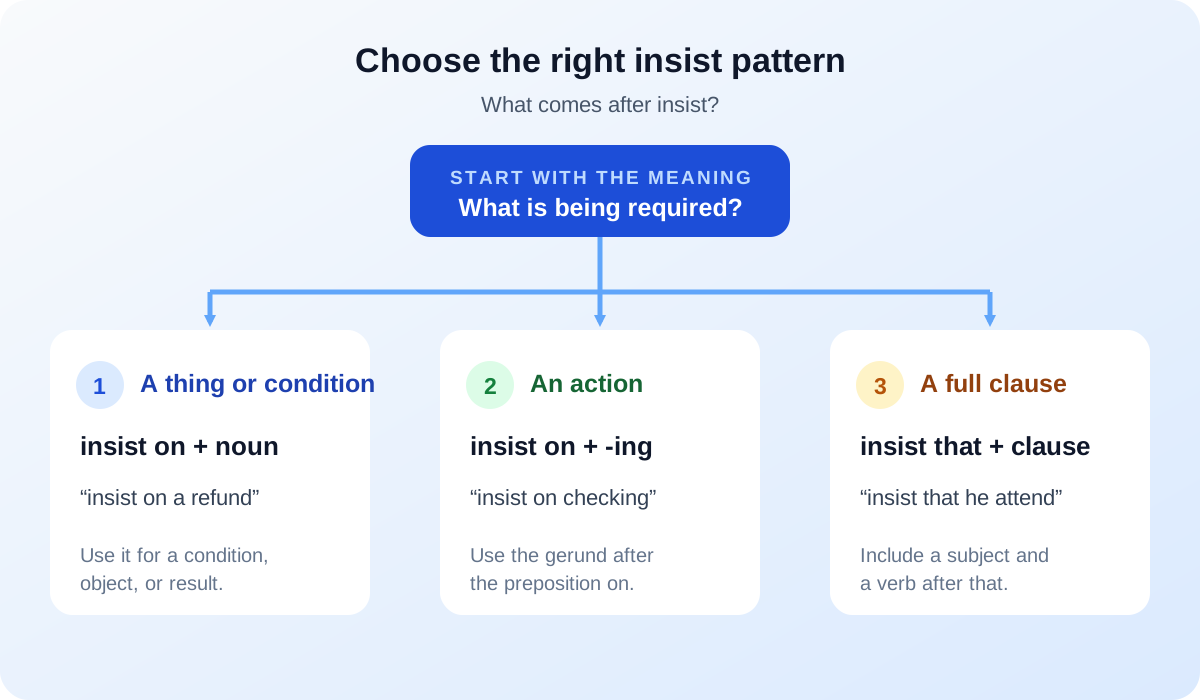
Use on or upon before a noun or an -ing form. Use that before a clause with its own subject and verb.
| Pattern | Meaning | Correct example | Common mistake |
|---|---|---|---|
| insist on + noun | Require a thing or condition | “The client insisted on a written refund policy.” | “The client insisted to a written refund policy.” |
| insist on + -ing | Require an action | “Maya insisted on checking the figures.” | “Maya insisted on to check the figures.” |
| insist that + clause | Require or firmly state something | “They insisted that he attend the meeting.” | “They insisted him attend the meeting.” |
| insist upon + noun or -ing | The same idea in a more formal style | “The auditor insisted upon seeing the original file.” | “The auditor insisted upon to see the file.” |
Ask whether the next element is a thing, an action, or a complete clause. That choice prevents most sentence-pattern errors.
Not sure whether your sentence needs insist on or insist that? Paste it into AI Grammar Buddy’s Grammar Checker to check the pattern before you send it.
Insist On + Noun or -ing Form
Use insist on + noun when the requirement is a thing, condition, or arrangement:
- “We insist on a signed contract before work begins.”
- “The customer insisted on a full refund.”
- “The quality team insists on documented test results.”
Use insist on + gerund when the requirement is an action. A gerund is the -ing form used as a noun:
- “The project lead insisted on keeping the agreed deadline.”
- “I insisted on reviewing the final quotation before it was sent.”
- “The technician insisted on testing every unit twice.”
After on, use a noun or gerund, not an infinitive. Insist on the team submitting the form is possible, but insist that the team submit the form is often clearer.
Insist That + Clause
Use insist that + subject + verb when the sentence contains a complete clause:
- “The operations director insisted that the vendor replace the damaged parts.”
- “We insisted that the meeting start on time.”
- “The employee insisted that the figures were accurate.”
The first two examples express a firm requirement. American English commonly uses the mandative subjunctive after this use of insist:
They insisted that he attend the meeting.
Use the base verb attend, not attends or to attend. British English can use should + base verb for the same requirement:
They insisted that he should attend the meeting.
Both versions are grammatical. In the assertion use, “The director insisted that the figures were accurate” reports a claim. A that clause needs a subject: “They insisted that he attend,” not “They insisted that attend.”
Oxford Learner’s Dictionaries gives the same useful patterns for insist on + -ing and insist that, including the British should construction.
Insist Upon: Is It Different?
Insist upon normally means the same as insist on. Upon is more formal and may suit a contract, policy, formal report, or deliberately serious tone:
- “The client insisted upon written notice of any changes.”
- “The auditor insisted upon reviewing the original records.”
In everyday workplace email, insist on is usually more natural. Upon changes the register; use either preposition with a noun or -ing, not to do.
Insist To Do or Insist On Doing?
The normal choice is insist on doing, not insist to do:
- Correct: “I insist on reviewing the contract.”
- Incorrect: “I insist to review the contract.”
When another person should take the action, use insist that + subject + base verb:
- “I insist that the legal team review the contract.”
- “The manager insisted that the vendor replace the damaged parts.”
Remember: insist on + noun or -ing; insist that + clause; avoid insist to do.
Insist Examples at Work
The situation determines whether insist sounds appropriate:
- Deadline: “The project lead insisted on keeping the agreed deadline because the launch was already scheduled.”
- Payment: “The supplier insisted on payment before dispatching the replacement parts.”
- Refund: “The customer insisted that the company issue a full refund after the duplicate charge.”
- Meeting attendance: “The HR manager insisted that all new employees attend the compliance meeting.”
- Contract terms: “The client insisted upon a clear termination clause in the contract.”
- Quality standards: “The quality team insisted on testing every batch against the agreed standards.”
- Workplace disagreement: “The supervisor insisted that the figures were correct, while the finance analyst asked for another review.” This last example is a firm claim, not a demand to change the figures.
The object or clause identifies the policy, remedy, deadline, or disagreement.
How to Use Insist Politely in Emails
Use insist for a genuinely non-negotiable safety requirement, contract term, quality standard, deadline, or correction. Give the reason and action so the firmness feels objective.
For example:
To meet the agreed quality standards, we insist on receiving the test report before shipment.
However, I insist or We insist that you... can sound hard-edged when the issue is only a preference. A client may read “We insist on receiving your reply today” as an order if the deadline was not agreed.
Compare a strong line with softer alternatives:
- Strong: “We insist on receiving the signed contract by 5 p.m. Friday.”
- Softer: “We would strongly prefer to receive the signed contract by 5 p.m. Friday.”
- Softer request: “Could we ask that you return the signed contract by 5 p.m. Friday?”
- Recommendation: “We recommend returning the signed contract by 5 p.m. Friday to keep the project on schedule.”
- Importance: “It is important that we receive the signed contract by 5 p.m. Friday.”
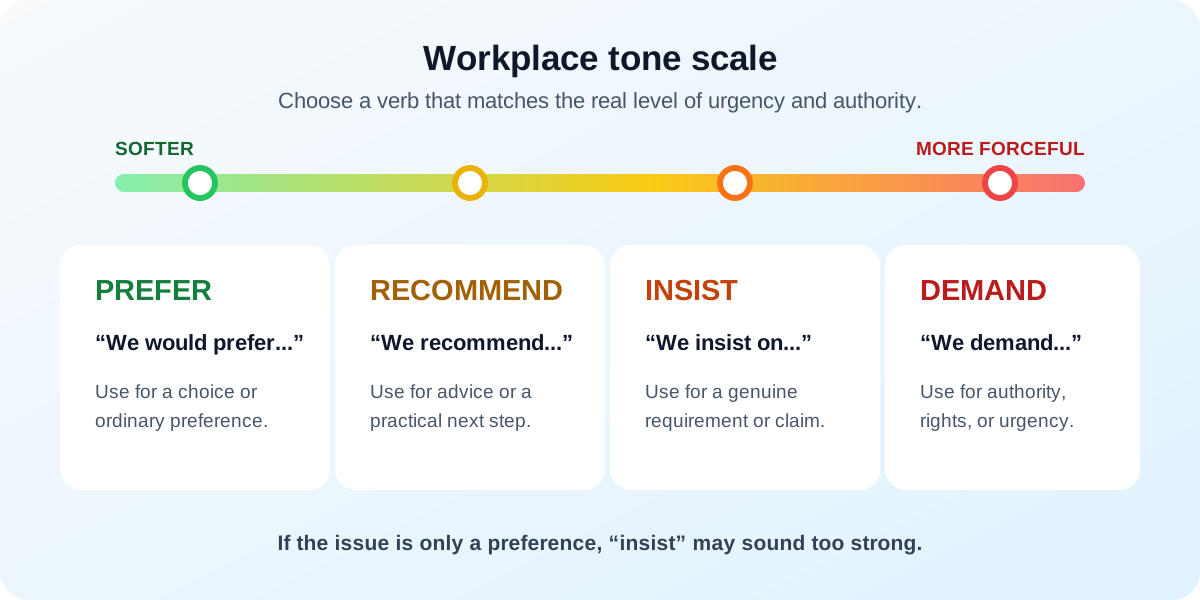
The alternatives are not identical: Could we ask that... requests, we recommend... advises, and it is important that... explains priority without ordering the reader. Match the phrase to your authority and the consequence of delay.
If “We insist...” sounds too forceful, paste the full email into Email Improver to make the wording clearer and more professional without removing the deadline. For specific request wording, see these professional alternatives to “please advise”.
Hi Daniel,
To keep the shipment on schedule, it is important that each batch meets the agreed quality standards. Could you send the test report by Thursday?
Kind regards, Kin
This illustrative before-and-after shows the kind of context-aware rewrite Email Improver can help produce:
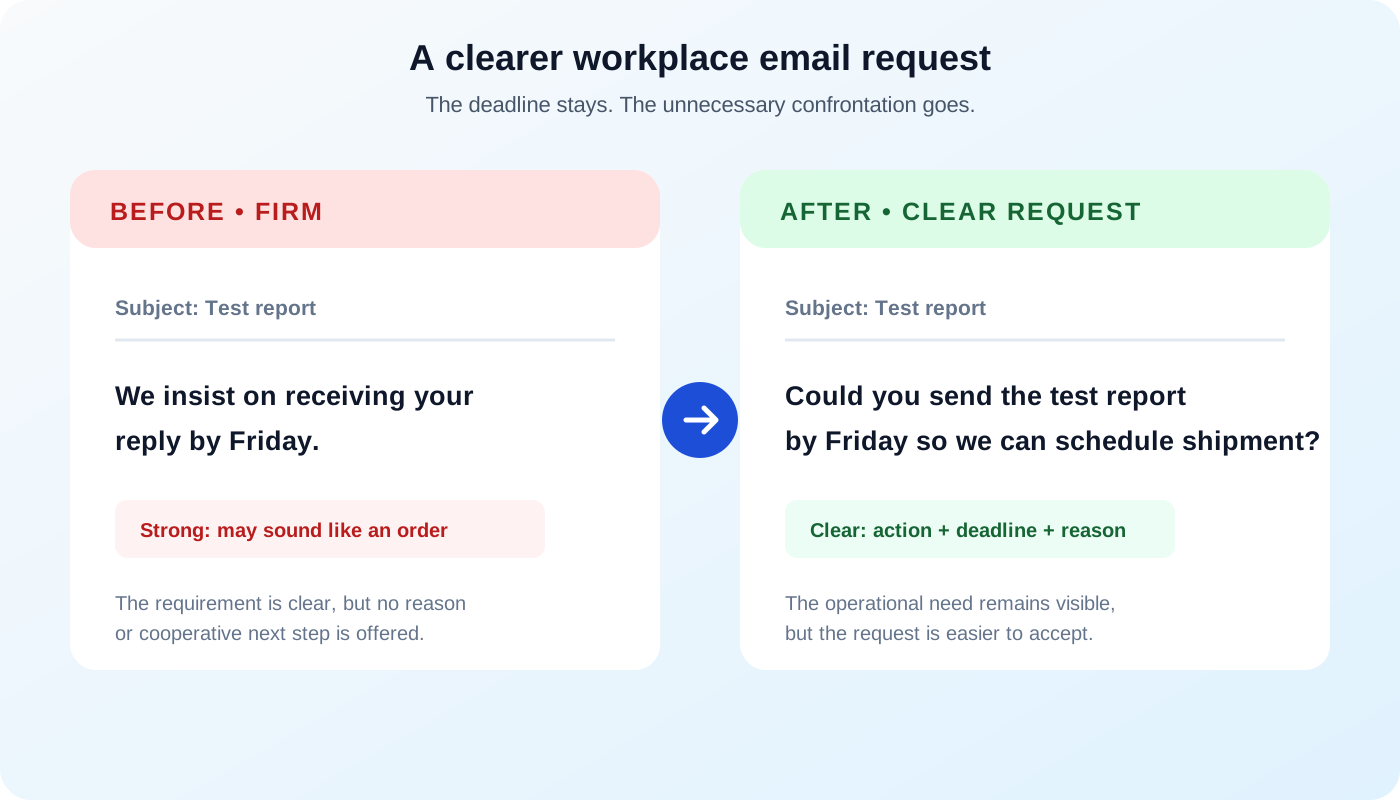
The rewrite keeps the operational detail but makes the request easier to accept.
Common Mistakes With Insist
1. Using “insist to do”
Use insist on doing or insist that + subject + verb, not insist to do:
- Not recommended: “I insist to review the contract.”
- Correct: “I insist on reviewing the contract.”
- Correct: “I insist that the legal team review the contract.”
2. Putting an infinitive after “on”
After on, use a noun or gerund: “They insisted on changing the deadline,” not “They insisted on to change the deadline.”
3. Forgetting the subject after “that”
Write “The manager insisted that we attend,” not “The manager insisted that attend.” If the subject is the same, insist on doing may be simpler.
4. Confusing a requirement with a claim
“The manager insisted that the report be revised” is a requirement. “The manager insisted that the report was accurate” is a claim. The verb form and context show which meaning you intend.
5. Using a strong word for a small preference
For a preferred meeting time, write “We would prefer to meet at 3 p.m.” If policy requires attendance, “The manager insists that all staff attend” is appropriate. Let the reason and relationship guide the tone.
For more sentence-structure guidance, see our business email grammar guide.
Insist vs Demand
Insist means to firmly require something or firmly say that something is true. Demand is usually a more direct, authoritative, or confrontational request:
- “The customer insisted on a refund.” The customer firmly stated the required outcome.
- “The customer demanded a refund.” The request sounds more forceful and may imply urgency or entitlement.
Both can be correct. Use demand for authority, rights, or serious complaints; use insist to stress a requirement or defend a statement without escalating the relationship.
Insist vs Persist
Persist means continue despite difficulty, or continue to exist. It does not normally mean “firmly require” or “claim.”
- “He insisted on a refund.” He firmly required a refund.
- “He persisted in requesting a refund.” He continued asking after delays or refusals.
- “The payment error persisted.” The problem continued to exist.
In short, insist describes the strength or content of a position; persist describes continuation over time. For the full usage guide, see our persist meaning guide.
Before sending a firm request, check the complete email in AI Grammar Buddy—not just the word insist—because the relationship, reason, and deadline determine whether the tone works.
Sources and Editorial Note
Kin is listed by AI Grammar Buddy as Senior Business English Editor. For definitions and pronunciation, see the Cambridge Dictionary entry for insist; for sentence patterns, see Oxford Learner’s Dictionaries. Workplace examples are original.
Final Summary
Use insist on + noun/-ing for a thing or action, and insist that + subject + verb for a clause. Insist upon is formal; insist to do is normally incorrect. Reserve insist for genuine requirements with a clear reason or deadline.
About This Article
Kin
Senior Business English Editor
Kin is AI Grammar Buddy’s Senior Business English Editor. She reviews workplace English guides for grammar, tone, and cross-cultural clarity, separating objective grammar rules from optional wording choices.
Last updated 23 August 2026
Frequently Asked Questions
What does insist mean?▼
Insist means to demand something firmly or state emphatically that something is true. It can be strong, but it is not automatically rude.
Is it insist on or insist to?▼
Use insist on before a noun or an -ing form: insist on a refund or insist on checking the figures. Do not normally use insist to do.
What is the difference between insist on and insist that?▼
Insist on is followed by a noun or -ing form. Insist that is followed by a clause with its own subject and verb, such as They insisted that he attend.
Is insist a rude word?▼
Not necessarily, but insist signals strong determination. It can sound firm or confrontational when used for a minor request or without a clear reason.
Can I use insist in a professional email?▼
Yes. Use it for a genuine requirement, policy, safety issue, or correction. For ordinary requests, a softer phrase such as Could we ask that... may be more suitable.
What is the difference between insist and persist?▼
Insist means firmly require something or claim something is true. Persist means continue despite difficulty or continue to exist, as in The problem persisted.
Keep going
Continue with AI Grammar Buddy
AI Grammar Buddy
Email Improver
Paste your draft and rewrite it for clearer, more professional English.
Rewrite This PhraseRelated guide
Email Etiquette in Singapore: 15 Rules for Professionals
Choose a clear, respectful tone for requests, deadlines, and workplace disagreement.
Related guide
15 Polite Ways to Say No at Work
Choose a firm but respectful tone when you need to set a boundary.