What Does Persist Mean? Meaning, Grammar and Examples
Learn when persist takes in, with, or no preposition, then apply the patterns to clear workplace examples.
Quick Answer
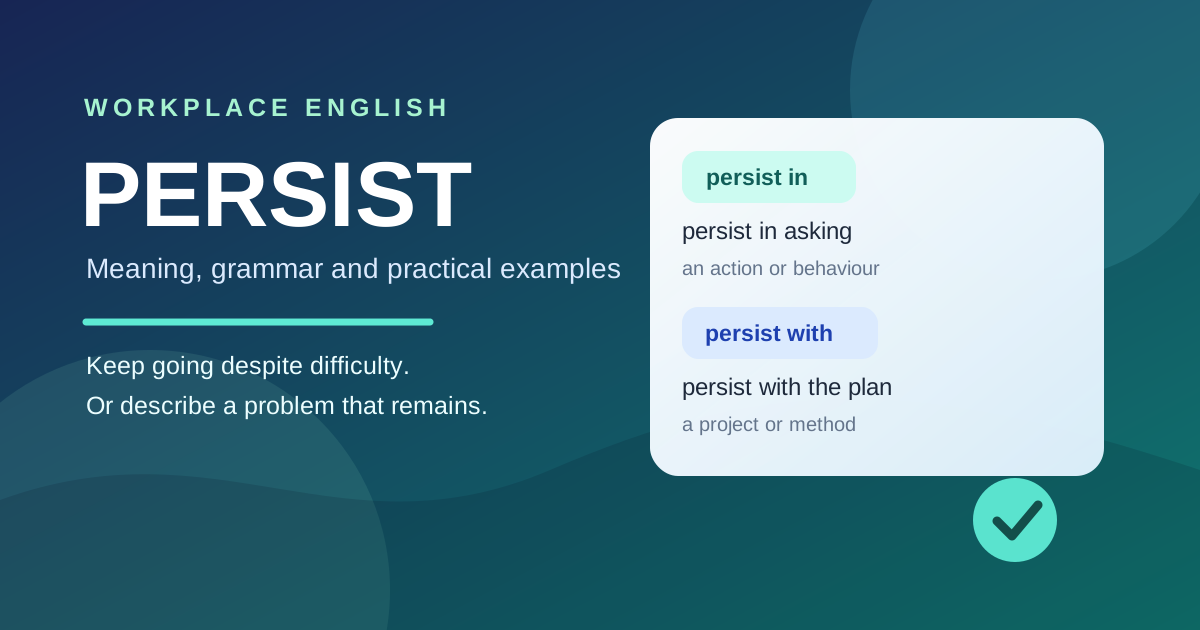
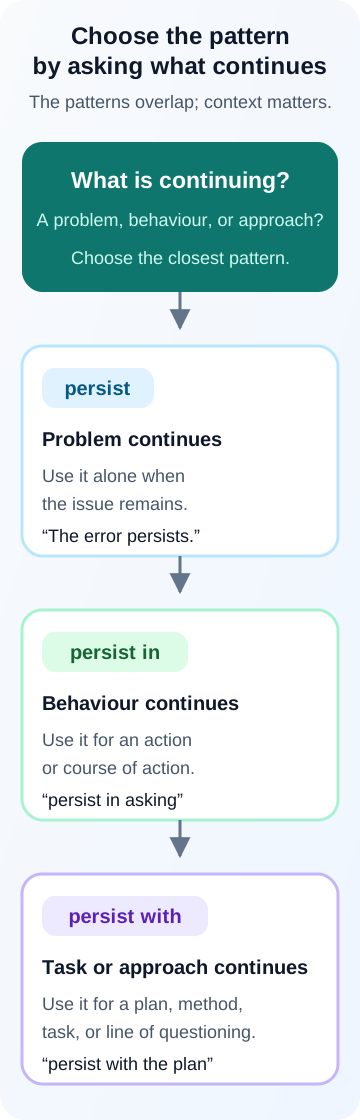
Persist means to keep doing something despite difficulty or opposition, or for a situation to continue longer than expected. Use persist in for behaviour or a course of action, persist with for a task or approach, and persist alone when a problem remains. The patterns can overlap, so context matters.
Pronunciation and word forms
- UK pronunciation: /pəˈsɪst/
- US pronunciation: /pərˈsɪst/
- Part of speech: verb
- Forms: persist, persists, persisted, persisting
Jump to sections
Use these anchors to jump straight to the section you need.
What Does Persist Mean?
In workplace English, persist focuses on continuation after resistance or an unexpected duration. Identify the subject first: is it a person or team, an approach, or an unresolved problem? That choice guides the pattern.
The Two Main Meanings of Persist
1. Continue despite difficulty or resistance
A person or team persists when they keep acting after a refusal, delay, or failed attempt. The tone can be positive or critical:
- “She persisted in requesting a written explanation after the payment was delayed.”
- “Despite two failed tests, the engineers persisted with the investigation.”
2. Continue to exist or happen
A problem, condition, effect, feeling, or situation can persist without a direct object:
- “The technical issue persisted after the software update.”
- “The misunderstanding persisted for several weeks.”
A problem can persist even after some relief. Compare alleviate meaning and examples when you need to distinguish a less severe problem from one that has ended.
- “If the problem persists, contact the support team.”
This is a concise way to say that an issue has not gone away.
How to Use Persist Correctly
In ordinary workplace English, persist is usually intransitive. Use persist in, persist with, or let the subject persist on its own. It can also introduce direct speech, as in “So?”, she persisted. This guide does not cover the technical computing sense, where persist may be transitive.
Persist in and persist with overlap. Treat these as common patterns, not rigid rules:
| Pattern | Use | Correct example | Common mistake |
|---|---|---|---|
| persist in + -ing or noun phrase | Continue behaviour or a course of action | “She persisted in asking for a written explanation.” | “She persisted to ask for an explanation.” |
| persist with + noun phrase | Continue a task, method, plan, programme, or line of questioning | “We persisted with the original plan.” | “We persisted the original plan.” |
| subject + persist | Say that a problem or condition continues | “The technical issue persists.” | “The technical issue persists something.” |
Both persist in her search and persist with his questioning can be grammatical. Context decides whether the emphasis is the action or the approach.
Check the pattern: Not sure whether your sentence needs persist in, persist with, or simply persists? Paste it into the Grammar Checker to review grammar, clarity, and tone.
Persist In + Noun or -ing Form
Use persist in + an -ing form or noun phrase when the focus is continuing behaviour, an effort, or a course of action:
- “They persisted in their efforts to solve the problem.”
- “She persisted in asking for a written explanation.”
- “The customer persisted in requesting a copy of the invoice.”
The persist in doing pattern often suggests repeated action after resistance. It can sound determined or critical depending on the situation.
Persist With + Noun
Use persist with + a noun phrase when the focus is the task, method, plan, programme, tool, or line of questioning that continues:
- “We decided to persist with the original plan.”
- “He persisted with the training despite the difficulties.”
- “The interviewer persisted with his questioning until the timeline was clear.”
- “We will persist with the current approach while monitoring the results.”
The phrase says that the team has chosen not to abandon the approach yet; it does not promise success.
When Something Persists
When the subject is a technical problem, delayed payment, repeated error, complaint, symptom, or feeling, persist can stand alone:
- “The technical issue persists.”
- “If the problem persists, please let us know.”
- “The incorrect total persisted across three versions of the report.”
If the problem persists means “if the problem continues or does not go away.” It is professional and objective. Use the past form for a completed period: “The payment delay persisted until the account details were corrected.”
Persist Examples at Work
Common business examples include:
- Technical problems: “If the login issue persists after you clear the cache, please send us a screenshot.”
- Delayed payments: “The payment delay persisted despite two follow-up requests, so Finance escalated the matter.”
- Repeated errors: “The same formula error persisted in the revised spreadsheet.”
- Customer complaints: “The customer persisted in requesting a written explanation of the charge.”
- Project difficulties: “Despite the delay, the team persisted in its efforts to complete the project.”
- Negotiations: “The buyer persisted in asking for a shorter payment term, while the seller offered a discount instead.”
- Training: “She persisted with the training programme until she could use the new reporting system confidently.”
- Follow-up emails: “If the issue persists, please let us know so we can review the case again.”
The problem persists is neutral; You persist in sending the same request may sound impatient. Useful team effort is often positive, while unwanted repetition can be negative. See our business email grammar guide for wider workplace wording guidance.
Check the full message: If the word is correct but the email sounds too forceful or vague, use the Email Improver to compare a Professional, Friendly, or Firm rewrite in context.
For a continuing unanswered request, these professional follow-up email templates can help you choose a clear next step.
Common Mistakes With Persist
1. Using “persist to do”
- Not recommended: “The team persisted to complete the migration.”
- Correct: “The team persisted in completing the migration.”
- Neutral: “The team continued to work on the migration.”
2. Treating persist as a transitive verb
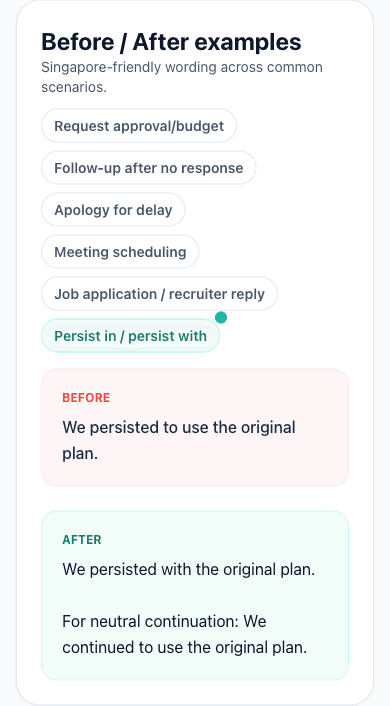
- Incorrect: “We persisted the original plan.”
- Correct: “We persisted with the original plan.”
- If it remained: “The original plan persisted.”
3. Treating persist in and persist with as strict opposites
- Oversimplified: “Persist in is always for actions, and persist with is always for objects.”
- Better: “Persist in often highlights behaviour; persist with often highlights the approach or task.”
The patterns overlap, so let context decide.
4. Using persist when continue is enough
- Overstated: “We persisted in sending the weekly status report.”
- Neutral: “We continued to send the weekly status report.”
Choose persist when determination, resistance, or unusual duration matters.
5. Confusing persist with insist
- Wrong for a firm demand: “The customer persisted on a refund.”
- Correct: “The customer insisted on a refund.”
- For repeated action: “The customer persisted in requesting a refund.”
For the related definition and grammar patterns, see our insist meaning guide.
6. Confusing the word family
- Incorrect: “Her persist helped the team.”
- Correct: “Her persistence helped the team.”
- Incorrect: “The error was persist for three days.”
- Correct: “The error persisted for three days.”
- Correct adjective: “It was a persistent error.”
Persist vs Continue
Continue is neutral. Persist adds difficulty, resistance, or a duration longer than expected.
- Neutral: “We continued to use the reporting tool after the update.”
- More determined: “We persisted with the reporting tool despite two failed integrations.”
- Neutral duration: “The delay continued for three days.”
- Problem-focused: “The delay persisted for three days.”
Continue to persist is grammatical but can sound repetitive. “The team must persist with the rollout” or “The team must continue the rollout” is usually cleaner.
Persist vs Insist
Persist means continue or remain. Insist means demand something firmly or state firmly that something is true.
- “The client insisted on a refund.” This is a firm demand.
- “The client persisted in requesting a refund.” This is repeated action.
- “The payment error persisted.” The error remained.
In email, insist can sound forceful; persist describes continuation.
Persistent and Persistence
| Word | Part of speech | Meaning | Example |
|---|---|---|---|
| persist | verb | Continue despite difficulty, or continue to exist | “The issue persisted after the update.” |
| persistent | adjective | Continuing for a long time, or refusing to give up | “We need to investigate the persistent errors.” |
| persistence | noun | The quality or fact of continuing | “Her persistence helped the team find the cause.” |
A persistent error keeps occurring. Persistence names the quality or continued existence; persist names the action.
Sources and Editorial Note
Usage patterns and definitions were checked against the Cambridge Dictionary, Oxford Advanced Learner’s Dictionary, Merriam-Webster, Collins Dictionary, and Dictionary.com on 23 August 2026. The workplace sentences and tone explanations are original editorial examples, not survey findings or quotations. Dictionary.com also records a technical computing use; this guide covers ordinary workplace English, not that separate transitive sense.
Summary: How to Use Persist
Use persist in + an -ing form or noun phrase for behaviour or a course of action. Use persist with + a noun phrase for an approach that continues, and persist alone when a problem remains. Choose continue for neutral meaning and avoid persist to do.
Try the Grammar Checker with one sentence from your email, then compare the result with the patterns above.
About This Article
Kin
Senior Business English Editor
Kin writes practical English usage guides for learners and professionals. For this guide, she compared five dictionary entries, checked the persist in and persist with examples, and separated dictionary meaning from workplace tone. She focuses on the wording choices that make business communication clearer across Singapore, Malaysia, and international teams.
Last updated 23 August 2026
Frequently Asked Questions
What does persist mean?▼
Persist means to continue doing something despite difficulty, opposition, or delay. It can also mean that a problem, situation, symptom, or feeling continues to exist.
Is it persist in or persist with?▼
Both can be correct. Persist in often highlights continuing behaviour or a course of action, while persist with often highlights the task, method, plan, programme, or questioning that continues.
Is ‘persist to do’ correct?▼
Persist to do is not the usual modern English pattern. Use persist in doing something, or use continue to do something when you simply mean keep doing it.
What does ‘if the problem persists’ mean?▼
It means that the problem continues or does not go away. It is a professional, objective way to describe an unresolved issue.
What is the difference between persist and continue?▼
Continue is neutral. Persist suggests difficulty, resistance, or that something lasts longer than expected.
What is the difference between persist and insist?▼
Persist means continue or remain. Insist means demand something firmly or state firmly that something is true.
Keep going
Continue with AI Grammar Buddy
AI Grammar Buddy
Email Improver
Paste your draft and rewrite it for clearer, more professional English.
Rewrite This PhraseRelated guide
How to Chase an Email Politely: Practical Templates
Choose a clear, respectful follow-up when an unanswered request still needs a next step.