Email Etiquette in Singapore — 15 Rules Every Professional Should Know
Learn the 15 essential email etiquette rules for Singapore business culture. From subject lines to sign-offs, avoid common mistakes and write emails that get results.
Jump to sections
Use these anchors to jump straight to the section you need.
Quick Answer
What is email etiquette in Singapore? Email etiquette in Singapore is a unique blend of Western formalism (British influence) and Asian hierarchy. It prioritizes efficiency, politeness, and clarity. While the culture is fast-paced, starting with a proper greeting and avoiding Singlish in external communications are non-negotiable. The golden rule: Be professional first, friendly second.
AI Grammar Buddy
Make this sound professional
Improve tone for work emails without changing your meaning.
Why Email Etiquette Matters in Singapore
Singapore is widely recognized as the premier business hub of Asia, hosting headquarters for thousands of multinational corporations (MNCs) alongside a thriving local SME sector. In this hyper-connected environment, email remains the primary currency of professional communication.
Why is this so critical for you? Because in Singapore’s competitive job market, your email etiquette is essentially your digital handshake. A poorly written email—filled with typos, vague subject lines, or accidental rudeness—can damage your professional reputation instantly.
Singaporean professionals value competence and respect. "Face" (dignity/reputation) is still a subtle but important concept. Sending a sloppy email can be seen as disrespectful to the recipient’s time or status. Whether you are an expat adjusting to local norms or a fresh graduate entering the workforce, mastering email etiquette in Singapore is not just about grammar; it is about demonstrating that you are culturally intelligent, reliable, and ready to do business on a global stage.
The 15 Essential Email Etiquette Rules for Singapore
Navigating business communications here requires balancing efficiency with courtesy. Here are the 15 rules you must follow to succeed.
Rule 1: Always Use a Clear Subject Line
In Singapore, professionals are often overwhelmed with high volumes of email. If your subject line is vague, your email might be ignored or deleted. Your subject line acts as a headline; it determines whether your email gets opened.
The Golden Rule: Be specific. Summarize the purpose and urgency in 5–8 words.
-
❌ Bad Examples:
- "Hi" (Too vague)
- "Question" (What about?)
- "Urgent!!!" (Unprofessional and stressful)
-
✅ Good Examples:
- "Meeting Request: Project Alpha Q3 Review — [Date]" (Clear purpose)
- "Invoice #1023 for Copywriting Services — Approval Needed" (Action-oriented)
- "Follow-up: Marketing Strategy Discussion on Friday" (Contextual)
By using a clear subject line, you show that you respect the recipient's time, which is a core pillar of email etiquette in Singapore.
Rule 2: Start with a Proper Greeting
Singaporean business culture leans towards the formal side, especially during the first point of contact. While Western tech startups might be okay with "Hey," traditional Singaporean companies (and government bodies) prefer formalities.
- Formal (Safe for first contact): "Dear Mr. Tan," / "Dear Ms. Lim,"
- Semi-Formal (Standard): "Hi Jonathan," / "Hello Sarah,"
- Casual (Only for close colleagues): "Hey Mark,"
Tip: Always check how the person signs off their email. If they sign as "Dr. Lee," address them as "Dr. Lee." If they start with "Hi [Your Name]," it is safe to mirror that tone in your reply. When in doubt, err on the side of formality.
Rule 3: Avoid Singlish in External Emails
Singlish (Singaporean English) is an integral part of national identity, used affectionately in social settings. However, business email etiquette dictates that it has no place in external professional correspondence.
Using words like "lah," "leh," "meh," or sentence structures like "Can or not?" can make you appear unprofessional or uneducated to international clients who don't understand the context. Even with local clients, standard English creates a necessary professional distance.
- ❌ Singlish: "Can you send the report by 5pm? Boss chasing liao."
- ✅ Standard English: "Could you please send the report by 5:00 PM? The management team is asking for it."
Another common phrase to watch out for is "Please revert." In standard English, "revert" means "to return to a previous state." However, in Singapore and India, it is often used to mean "reply." While locals understand it, it can confuse international recipients.
- Better Alternative: "Please reply" or "Please get back to me."
The same clarity matters when an international client relationship moves from email to an in-person visit. Review these business trip English phrases before airport pickups, hotel check-ins, and meetings.
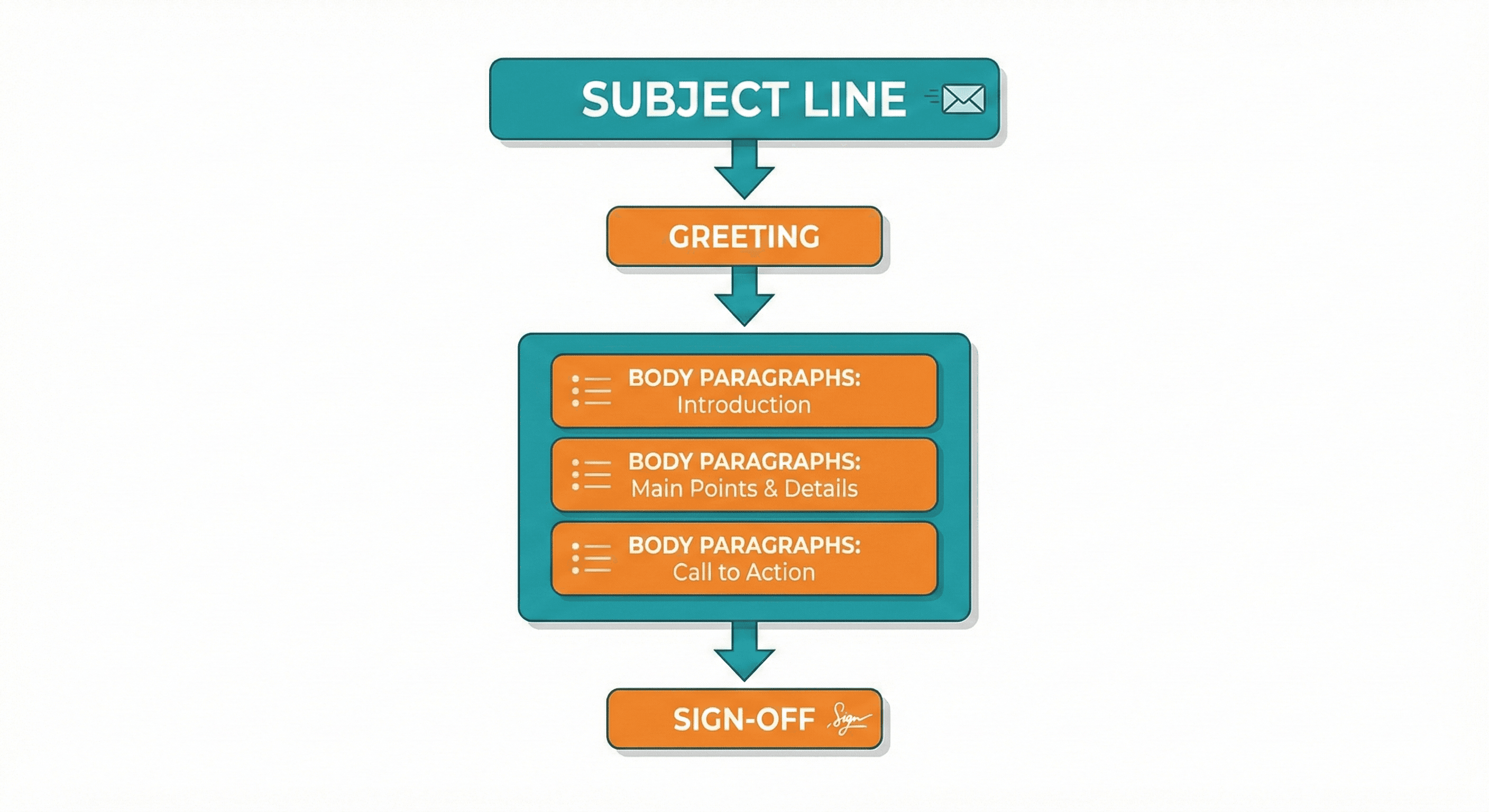
Rule 4: Keep It Concise and Structured
Singapore is known for its efficiency. Long, rambling emails are frowned upon. Professionals here appreciate brevity—getting straight to the point without sacrificing politeness.
If your email is longer than two paragraphs:
- Use Bullet Points: Break down lists or steps.
- Bold Key Information: Highlight deadlines, dates, or action items.
- Short Paragraphs: Keep paragraphs to 2–3 sentences max for readability on mobile devices.
Example: "Hi James, Please find the Q3 report attached. Key Action Items:
- Review the budget section on page 4.
- Approve the new vendor list.
- Reply by Friday, 12th Oct. Thanks."
Rule 5: Use Professional Sign-Offs
How you end an email leaves a lasting impression. In Singapore email culture, the sign-off should be respectful but not overly stiff.
- Best for most situations: "Best regards," / "Kind regards,"
- Formal: "Sincerely," (if you started with "Dear")
- Friendly: "Warmly," / "Many thanks,"
Avoid:
- "Cheers" (Too casual, unless you know them well)
- "Yours," (Too intimate or incomplete)
- "Sent from my iPhone" (Remove this default signature; it looks lazy)
Rule 6: Reply Within 24 Hours
The pace of business in Singapore is fast. It is generally expected that you acknowledge an external business email within 24 working hours.
If you cannot provide a full answer immediately, do not just ignore specific emails. Instead, send a "holding reply."
Example: "Hi Rachel, received with thanks. I am currently looking into this and will get back to you with a full answer by Wednesday."
This small gesture builds immense trust and shows you are on top of your work.
Rule 7: Proofread Before Sending
Nothing undermines your authority faster than spelling errors or grammatical mistakes. In a society that values education and precision, typos signal carelessness.
Before you hit send, check for:
- Spelling of the recipient's name (Crucial!)
- Correct dates and times.
- Grammar errors (e.g., subject-verb agreement).
For a sentence-level checklist, use these business email grammar rules before sending important client or manager emails.
Tip: Read your email aloud to check the flow. Does it sound professional?
Not sure if your email is professional enough? Try Grammar Buddy's free Email Improver.
Rule 8: Use CC and BCC Appropriately
Over-CCing (Carbon Copying) is a common complaint in Singapore offices. It clogs up inboxes and creates "noise."
- To: People who need to take action.
- CC: People who need to know (FYI) but don't need to act.
- BCC: Use this when emailing a large group of people who don't know each other to protect their privacy.
Don't: CC your boss on every single email just to "prove" you are working. It is often seen as insecure or annoying.
Rule 9: Don't Use "Reply All" Unless Necessary
This is a cardinal sin of professional email rules. If an HR manager sends a company-wide email about the pantry renovation, do not hit "Reply All" to say "Ok."
Only use "Reply All" if everyone on the chain genuinely needs to see your response. Otherwise, you are just spamming 50 people's inboxes.
Rule 10: Avoid ALL CAPS and Excessive Exclamation Marks
Writing in ALL CAPS is universally interpreted as SHOUTING. It comes off as aggressive and rude.
Similarly, avoid peppering your email with exclamation marks. One is enough to show enthusiasm ("Great job!"). Three looks unprofessional ("Great job!!!").
- ❌ Aggressive: "PLEASE SEND THE FILE ASAP."
- ✅ Professional: "Could you please send the file as soon as possible?"
Rule 11: Be Mindful of Tone
Email lacks facial expressions and tone of voice. A direct statement can easily be misread as rude, especially in cross-cultural communication which is common in Singapore.
- Too Direct: "Send me the report."
- Softer/Politer: "Could you please forward the report when you have a moment?"
Using softeners like "please," "could you," and "would you mind" helps maintain a cooperative relationship.
Rule 12: Respond to Meeting Requests Promptly
In Singapore, calendars fill up fast. If you receive a calendar invite, accept or decline it promptly. Do not leave it as "Tentative" for days.
For the difference between a tentative RSVP and a confirmed meeting, see this tentative meaning in emails and meetings guide.
If you decline, it is polite email etiquette to propose a new time slot immediately so the organizer doesn't have to chase you.
Rule 13: Use Out-of-Office Replies When Away
If you are on leave or away for a public holiday (like Chinese New Year or Deepavali), always set an auto-responder.
It should include:
- The dates you are away.
- When you will return.
- Who to contact in your absence (with their email).
This manages expectations so clients don't think you are ignoring them.
Rule 14: Don't Forward Chain Emails
This refers to jokes, inspirational quotes, or unverified news. In a professional setting, these are clutter. Keep your work email strictly for work. Forwarding non-essential content dilutes the importance of your actual business emails.
Rule 15: End on a Positive Note
Even if the email is about a difficult topic or a negotiation, try to end on a constructive, forward-looking note.
- "I look forward to resolving this with you."
- "Thanks for your patience."
- "Have a great week ahead."
This ensures the interaction remains professional and leaves the door open for future collaboration.
Common Email Etiquette Mistakes in Singapore (and How to Fix Them)
Even experienced professionals fall into these traps. Here are the most common mistakes in Singapore email culture:
| Mistake | Why It's Bad | What to Do Instead |
|---|---|---|
| Using "Noted with thanks" | It can sound robotic, dismissive, or passive-aggressive if used too abruptly. | Use "Thank you for the update" or "Received, thanks." Read more: Noted with Thanks Alternatives |
| Writing "Please do the needful" | This is an old-fashioned phrase common in South Asia but considered archaic or vague in modern global business. | Be specific: "Please process this request" or "Please finalize the contract." Read more: do the needful meaning |
| Forgetting Attachments | It looks careless and requires a second "oops" email, wasting time. | Enable your email client's "forgotten attachment detector" or attach files before writing the body text. |
| Emailing Late at Night | Sending emails at 2 AM can pressure subordinates to reply or make you look like you have poor time management. | Use the "Schedule Send" feature to deliver the email at 8:30 AM the next working day. |
| Using "Dear all" for one person | It shows you copy-pasted a template and didn't check. | Always address the specific person by name if possible. |
Email Etiquette Checklist (Before You Hit Send)
Keep this checklist handy. Before you click send, scan your email against these points to ensure it meets the standards of email etiquette in Singapore.
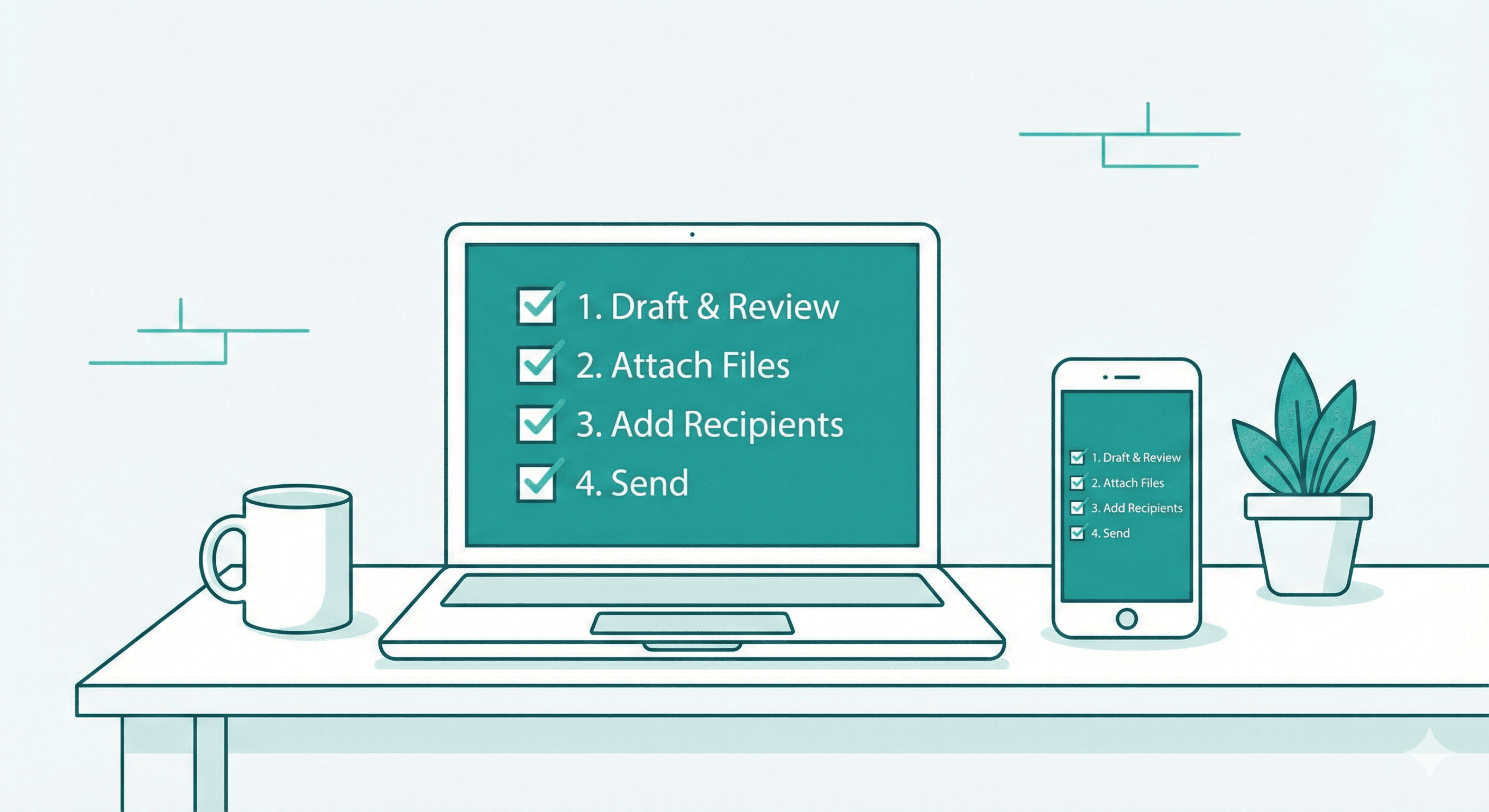
- ☐ Subject line is clear and specific (No vague "Hello")
- ☐ Greeting is appropriate for the relationship (Formal for new contacts)
- ☐ No Singlish or regional phrases (Used standard English for external mails)
- ☐ Email is concise and well-structured (Bullet points used for lists)
- ☐ Tone is professional and polite (Used "please" and "thank you")
- ☐ Spelling and grammar checked (Use our grammar checker for business emails, and verify names manually)
- ☐ Attachments included (Checked file names too)
- ☐ Sign-off is professional (Avoided "Cheers" for formal clients)
FAQ: Email Etiquette in Singapore
Q1: Is it rude to use "Hi" in Singapore business emails? It is generally acceptable to use "Hi" if you have met the person before or if the company culture is modern/relaxed. However, for the very first email to a senior executive or a client, "Dear [Name]" is safer.
Q2: Should I reply to my boss's email immediately even after office hours? This depends on your company culture. However, generally, unless it is marked "Urgent," you are not strictly expected to reply late at night. A reply first thing in the morning (by 9 AM) is usually acceptable.
Q3: Can I use emojis in business emails in Singapore?
Use them sparingly. A smiley face :) to soften a tone with a close colleague is fine, but avoid them in formal negotiations or initial outreach emails as they can look unprofessional.
Q4: Is "Noted with thanks" professional? It is very common in Singapore, but some find it cold. It is better to write a full sentence like "Thank you for the update, I have noted the details."
Q5: How formal should my email be to a new client? Start with high formality. It is better to be too polite than too casual. Wait for the client to invite you to be more casual (e.g., if they sign off with their first name and use emojis).
Summary
Mastering email etiquette in Singapore is about striking the right balance between Asian respectfulness and Western efficiency. By using clear subject lines, avoiding Singlish in professional contexts, and proofreading your work, you present yourself as a competent and reliable professional.
Remember, every email you send is a reflection of your personal brand. Make strict adherence to these rules a habit, and you will navigate the Singapore business world with confidence.
Worried about tone and grammar? Check your emails with Grammar Buddy before hitting send.
Related Articles
Next step
Make this sound professional
Improve tone for work emails without changing your meaning.
Keep going
Continue with AI Grammar Buddy
AI Grammar Buddy
Email Improver
Paste your draft and rewrite it for clearer, more professional English.
Improve My ToneRelated guide
Business Trip English Phrases: Airport, Hotel & Meetings
Learn practical business trip English phrases for airports, immigration, hotels, meetings, and delays, with mini dialogues and ready-to-use examples.
30 July 2026
Related guide
OK Noted Meaning in Email: Rude? Better Replies
What does OK noted mean in email? Is okay noted rude? Why noted on this is wrong, plus clearer professional replies you can copy.
18 July 2026
Related guide
AI Email Rewriter for Professional Emails (Before & After)
Turn rough drafts into professional emails. See before-and-after rewrites, better prompts, and common mistakes that affect tone, clarity, and structure.
17 June 2026