At Your Earliest Convenience Meaning + 10 Alternatives
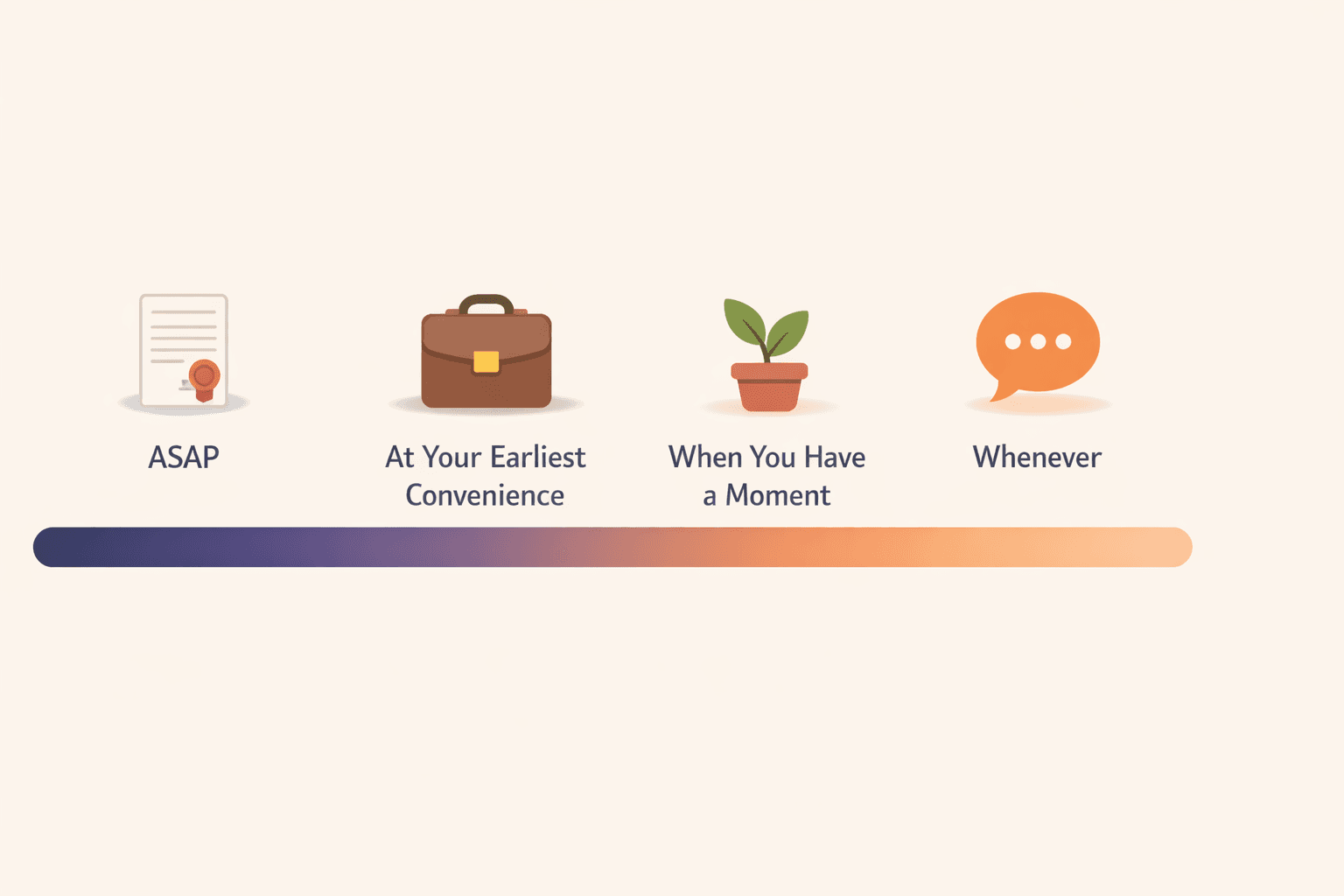
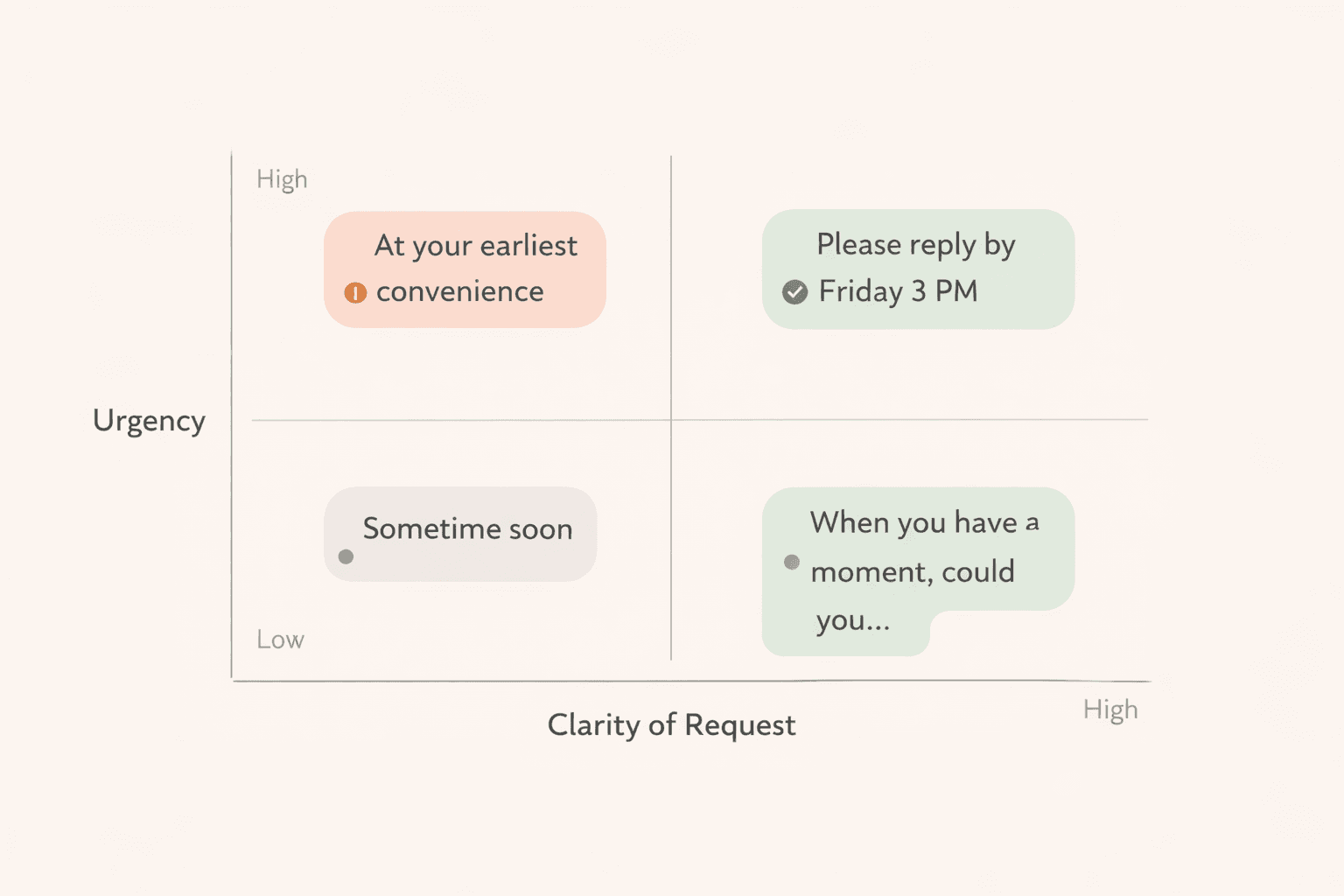
You want a reply without sounding pushy, so you write “at your earliest convenience.” It sounds polished. It also leaves the reader guessing: today, this week, or whenever?
The at your earliest convenience meaning is flexible by design: the reader controls the timing. That works for a non-urgent request, but not for a real deadline. The practical fix is to match the wording to the urgency while keeping the tone respectful.
Jump to sections
Use these anchors to jump straight to the section you need.
Quick Answer
"At your earliest convenience" means "as soon as you can reasonably handle this." It is a formal, polite phrase that works for non-urgent requests, but it is less precise than a real deadline. Use it when the timing is flexible. If the task matters today, say exactly when you need it.
At Your Earliest Convenience Meaning
In plain English, “at your earliest convenience” means “please do this as soon as you reasonably can, when it fits your schedule.”
That makes it more polite than ASAP, but also less precise.
This matches the Cambridge Dictionary definition, which describes the phrase as acting as soon as someone likes or is able to. In an email, the important nuance is that the recipient — not the sender — decides what “earliest” means.
The phrase usually carries three ideas at once:
- The task matters.
- The sender wants action soon.
- The sender does not want to sound demanding.
So the core at your earliest convenience meaning is not "right now." It is closer to "please handle this without unnecessary delay."
That is why the phrase often appears in approval requests, document reviews, and formal follow-ups.
With this phrase, the risk is not harshness. The risk is ambiguity.
Is It Polite?
Yes, usually.
In fact, "at your earliest convenience" is one of the more polite phrases in business English.
It works because it shows respect for the other person's time. You are asking for action, but you are not ordering them around.
Still, "polite" does not always mean "effective."
The phrase can be a poor choice when:
- you need action today
- you want to avoid delay
- the task has a real deadline
- your relationship is casual and the wording feels stiff
For example, this sounds polite:
Please review the attached draft at your earliest convenience.
But it leaves the reader guessing:
- later today?
- this week?
- sometime next week?
That is where problems start.
The phrase is much safer in formal, non-urgent situations than in urgent ones.
If the issue is not timing but whether your follow-up sounds too aggressive, read our guide on per my last email meaning — a phrase that can come across far harsher than intended.
If you are unsure whether your request sounds soft or stiff, compare a clearer rewrite in Email Improver. Paste the sentence, choose a professional tone, and check whether the rewrite gives the reader a usable timeline.
When To Use It
Use at your earliest convenience when all three of these are true:
- the request is important
- the request is not truly urgent
- a formal tone makes sense
Good examples:
- asking a client to review a proposal
- asking a manager to approve a draft
- requesting documents when same-day action is not required
It is less effective for:
- internal team messages
- fast-moving project updates
- tasks with a fixed deadline
In those cases, clearer wording usually gets faster action.
If the recipient has already gone quiet, use a follow-up email after no response with a clear next step instead of repeating soft timing language.
10 Better Alternatives to At Your Earliest Convenience
The best replacement depends on what you really mean.
When there is no hard deadline
Use these when the request is flexible and you genuinely do not want to create pressure.
| Situation | Better alternative |
|---|---|
| Please look at this when you have time | When you have a moment, could you take a look? |
| I want to sound polite but natural | When convenient, please let me know your thoughts. |
| I want to follow up without pressure | No rush, but I’d value your thoughts by the end of the week. |
When you need action by a deadline
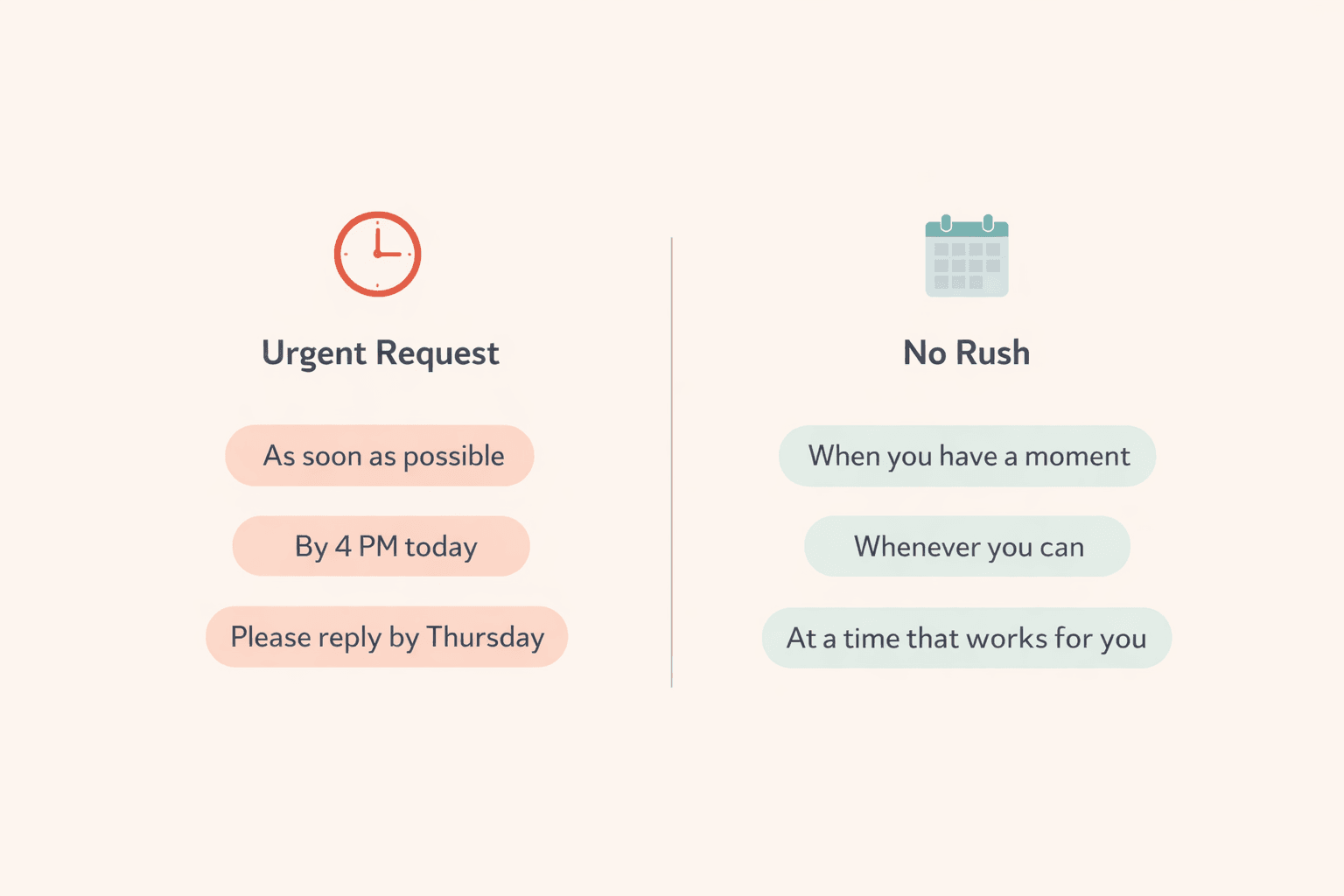
State the date or time. A specific deadline is easier to prioritise than either “at your earliest convenience” or “ASAP.”
| Situation | Better alternative |
|---|---|
| I need this today | Could you send this by 4 PM today? |
| I need approval this week | I would appreciate your approval by Friday if possible. |
| Please reply soon | Could you get back to me by Thursday morning? |
| Please review this document | Could you review the attached draft and share comments by Tuesday? |
When tone or hierarchy matters
These options keep the request respectful while making the next action clearer.
| Situation | Better alternative |
|---|---|
| I need a quick internal response | Can you take a look today and let me know? |
| I need this urgently but politely | Could you prioritise this and get back to me by [date]? |
| I am writing to someone senior | Please let me know your availability to discuss this. |
Notice what these alternatives do better:
- They name the action.
- They reduce guesswork.
- They make the timeline clear.
That is what gets replies.
For firmer requests that still sound professional, see these “please advise” alternatives. If you want a version matched to your own deadline and relationship, paste your original line into Email Improver and compare the suggested rewrite before sending.
At Your Earliest Convenience vs ASAP
Both phrases ask for prompt action, but they signal different levels of pressure.
| Phrase | What the reader hears | Best use | Main risk |
|---|---|---|---|
| At your earliest convenience | Please act soon when your schedule allows | Formal, flexible requests | Too vague when timing matters |
| As soon as possible | Please treat this as urgent | Time-sensitive requests | Can sound demanding without context |
| ASAP | This needs immediate attention | Familiar internal teams or genuine emergencies | Too abrupt or informal in client email |
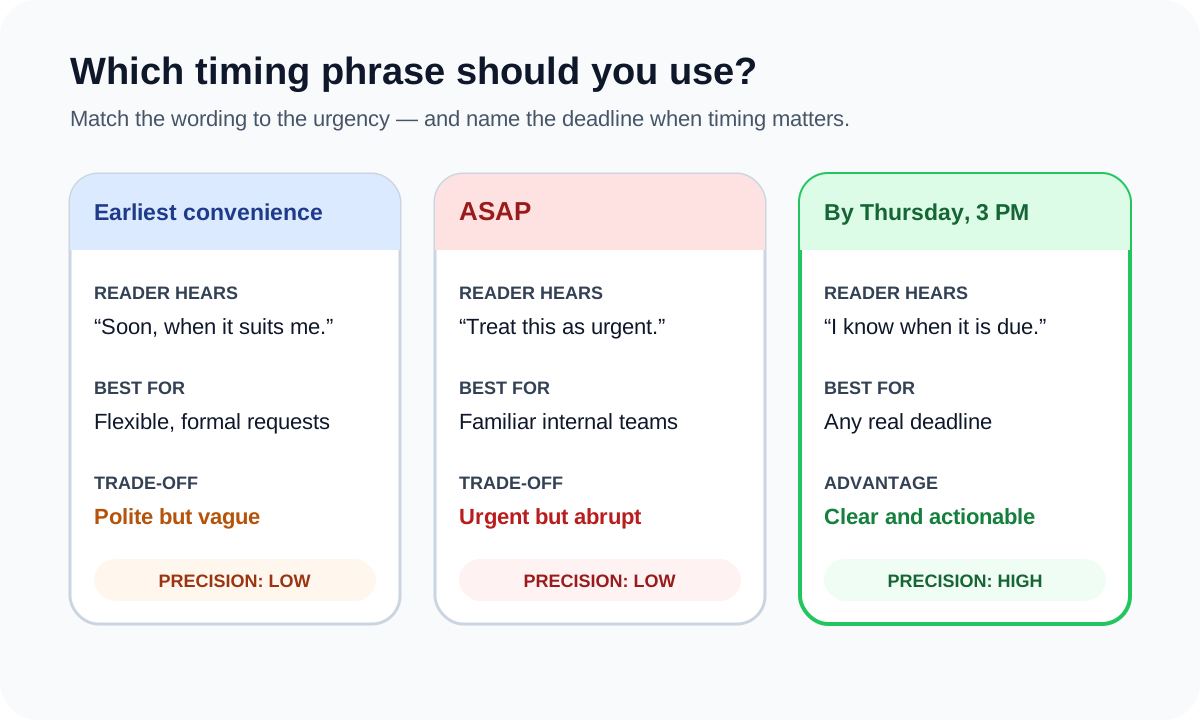
Neither phrase gives an exact deadline. If the work must be finished today, “Could you send this by 4 PM today?” is clearer than either option. Add a short reason when useful: “Could you send this by 4 PM today so I can include it in the client pack?”
Common Mistakes
The phrase is grammatically correct, but these choices make the email less effective:
- Using it for a real deadline. If Friday is the deadline, write Friday.
- Adding empty urgency. “At your earliest convenience, ASAP” is repetitive and confusing.
- Hiding the action. Name what you need the reader to review, send, approve, or confirm.
- Using it in every email. In a familiar team, “when you have a moment” often sounds more natural.
- Writing “at my earliest convenience.” This shifts convenience to the sender and can sound dismissive.
At My Earliest Convenience
The phrase "at my earliest convenience" is the reversed version, and it is almost always a mistake in professional writing.
It implies: "I will get to this when I feel like it."
Even if that is not your intention, the reader may hear arrogance or passive dismissal. Avoid it entirely in formal or client-facing emails.
Better alternatives:
- I will send this by [date].
- I will follow up by end of day Thursday.
- I aim to complete this within 48 hours.
The rule is simple: if you control the timeline, name it. Do not soften a commitment into vagueness.
Before-and-After Email Examples
Here is where the phrase often looks polite but underperforms.
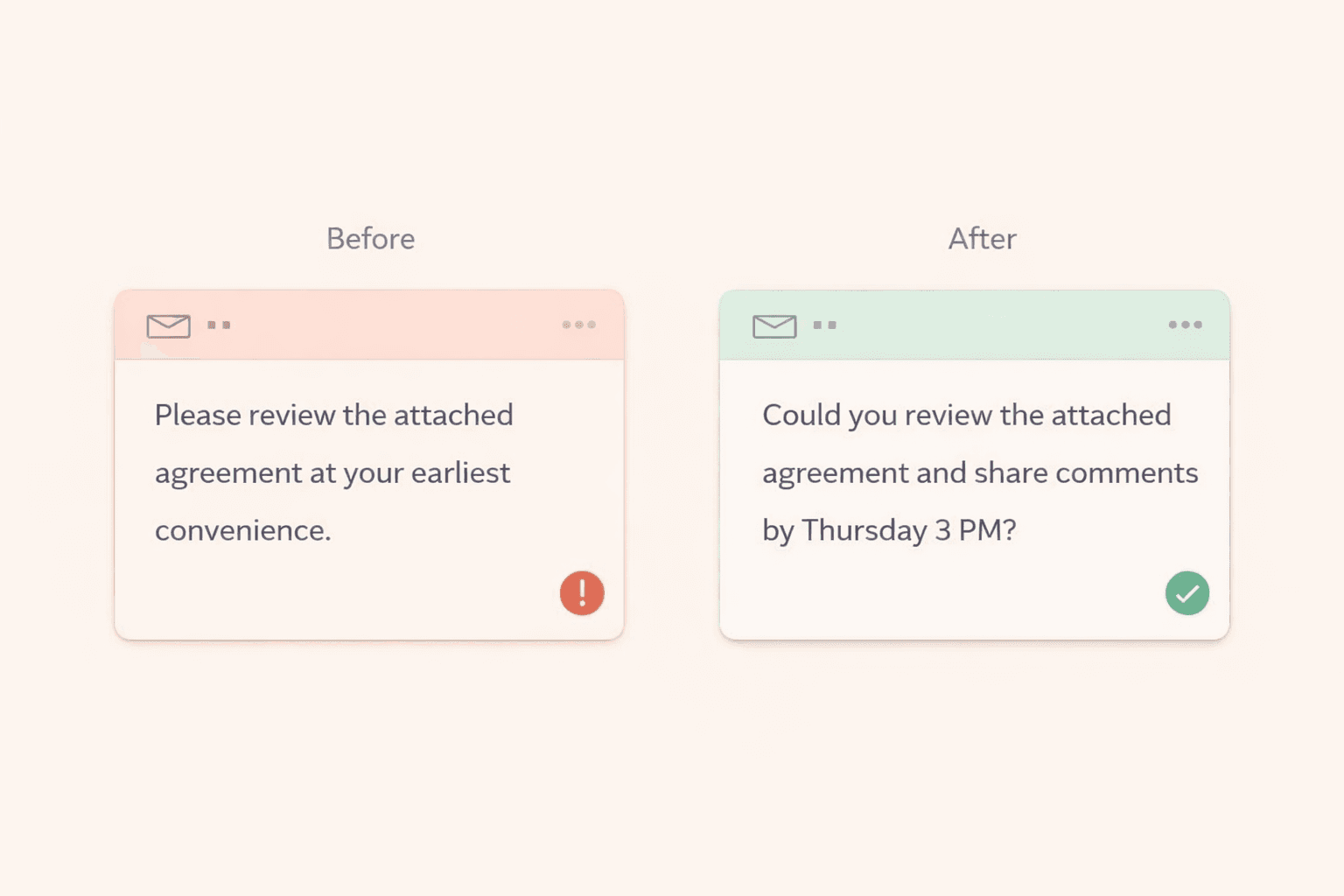
Example 1: Document review
Before
Please review the attached agreement at your earliest convenience.
After
Could you review the attached agreement and share your comments by Thursday 3 PM?
Why the rewrite works: it keeps the professional tone but removes ambiguity.
Example 2: Internal follow-up
Before
Please send the updated slides at your earliest convenience.
After
Could you send the updated slides by noon so I can include them in the client deck?
Why the rewrite works: it adds a real deadline and a reason.
When you are waiting for slides, approval, or another overdue item, these examples of how to chase an email politely can help you follow up without sounding accusatory.
Want this kind of rewrite on your real draft? Drop the email into AI Grammar Buddy and use the suggested deadline-plus-reason pattern as your starting point.
Example 3: Client approval
Before
Kindly confirm the final layout at your earliest convenience.
After
Please let me know whether you approve the final layout by Friday so we can proceed to print.
Why the rewrite works: it asks for the exact decision and explains what happens next.
Copy-ready email
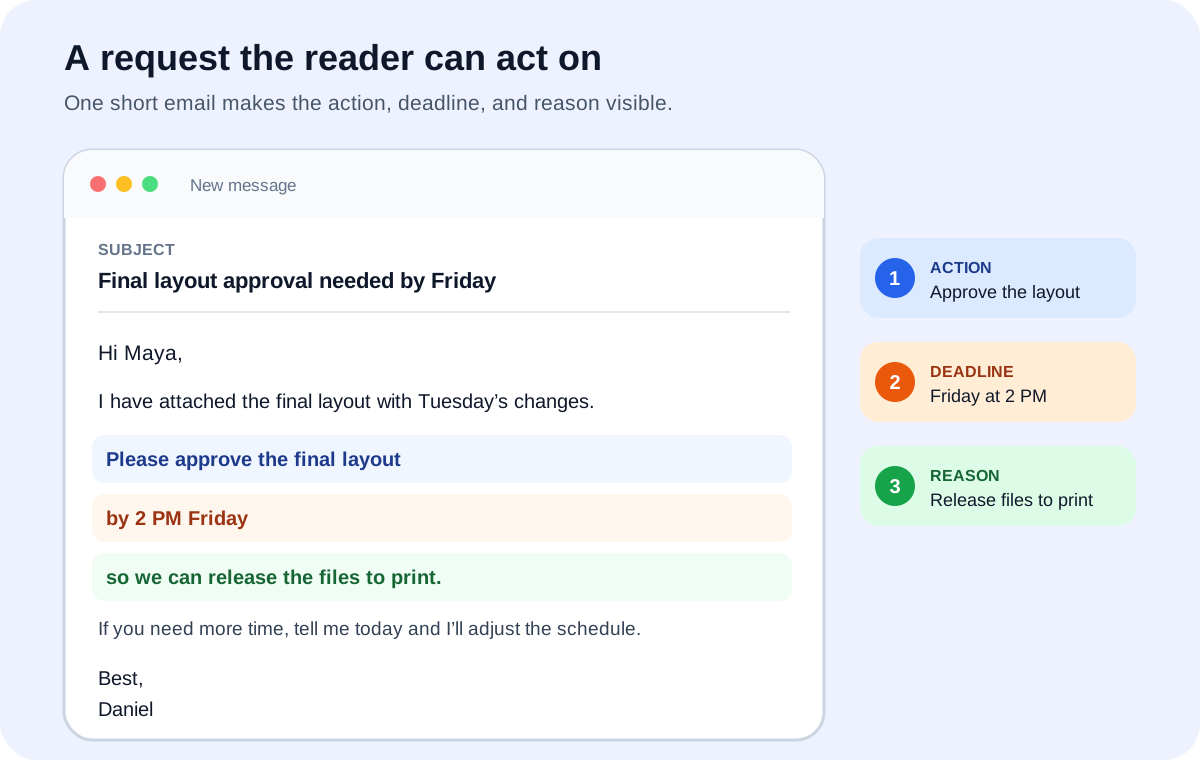
Subject: Final layout approval needed by Friday
Hi Maya,
I have attached the final layout with Tuesday’s changes. Please let me know whether you approve it by 2 PM Friday so we can release the files to print. If you need more time, tell me today and I will adjust the production schedule.
Best, Daniel
Example 4: Friendly but professional request
Before
Please take a look at the proposal at your earliest convenience.
After
When you have a moment, could you take a look at the proposal and let me know if anything needs to change?
Why the rewrite works: it sounds more natural and more human.
Related Email Phrases
If you are working on your overall professional email style, these guides cover the same family of formal-but-sometimes-unclear office phrases:
- please revert meaning — understand why this phrase confuses native English speakers
- kindly do the needful meaning — unpack this South Asian office phrase and find modern replacements
- kindly oblige meaning — understand this formal request closing and replace it with a clear action
- “noted with thanks” alternatives — copy workplace replies for managers, colleagues, clients, and vendors
The Action + Deadline + Reason Formula
The strongest rewrite usually follows one pattern: action + deadline + reason. For example: “Could you approve the layout by Friday so we can proceed to print?”
Kin reviewed every recommendation in this guide across document reviews, internal follow-ups, client approvals, urgent requests, and senior-stakeholder emails. Each rewrite had to make the action explicit, represent the timing honestly, and fit the relationship.
If you want to test the formula on your own draft, paste the sentence into Email Improver and compare the rewrite before sending.
Final Takeaway
The real at your earliest convenience meaning is simple: please do this as soon as it reasonably fits your schedule.
So yes, it is polite.
But it is also soft enough to slow people down.
If your goal is to sound professional and get a faster reply, use one rule: name the action, name the deadline, and add the reason when it helps the reader prioritise.
For more natural closing lines, compare these alternatives to “looking forward to hearing from you”.
About This Article
Kin
Business English and Email Tone Writer
Kin writes about professional communication and business English for AI Grammar Buddy. She reviews real workplace-style drafts to find phrases that sound polite but create friction — and replaces them with writing that is easier to act on.
Last updated 23 July 2026
Frequently Asked Questions
What does "at your earliest convenience" mean?▼
"At your earliest convenience" means "as soon as you can reasonably handle this." It belongs to a formal business-English register, so it sounds more polished and more polite than "ASAP." The trade-off is precision. It works best for non-urgent requests where the timeline is flexible and you do not need action by a fixed hour or date.
Is "at your earliest convenience" polite?▼
Yes. The phrase is generally polite and professional because it respects the other person's schedule instead of sounding like a command. But politeness and effectiveness are different things. A phrase can be polite and still fail to get the result you want if it is too vague, especially when the request really needs a deadline.
Is "at your earliest convenience" too formal?▼
Sometimes. In modern workplace email, it can sound slightly stiff or distant, especially in internal messages. A warmer option like "when you have a moment" often sounds more natural. The phrase still works in client-facing or formal requests, but many teams now prefer clearer, more conversational wording that tells the reader exactly what action to take and roughly when.
What is a better alternative to "at your earliest convenience"?▼
The best alternative depends on your goal. Use a clear deadline for urgent requests, a warm question for friendly follow-ups, and a polite approval request when writing to clients or managers. For example, instead of "please review at your earliest convenience," write "could you review this and share comments by Thursday 3 PM?" That keeps the polite tone but removes all ambiguity.
Should I use "at your earliest convenience" in urgent emails?▼
Usually no. If something is urgent, be specific. Say "Please send this by 4 PM today" instead. That is clearer and more useful than a vague phrase like "at your earliest convenience." In urgent situations, the best writing is not softer writing. It is writing that tells the reader exactly what needs to happen and by when.
Is "at your earliest convenience" the same as ASAP?▼
Not exactly. "At your earliest convenience" respects the recipient's schedule and usually signals flexible timing. "ASAP" signals stronger urgency and can sound abrupt in a formal email. Neither phrase gives a precise deadline, so use a date or time when the request must be completed by a specific point.
What does "at my earliest convenience" mean?▼
"At my earliest convenience" means the sender will act when it suits their own schedule. Although it is grammatically possible, it can sound dismissive because it prioritises the sender's convenience. In a professional reply, make a clearer commitment such as "I will send the revised file by Thursday at 5 PM."
Keep going
Continue with AI Grammar Buddy
AI Grammar Buddy
Email Improver
Paste your draft and rewrite it for clearer, more professional English.
Rewrite This PhraseRelated guide
Please Find Attached: 20 Clearer Email Alternatives
Replace a stiff attachment phrase with a clear line that tells the reader what to review.
Related guide
"For Your Review" Meaning in Email + Better Alternatives
Learn when this phrase asks for action and how to add a useful deadline.
Related guide
50 Professional Email Templates for Work
Copy practical request, follow-up, approval, and deadline-based email templates.