Business Trip English Phrases: Airport, Hotel & Meetings
Learn practical business trip English phrases for airports, immigration, hotels, meetings, and delays, with mini dialogues and ready-to-use examples.

Your gate just changed, the hotel cannot find your company booking, and the client still expects you at 9 AM. On a business trip, you do not need perfect English—you need short, polite phrases you can use under pressure.
This guide gives you practical business trip English phrases for the airport, immigration, hotel, meeting room, local transport, networking, and last-minute delays, with mini dialogues and ready-to-use messages you can adapt immediately.
Together, they form a useful set of English phrases for business travel, not a word list to memorise without context.
TL;DR
For a successful business trip, prepare short and polite English phrases for each stage: airport check-in, immigration, the hotel, meetings, networking, and unexpected changes.
Top alternatives:
- •Use short answers at immigration and keep your documents ready.
- •In meetings, clarify what you heard before you agree to an action.
- •When plans change, state the problem, its impact, and your requested solution.
Jump to sections
Use these anchors to jump straight to the section you need.
Quick Answer
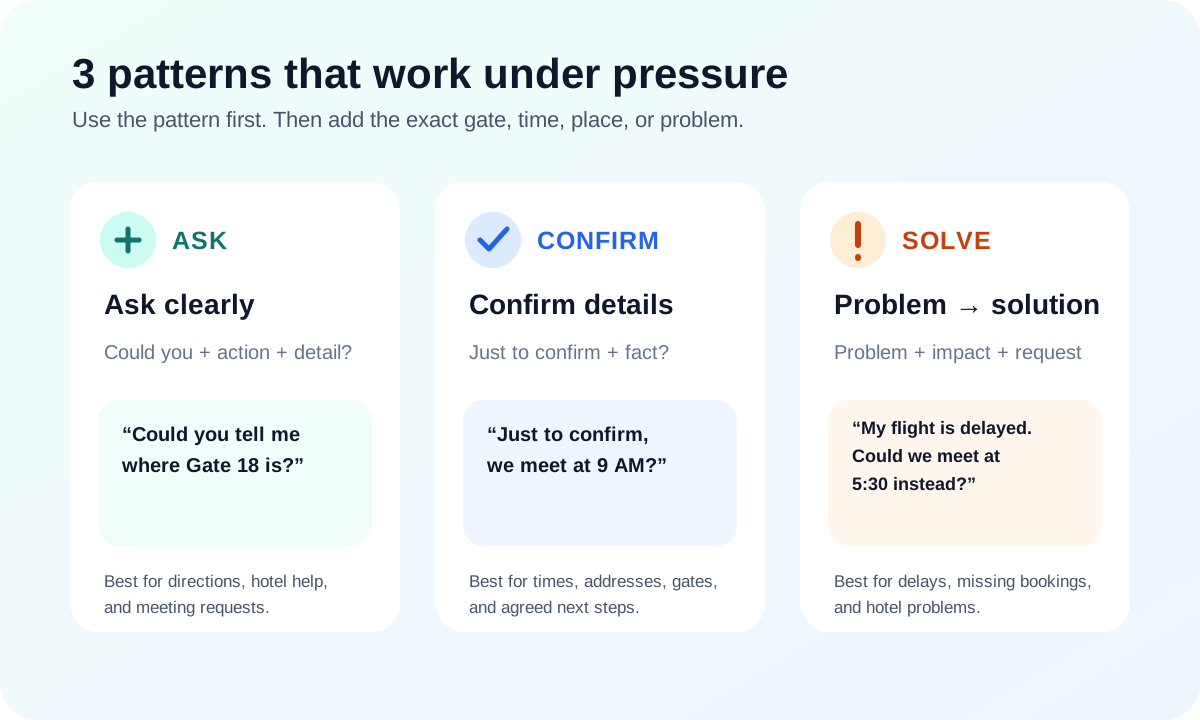
Business trip English is the practical language you use to check in, clear immigration, solve hotel problems, join meetings, network, and explain delays. The most useful business trip English phrases follow three simple patterns:
- Ask clearly: “Could you tell me where Gate 18 is?”
- Confirm details: “Just to confirm, the meeting starts at 9 AM.”
- Explain a problem and request a solution: “My flight has been delayed. Could we move the meeting to 5:30 PM?”
You do not need long or complex sentences. In travel situations, clear nouns, times, names, and polite questions are more useful than advanced vocabulary.
Editor's note from Kin: When I edit a travel update, I check three operational facts before polishing the grammar: what changed, who or what is affected, and what the reader should do next. A grammatically correct message can still be unhelpful when one of those details is missing.
Before Your Business Trip: Prepare Your English
Prepare the information you may need to say aloud before you leave. Save the English versions of your company name, job title, hotel address, host's name, meeting venue, and reason for travel.
Useful preparation phrases
| Situation | Phrase | Why it works |
|---|---|---|
| Confirming a meeting | “Could you confirm the meeting time and venue?” | Asks for both details directly. |
| Sharing your arrival | “I am due to arrive at 6:40 PM on Tuesday.” | Due to arrive means scheduled to arrive. |
| Arranging transport | “Will someone meet me at the airport, or should I take a taxi?” | Gives the organiser two clear options. |
| Checking requirements | “Is there anything I should bring to the meeting?” | Covers documents, samples, and equipment. |
| Sharing a contact | “Here is the number you can reach me on while I am travelling.” | Makes the purpose of the number clear. |
If you need to email these details, write the date, local time zone, address, and contact person on separate lines. The email clarity checklist can help you make the action and timing easy to understand.
If you are confirming the venue by email, paste your draft into AI Grammar Buddy's Email Improver and ask for a clearer, more specific version before you send it.
Mini dialogue: confirming the itinerary
Traveller: Could you confirm whether the client meeting is at your office or the hotel?
Colleague: It is at our office. I will send you the address.
Traveller: Thank you. Just to confirm, we are meeting in the lobby at 8:30 AM?
Natural alternative: Instead of “Please send me all details,” say “Could you send me the office address, contact person, and start time?” A specific request is easier to answer.
Business Trip English Phrases for Airport Check-in and Boarding
At check-in, staff usually need your passport, destination, baggage details, and sometimes proof of onward travel. Keep your answers short because the environment is busy.
This airport English for business travelers focuses on the questions you are most likely to ask at check-in, security, and the departure gate.
Practise this airport English aloud with your flight number, destination, and gate. Replacing the sample details with your real information makes the phrases easier to recall when the terminal is noisy or rushed.
At the check-in counter
- “Good morning. I would like to check in for Flight 218 to Seoul.”
- “I have one suitcase to check in and one carry-on bag.”
- “Could I have an aisle seat, if one is available?”
- “Will my bag be checked through to my final destination?”
- “Where can I find the departure gate?”
Explanation: To check in a bag means to give it to the airline for the flight. A carry-on bag stays with you in the cabin. If a bag is checked through, you normally collect it at the final destination rather than during the connection.
At security and the gate
- “Do I need to remove my laptop from my bag?”
- “Is this the queue for security?”
- “Has boarding started for Flight 218?”
- “Has the gate changed?”
- “Could you tell me when the final boarding call will be?”
Mini dialogue: a gate change
Traveller: Excuse me, the screen says my gate has changed from B12 to C7. Is that correct?
Airport staff: Yes. Gate C7 is about a ten-minute walk from here.
Traveller: Thank you. Has boarding started yet?
Common mistake: “Where is my flight?” sounds as if you are asking where the aircraft is. Ask “Which gate does my flight depart from?” or “Where is Gate C7?”
English Phrases for Airport Immigration and Customs
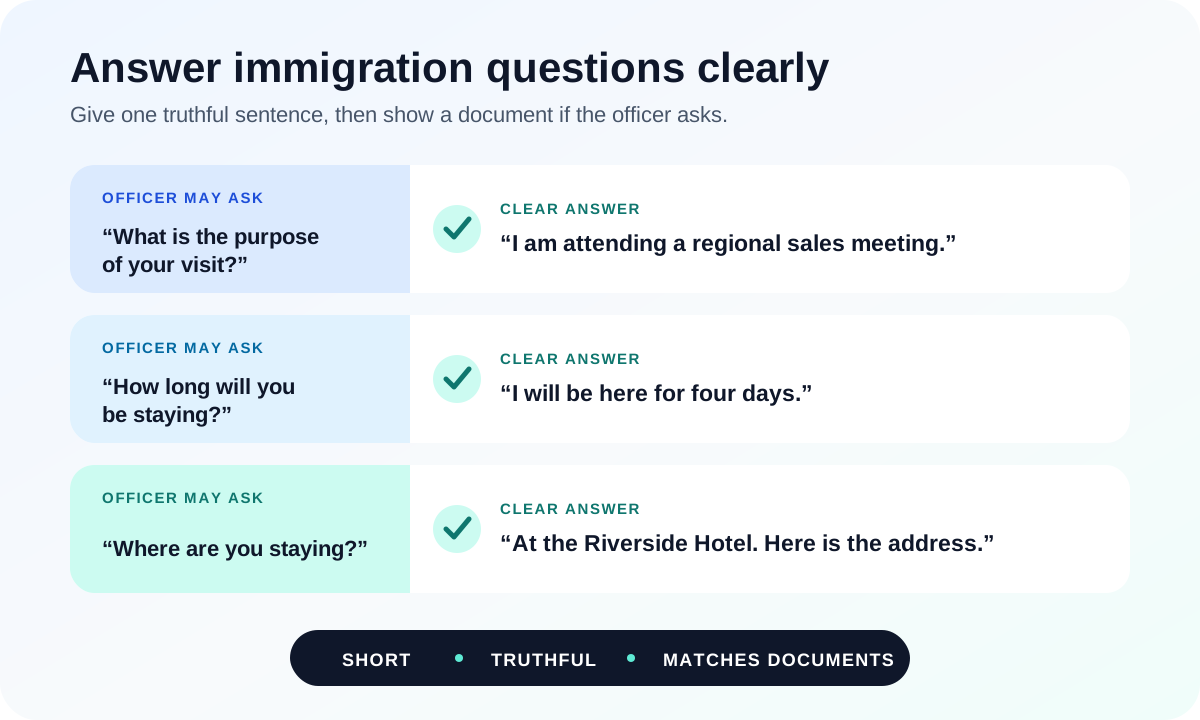
Immigration officers normally ask why you are visiting, how long you will stay, and where you will stay. Answer truthfully and use the same details shown in your documents.
Common immigration questions and answers
| Officer may ask | Clear answer |
|---|---|
| “What is the purpose of your visit?” | “I am here for business.” |
| “What kind of business?” | “I am attending a regional sales meeting with our local office.” |
| “How long will you be staying?” | “I will be here for four days.” |
| “Where are you staying?” | “I am staying at the Central Park Hotel. Here is the address.” |
| “When are you leaving?” | “My return flight is on Friday evening.” |
| “Who are you meeting?” | “I am meeting colleagues from our regional office.” |
Mini dialogue: at immigration
Officer: What is the purpose of your visit?
Traveller: I am here for a three-day industry conference.
Officer: Where will you be staying?
Traveller: At the Riverside Hotel. Here is my booking confirmation.
At customs, you may hear:
- “Do you have anything to declare?”
- “Are you carrying commercial samples?”
- “Did you pack these bags yourself?”
Answer based on the rules and your actual luggage. If you are unsure, say, “I am carrying product samples for a meeting. Could you tell me whether I need to declare them?”
Common mistake: Do not memorise a false answer because it sounds easier. Immigration and customs English should be brief, accurate, and supported by your documents.
Taxi and Ride-Hailing English After Landing
Once you leave the airport, you may need to confirm a pickup point, show an address, or ask whether you will arrive on time. Use the full building name and street address rather than relying on a company name that the driver may not know.
Useful taxi and ride-hailing phrases include:
- “Where is the designated ride-hailing pickup point?”
- “Could you take me to this address, please?”
- “I need to be at the Meridian Tower by 8:45 AM.”
- “About how long will the journey take?”
- “Could you drop me at the main entrance?”
- “Could I have a receipt for the fare, please?”
- “I think we may be going to the wrong address. Could we check the map?”
Mini dialogue: confirming the destination
Driver: Meridian Hotel?
Traveller: Meridian Tower, please—the office building on King Street. Here is the full address.
Driver: Thank you. It should take about 25 minutes.
Traveller: Great. Please let me know if the traffic changes the arrival time.
Common mistake: “Send me to this address” sounds unnatural in a taxi. Say “Could you take me to this address?” For a ride-hailing driver, “Could you drop me at the main entrance?” is a clear way to confirm the exact stop.
Hotel English for Business Trips: Check-in and Problem-solving
For hotel check-in, give the name on the reservation first. If an assistant or travel department made the booking, the company name may also help.
Checking in and requesting work essentials
- “Hello, I have a reservation under Mei Lin Tan.”
- “The booking may be under my company name, Northstar Consulting.”
- “Could I have a quiet room away from the lift, if possible?”
- “What time is breakfast served?”
- “Could you tell me the Wi-Fi password?”
- “Is there somewhere I can print a document?”
- “Could you arrange a taxi for 7:30 tomorrow morning?”
- “May I have an itemised receipt when I check out?”
An itemised receipt lists each charge separately, which is useful for an expense claim.
Reporting a hotel problem
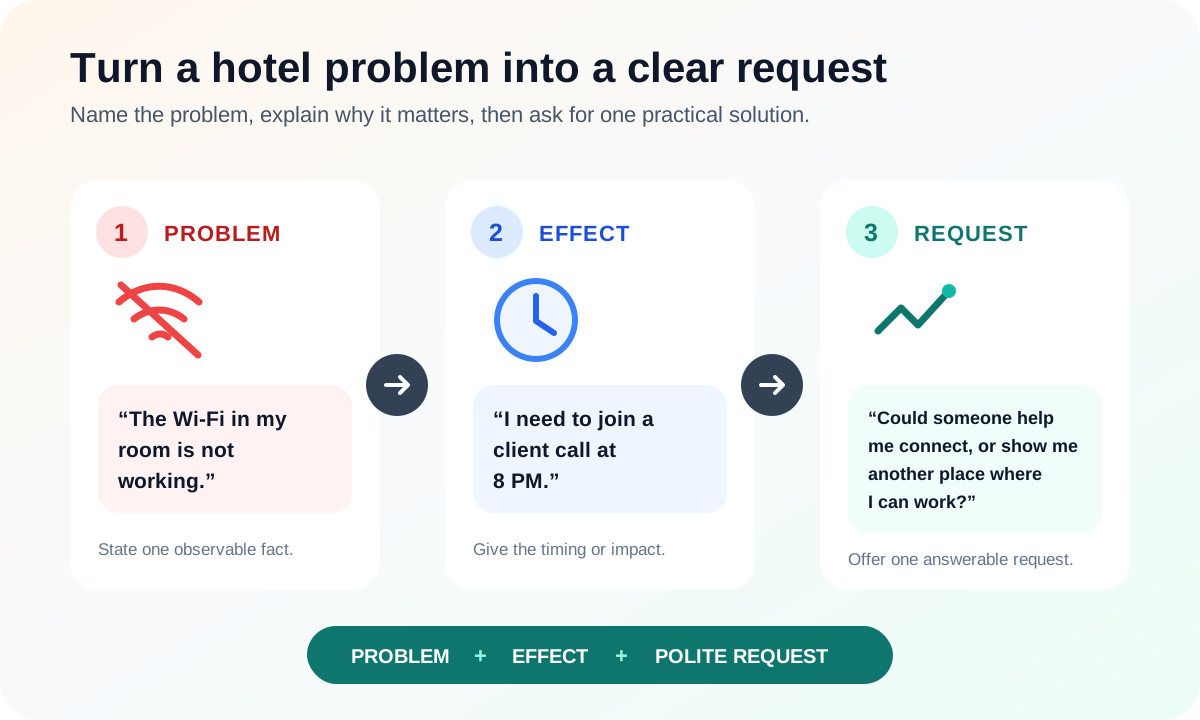
Use a simple three-part structure: identify the problem, explain the effect, and ask for a solution.
“The Wi-Fi in my room is not working, and I need to join a call at 8 PM. Could someone help me connect, or is there another place where I can work?”
Other useful phrases:
- “My room key does not seem to be working.”
- “The air conditioning is very noisy. Could someone check it?”
- “I think there may be an error on my bill.”
- “I was charged twice for breakfast. Could you check this, please?”
- “Would a late check-out at 1 PM be possible?”
Mini dialogue: the booking is missing
Receptionist: I am sorry, but I cannot find a reservation under that name.
Traveller: The booking was made by my company. Could you try Northstar Consulting?
Receptionist: Yes, I have found it.
Traveller: Great, thank you. Could I also have a copy of the booking details?
Natural alternative: “I want a quiet room” can sound demanding. “Could I have a quiet room, if one is available?” is clear and polite.
Business Meeting English Phrases
In a meeting, your main tasks are to open the discussion, explain your point, clarify information, disagree professionally, and confirm next steps.
Opening and setting the agenda
- “Thank you for making time to meet with us.”
- “Shall we start with a quick round of introductions?”
- “The main objective today is to agree on the launch schedule.”
- “We have three points to cover: pricing, delivery, and support.”
Clarifying and contributing
- “Could you clarify what you mean by ‘priority market’?”
- “Just to make sure I understood, are you suggesting a September launch?”
- “May I add something to that point?”
- “From our side, the main concern is delivery time.”
- “Could you walk us through the figures?”
Explanation: “Could you walk us through...” asks someone to explain a process or set of information step by step.
Agreeing and disagreeing professionally
- “That makes sense to me.”
- “I agree with the overall direction.”
- “I see your point. My concern is the implementation timeline.”
- “Could we consider another option?”
- “I am not sure that approach will work in every market.”
To sound confident without sounding aggressive, connect your opinion to a reason or business effect. See these polite ways to say no when you need to reject a proposal without ending the discussion.
Closing the meeting
- “Let us summarise what we have agreed.”
- “The next step is for our team to send the revised proposal by Thursday.”
- “Who will be responsible for the local rollout?”
- “Are we aligned on the timeline?”
- “I will circulate the meeting notes this afternoon.”
Mini dialogue: clarifying a decision
Client: We would prefer to move quickly.
Traveller: Understood. When you say “quickly”, are you aiming to launch this month?
Client: Ideally, yes.
Traveller: In that case, we would need final approval by Friday. Would that be possible?
Common mistake: “I don't agree” can stop the conversation. “I see your point. My concern is...” shows that you listened before explaining the risk.
Networking Phrases in English and Safe Small Talk
Networking English does not need to be clever. A good conversation usually moves from greeting, to a shared topic, to one useful follow-up question.
Starting a conversation
- “Hi, I am Daniel from Meridian Logistics. May I join you?”
- “What brings you to the conference?”
- “How did you hear about this event?”
- “Is this your first time visiting Singapore?”
- “Which part of the programme has been most useful for you?”
Talking about work
- “What does your role involve?”
- “Which markets do you work with?”
- “What kind of projects is your team focusing on?”
- “We work with manufacturers across Southeast Asia.”
- “That sounds interesting. How did the project begin?”
Ending the conversation naturally
- “It was great speaking with you.”
- “Would you be open to connecting on LinkedIn?”
- “May I send you the case study we discussed?”
- “I should let you speak with the other guests, but I hope we can continue this conversation.”
- “I will follow up next week.”
Mini dialogue: at a conference break
Traveller: Hi, I am Aisha from BrightPath. What brings you to the conference?
Contact: I lead partnerships for a payment company in Jakarta.
Traveller: That is interesting. Which markets are you expanding into?
Contact: We are looking at Thailand and Vietnam.
Traveller: We work with retailers in both markets. Would you be open to connecting after the event?
Safe topics include the event, the city, food, travel, and the other person's work. Be cautious with salary, age, politics, religion, health, or personal family questions. For more regional tone guidance, read the Singapore email etiquette guide.
If you promised to send a case study or arrange a call and receive no reply, use a short, contextual message rather than “Any update?” These examples show how to chase an email politely.
Common mistake: “Give me your name card” is too direct. Try “May I have your business card?” or “Would you be open to connecting on LinkedIn?”
Handling Delays and Unexpected Changes
When travel plans change, communicate early. A useful update has three parts:
- Update: what happened.
- Impact: what it changes.
- Next step: what you suggest.
Flight and transport delays
- “My flight has been delayed by two hours.”
- “I may not reach the office before 4 PM.”
- “Could we move the meeting to 5:30 PM?”
- “If that is not convenient, I can join by video call.”
- “The train has been cancelled, so I am arranging a taxi now.”
Lost baggage or documents
- “My checked bag has not arrived. Where can I report it?”
- “Could you give me a reference number for the baggage report?”
- “I seem to have misplaced my passport. Could you help me contact the police or my embassy?”
- “My laptop charger is in the missing bag. Is there somewhere nearby where I can buy one?”
Rescheduling with a client
Traveller: I am sorry, but my flight has been delayed and I will miss our 3 PM meeting.
Client: What time do you expect to arrive?
Traveller: Around 4:45 PM. Could we meet at 5:30, or would tomorrow morning be better for you?
Common mistake: “My flight delay, cannot come” may be understood, but it leaves the reader guessing. Use a full update: “My flight has been delayed, so I cannot reach the office by 3 PM. Could we meet at 5:30 instead?”
Incomplete delay messages create extra back-and-forth. Before sending an update, paste it into AI Grammar Buddy and check that it includes what happened, the impact, and the next step.
If the client does not reply to your proposed new time, use a short follow-up email after no response that repeats the affected meeting and asks them to confirm one option.
Business Trip English Checklist
Use this business travel vocabulary checklist to connect the language you have practised with the documents, equipment, and meeting details you need.
Documents and travel details
- Passport, visa, and any required entry documents
- Flight details and return or onward booking
- Hotel address and confirmation
- Host's name, phone number, and office address
- Travel insurance and emergency contacts
- Copies of important documents stored securely
Work preparation
- Meeting objective, agenda, and attendee names
- Presentation saved online and offline
- Chargers, adapters, and approved security tools
- Company booking references and expense policy
- A short English introduction for yourself and your company
- Key questions you want answered before the meeting ends
Useful language saved on your phone
- “Could you speak a little more slowly, please?”
- “Could you write that down for me?”
- “Let me confirm the time and address.”
- “I am sorry, I did not catch the last part.”
- “Who should I contact if the schedule changes?”
Before sending your final itinerary, you can adapt a structure from these professional email templates so your colleagues can scan the dates, locations, and next actions quickly.
Staying Connected While Travelling
Reliable internet access can be useful when checking meeting details, contacting colleagues, or using navigation and translation apps abroad. Before departure, check whether your company provides roaming, a travel SIM, or another approved option, especially if you handle confidential work.
An international eSIM such as Saily allows eligible travellers to arrange mobile data before departure without replacing their physical SIM card. Availability and compatibility vary, so check your destination, device, final price, and current offer terms before purchasing.
Avoid discussing confidential client information on an unsecured public network. Follow your employer's security policy and use approved tools when accessing company systems.
Examples: Copy-Paste Business Trip Messages
Here is how the phrases work together across one trip.
Arrival message: before and after
Original: “I arrived. See you tomorrow.”
Clearer: “Hi Marcus, I have arrived and cleared immigration. I expect to reach the hotel around 7 PM. Just to confirm, we are meeting in the lobby at 8:30 AM tomorrow.”
Want this tone consistently? Run your travel updates through the Email Improver and check every name, time, and location before sending.
Meeting contribution
From our side, the main concern is the delivery timeline. Could you walk us through the steps between final approval and the first shipment?
Networking follow-up
Hi Elena, it was great speaking with you at the conference. I enjoyed learning about your expansion plans in Southeast Asia. As discussed, I have attached the case study on our retail project. Would you be available for a 20-minute call next week?
Before sending a networking follow-up, run it through the Email Improver to keep the opening warm, the context specific, and the next step easy to answer.
Delay update: before and after
Incomplete: “My flight is delayed. I will be late.”
Clearer: “My flight has been delayed by two hours, so I may miss the 3 PM meeting. Could we move it to 5:30 PM or switch to a video call?”
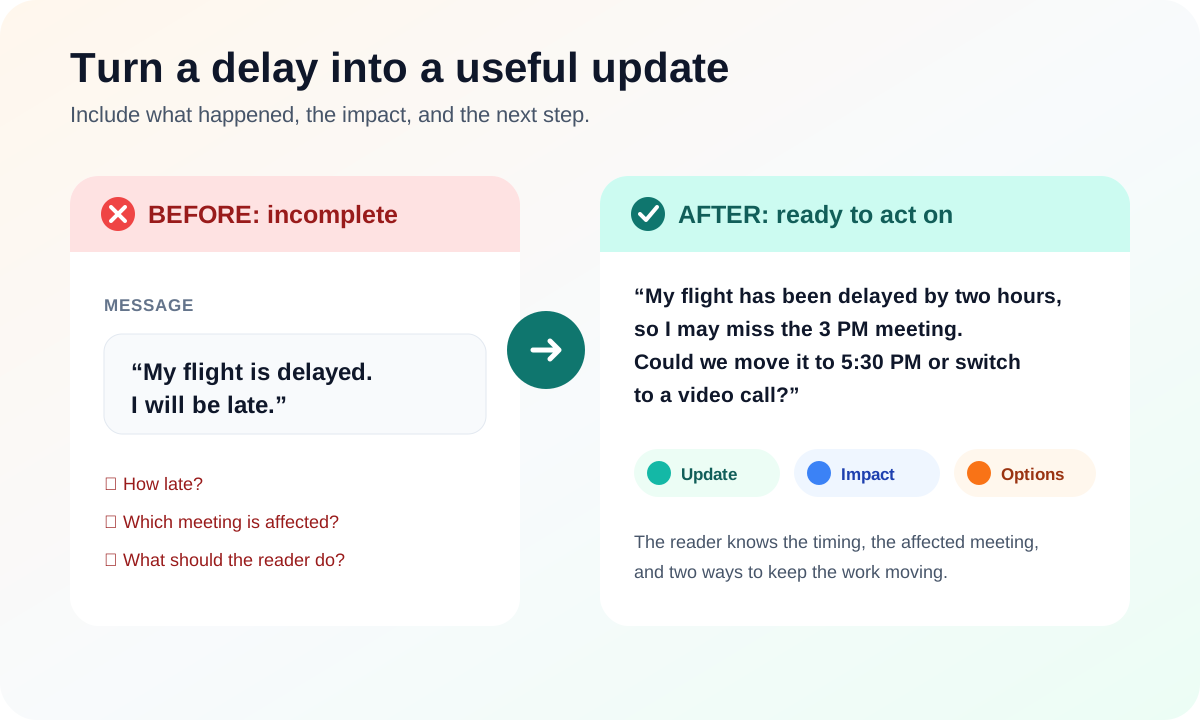
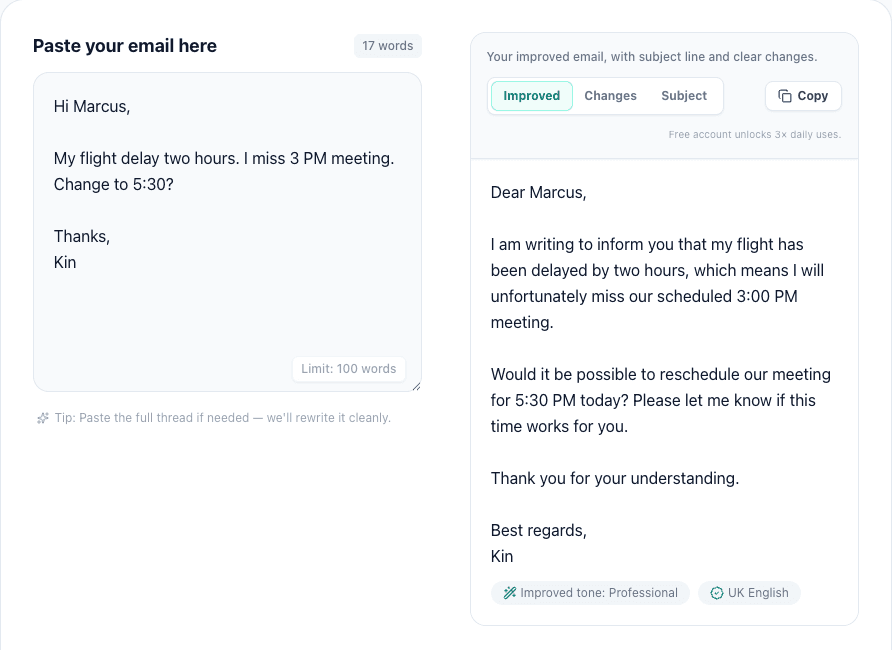
Notice that each message gives the reader a fact, a time, and a next step. That structure matters more than using impressive vocabulary.
Common Mistakes to Avoid on a Business Trip
1. Using “travel” as a countable noun
Less natural: “I have a business travel next week.”
Better: “I have a business trip next week.”
Also natural: “I am travelling for business next week.”
Use trip for one specific journey. Travel is usually an uncountable general activity.
2. Saying “I am here for a meeting” without enough detail
At immigration, you may need to explain who you are meeting or what kind of event you will attend. Keep the answer short but specific: “I am attending our company's regional planning meeting.”
3. Translating a direct request word for word
Too direct: “Change my room.”
Better: “Would it be possible to move to a quieter room?”
Adding a reason and a polite question helps service staff understand and respond.
Direct translations and regional workplace phrases can also sound different outside Asia. The guide to Indian English versus global business English explains how to keep the meaning while choosing wording an international reader will recognise.
4. Agreeing before you understand
Do not say “yes” only to keep the meeting moving. Use “Just to make sure I understood...” and repeat the action in your own words.
5. Giving an incomplete delay update
“I will be late” does not tell the client how late or what should happen next. Give an estimated arrival time and offer an alternative.
How AI Grammar Buddy Can Help
Spoken phrases and written travel updates need different kinds of practice:
| Communication task | Best approach |
|---|---|
| Airport, immigration, hotel, or meeting conversation | Read the prompt aloud, pause, and answer in one or two sentences using your real names, times, and locations. |
| Arrival update, delay message, or networking follow-up | Draft the facts first, then use the Email Improver for a quick tone, grammar, and clarity pass. |
For written arrival updates, rescheduling messages, and networking follow-ups, use the Email Improver for a quick tone and clarity pass. Then verify every flight, time zone, address, and commitment yourself. The tool can polish your sentence; it cannot confirm the travel facts.
Final Takeaway
Good business trip English phrases are clear, calm, and specific. Prepare a few flexible sentence patterns instead of memorising a long script:
- ask a polite, direct question
- confirm names, times, and locations
- explain a problem and request a solution
- summarise decisions and next steps
Those patterns will help you from airport check-in and immigration to local transport, the hotel, meeting room, networking event, and journey home. Your English does not need to sound complicated. It needs to help the other person understand what is happening and what should happen next.
About This Article
Kin
Senior Business English Editor
Kin writes practical English guides for professionals who work across cultures. She focuses on clear, polite language that non-native speakers can use in real meetings, emails, and business travel situations.
Last updated 30 July 2026
Frequently Asked Questions
What does business trip mean in English?▼
A business trip is a journey you take for work, such as visiting a client, attending a conference, meeting colleagues, or inspecting a site. You can say, “I am going on a business trip to Tokyo next week.”
How do I say I am travelling for business at immigration?▼
Say, “I am here for business” or “I am attending a three-day industry conference.” Keep your answer brief, truthful, and consistent with your travel documents.
What should I say when checking into a hotel for work?▼
Start with, “Hello, I have a reservation under [name].” If your company booked the room, add, “The booking may be under my company name, [company].”
How can I sound polite in a business meeting?▼
Use phrases such as “Could you clarify that point?”, “May I add something?”, and “Just to confirm, the next step is...” These sound cooperative while keeping the discussion precise.
What are safe small-talk topics for business networking?▼
Ask about the event, the person's role, their journey, or their experience of the city. Avoid sensitive questions about salary, politics, religion, health, or family unless the other person raises the topic.
How should I tell colleagues that my flight is delayed?▼
State the update, impact, and next action: “My flight has been delayed by two hours, so I may miss the 3 PM meeting. Could we move it to 5:30 PM or switch to a video call?”
Keep going
Continue with AI Grammar Buddy
AI Grammar Buddy
Email Improver
Paste your draft and rewrite it for clearer, more professional English.
Improve My ToneRelated guide
Business Email Grammar Checker: 10 Rules + Examples
Write clear travel updates, meeting notes, and follow-up emails.
June 2026
Related guide
How to Sound More Senior in Emails
Use concise, confident English with clients and colleagues.
March 2026
Related guide
Email Etiquette in Singapore
Adapt your tone for regional and international workplace communication.
March 2026